IUCN's First Red List of Coral Reef Ecosystems Rates 96 Percent of Shallow Reefs Critically Endangered
122 of 127 reef ecoregions are in the top threat category once projected heat stress is counted, but the assessors stress that most reefs still have living coral and the window to act remains open.
Thursday, October 29, 2026/2 min read
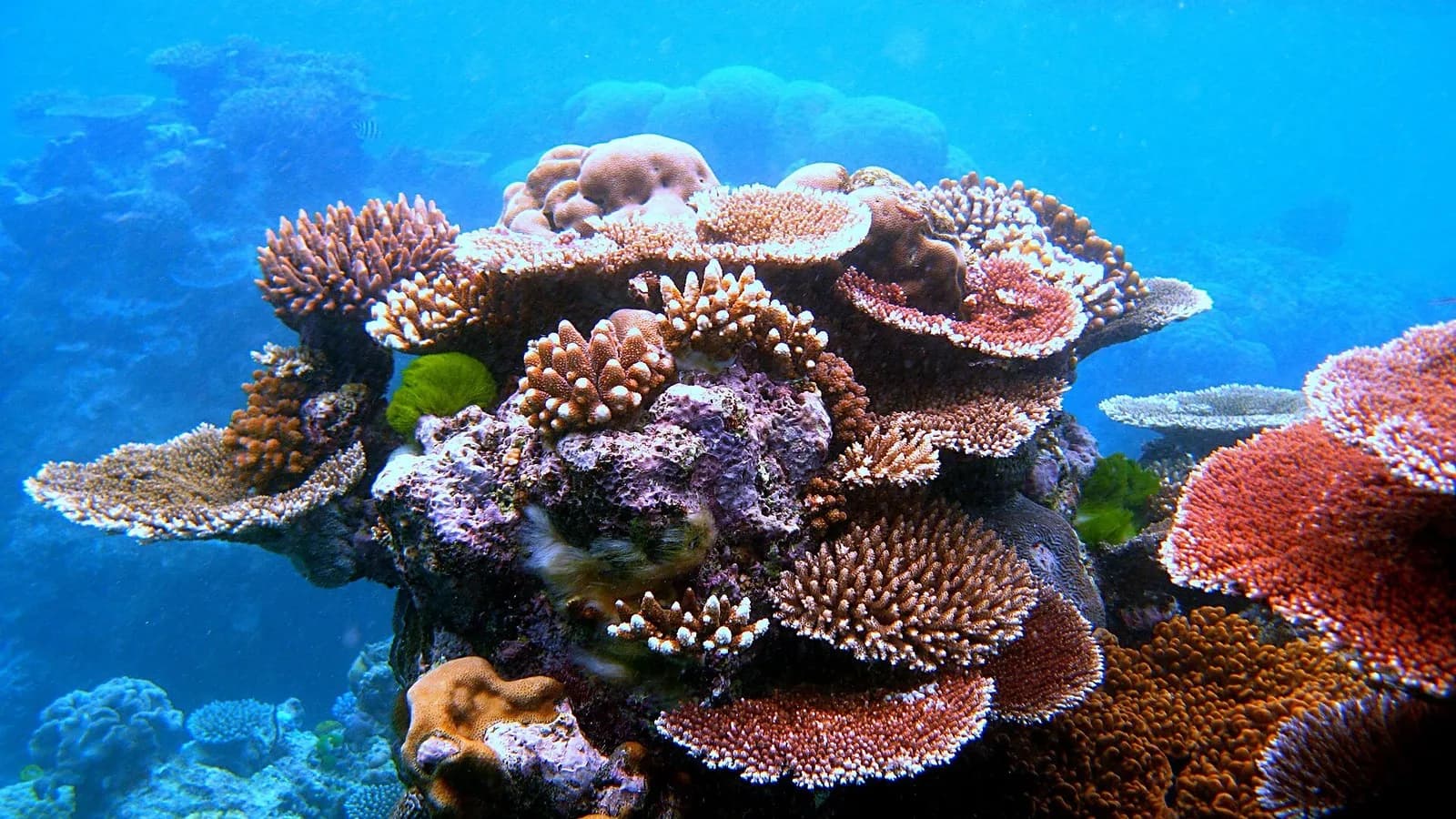
The International Union for Conservation of Nature has, for the first time, assessed the world's coral reefs as ecosystems, and the headline is stark: 122 of the 127 reef ecoregions it examined, 96 percent, are Critically Endangered. The assessment, published on 22 October, covers shallow, sunlit reefs in more than 80 countries and territories and rests on the work of more than 250 experts in ten regional teams.
It is a verdict about risk of collapse, not a declaration that reefs have gone. IUCN is explicit that Critically Endangered does not mean the reefs are gone, because most still hold living coral and work as reef ecosystems, but it says the window to act is closing.
Why did the figure jump from 24 percent to 96 percent?
The answer is heat. Judged only on what has been observed over the past 50 years, 116 ecoregions, or 91 percent, are threatened and 30, or 24 percent, are already Critically Endangered. The leap to 96 percent comes from projected heat stress under the IPCC's SSP2-4.5 scenario, roughly a middle-of-the-road path for emissions. Marine heatwaves are the single biggest threat: on the past 50 years they already threaten 77 percent of ecoregions, and under projections heat stress alone puts 95 percent in the top category. One ecoregion, the Western Galápagos Islands, has already collapsed, following the 1982 to 1983 El Niño. Four were too poorly known to rate.
Other pressures stack on top. Disrupted ecosystem balance, such as overfishing of parrotfish and groupers and pollution that favours algae, affects 63 percent of ecoregions. Small or isolated reefs are exposed to a single cyclone, bleaching event or disease outbreak, which could wipe out 45 percent of ecoregions, and a quarter have already lost much of their living reef.
Which reefs are most at risk, from the Great Barrier Reef to the Gulf?
Every Caribbean ecoregion is Critically Endangered once projections are included, as are all 17 in Australia, which include the Great Barrier Reef, and all 25 in East Asia, which include the Coral Triangle. The Red Sea and Gulf of Aden, with four ecoregions, also reach that category with projections, although DeeperBlue reports that on recent trends alone the Northern Red Sea would be Vulnerable, and IUCN notes heat-tolerant corals there. The six ecoregions of the ROPME Sea Area, the marine region around the Gulf, are all threatened and all Critically Endangered overall.
IUCN's Mishal Gudka called the assessment a "wake-up call rather than a cause for despair."
What can divers and reef users actually do?
The first lever is cutting greenhouse gas emissions, ideally holding warming near 1.5 degrees Celsius. The local levers are within reach: protecting heat-tolerant "bright spots," strengthening marine protected areas, restoring parrotfish and grouper populations, and cutting pollution and sediment from the coast. IUCN says restoration complements but does not replace tackling root causes, and divers who collect or share monitoring data feed directly into future assessments, especially in data-poor regions such as the Gulf of Aden, the Western Arabian Sea and northern Brazil. The assessment does not cover deeper reefs, rocky reefs or cold-water corals.
IUCN lists filling those data gaps among its recommended actions, and the coming bleaching seasons will show whether the projections are holding.
Published in The Outspoken Digest
Editorial desk
Outspoken Digest Diving DeskCovers freediving, recreational and technical diving, dive medicine and the incidents the sport learns from.
Newsletter
The Digest, in your inbox
One edition, sent when it is ready. No noise, and your address is never passed on.
Read Next
More Diving →
Carabinieri Divers Rediscover Roman Wine Amphorae Off Camogli, 67 Years After They Were First Reported
Oct 28, 2026/2 min read
Divers Cement Storm-Torn Corals Back Onto Hawaii's Reefs While a 45-Day Clock Runs
Oct 25, 2026/2 min read
Polish Diver Reaches 338 Metres in North Macedonia's Vrelo Cave, a Claimed Depth Record
Oct 23, 2026/3 min read
Breathless and Coughing Pink Froth After a Dive: Immersion Pulmonary Edema Explained
Oct 17, 2026/3 min read