Kabsa Spice Mix: What Goes In and What Each Spice Does
There is no single official formula, and every Saudi household adjusts it. Here is a working baseline, what each spice contributes, and the one ingredient that has to be ground separately.
Friday, August 14, 2026/3 min read
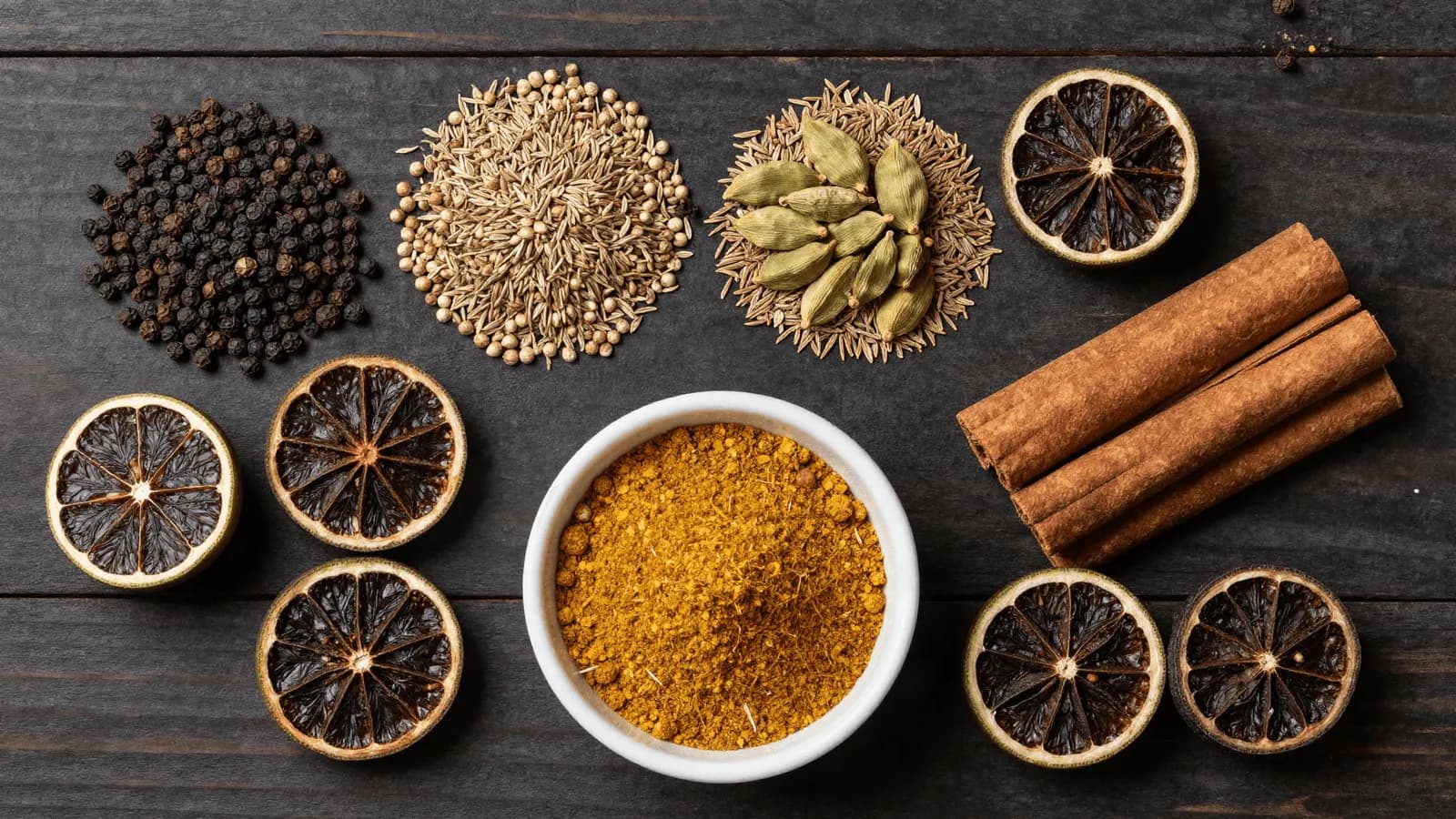
Kabsa spice mix is a warm, aromatic blend built on black pepper, cumin, coriander, cinnamon, cardamom and clove, with dried lime powder for sourness and turmeric or saffron for colour. It is not hot. Anyone who has made kabsa taste spicy has made a different dish.
There is no single authoritative formula. Every household in Saudi Arabia and the wider Gulf adjusts it, and commercial blends vary widely. What follows is a baseline that works and that you can move from once you know what each part is doing.
The blend
Makes roughly 8 tablespoons, enough for four large batches of kabsa.
- 2 tablespoons black peppercorns
- 2 tablespoons coriander seeds
- 1 tablespoon cumin seeds
- 1 tablespoon dried lime powder, from about 2 loomi
- 2 teaspoons ground turmeric
- 1.5 teaspoons green cardamom seeds, from about 20 pods
- 1 cinnamon stick, broken
- 1 teaspoon whole cloves
- 0.5 teaspoon grated nutmeg
- 0.5 teaspoon ground ginger, optional
- 2 dried bay leaves, optional
Method
1. Toast the whole spices
Put the peppercorns, coriander, cumin, cardamom seeds, cinnamon and cloves in a dry pan over medium heat and toast for three to four minutes, moving them constantly, until they smell fragrant and the cumin darkens slightly.
Take them off the heat before they smoke. Burnt spice is bitter all the way through the finished dish and there is no fixing it.
2. Cool completely
Grinding warm spices makes them clump and turns the mix pasty rather than powdery. Five minutes on a cold plate.
3. Grind the loomi separately
This is the step that matters. Dried limes are hard, hollow and fibrous, and they do not break down at the same rate as seeds. Ground together, you get fine powder full of gritty lime fragments.
Break the loomi open, discard the seeds, which are bitter, and grind the shells alone until fine. Then sieve.
4. Grind everything else and combine
Grind the toasted spices to a fine powder, then stir through the lime powder, turmeric, nutmeg and any optional additions. Sieve the whole mix if you want it silky, and re-grind whatever stays in the sieve.
What each spice is doing
- Black pepper. The backbone. Kabsa's warmth is peppery rather than chilli heat.
- Coriander seed. Citrus and a light sweetness. Present in the largest quantity after pepper for a reason.
- Cumin. Earthiness and savoury depth.
- Dried lime. The signature. Sour, faintly fermented, slightly bitter. This is what makes kabsa taste like kabsa rather than like a pilaf.
- Cardamom. Floral lift. It stops the blend feeling heavy.
- Cinnamon and clove. Sweet warmth. Small quantities; both dominate if allowed.
- Turmeric. Colour first, a mild earthiness second.
- Nutmeg. A rounding note nobody can identify and everyone notices when it is absent.
Is kabsa spice the same as baharat?
They overlap heavily and they are not the same. Baharat is the general-purpose Levantine and Gulf seven-spice blend, usually black pepper, cumin, coriander, cinnamon, clove, nutmeg and cardamom.
Kabsa mix is baharat plus dried lime and turmeric, and the dried lime is not a small addition. It changes the whole character. You can make a decent kabsa using baharat plus a teaspoon of lime powder and half a teaspoon of turmeric.
How is it different from biryani masala?
Biryani masala is hotter and more complex: it usually contains chilli, star anise, fennel, mace and bay in quantities kabsa mix does not, and it is built to stand up to yogurt and to a layered cooking method.
Kabsa mix is quieter and sourer. The two are not interchangeable, and the dishes are constructed differently, which we explain in the lamb kabsa recipe.
Whole spices as well as ground
Most kabsa recipes use both, and they are doing different jobs. The ground blend flavours the broth throughout. Whole spices dropped into the pot, a cinnamon stick, a few cardamom pods, bay leaves and the pierced whole loomi, release slowly and perfume the rice as it absorbs.
Fish the whole ones out before serving, or warn people. Biting into a whole clove ruins a mouthful.
Storage
An airtight jar away from light and heat, which means not above the hob where most people keep spices. Ground blends hold their aromatics for about six months and are noticeably flat after a year.
Make small batches often rather than a large one once. This is the cheapest improvement available to almost any home cook, and it applies well beyond this blend. Use it in chicken kabsa and in machboos.
Published in The Outspoken Digest
Editorial desk
Outspoken Digest Food DeskCooking, ingredients, restaurants and the economics of what ends up on the table.
Newsletter
The Digest, in your inbox
One edition, sent when it is ready. No noise, and your address is never passed on.
Read Next
More Recipes →
Swangy Tamarind Glazed Chicken Wings for the Flavour Replacing Swicy on Fast Food Menus
Sep 29, 2026/3 min read

Baked Apple Cider Doughnuts for a Cider Season That Peaked Earlier Than the Calendar Says
Sep 29, 2026/3 min read
An Obatzda Bavarian Beer Cheese Dip for the Final Stretch of Oktoberfest 2026
Sep 29, 2026/3 min read