Henri Kagan and Kenso Soai Win the Nobel Prize in Chemistry for Showing How a Tiny Imbalance in Molecules Can Snowball
A French chemist and a Japanese one share the award for the reactions that explain how mirror-image molecules can tip heavily to one side, a puzzle that matters for medicines and for life itself.
Wednesday, October 7, 2026/3 min read
Hold up your hands and try to lay one on top of the other. They match in every detail and still cannot be superimposed. Molecules do the same thing, and the consequences are not trivial: one mirror-image form of the compound carvone smells of mint, the other of caraway, as NPR put it in its report on Wednesday's Nobel announcement.
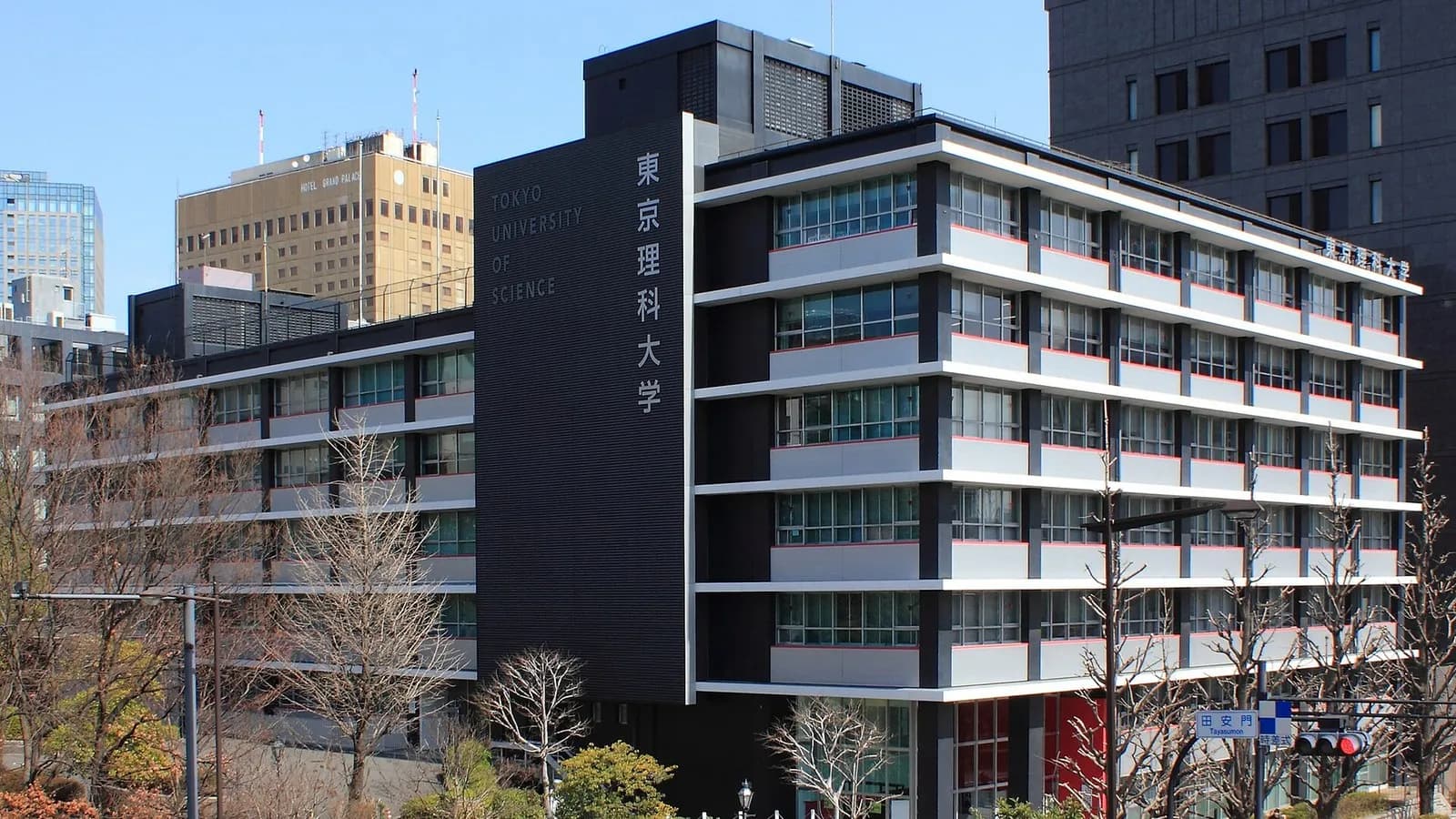
The Royal Swedish Academy of Sciences awarded the 2026 Nobel Prize in Chemistry to Henri B. Kagan of France and Kensō Soai of the Tokyo University of Science, "for the discovery of non-linear effects and autocatalysis in asymmetric organic synthesis", according to Chemistry World. The prize is 12 million Swedish kronor, about $1.2 million, shared between them.
What is chirality, and why does life prefer one hand?
Many molecules come in two forms that are mirror images of each other. Life uses almost only one. Proteins are built from left-handed components and DNA twists to the right, a one-sidedness chemists call homochirality, and why it arose has been argued over for generations. Drug designers care for a plainer reason: the two mirror-image forms of a medicine can behave very differently in the body.
Heiner Linke, chair of the Nobel Committee for Chemistry, said the laureates "have provided a solution to a chemical mystery that is over a century old", a line carried by The Times of Israel from the committee's news release.
What did Kagan and Soai discover?
Chemists once assumed that if a catalyst was slightly lopsided, the product would be lopsided in the same proportion. In 1986 Kagan and his colleagues at the Université Paris-Sud showed that this need not be true. Chemistry World gives an example: a catalyst mixture with a 75 to 25 ratio of mirror-image forms could produce a 90 to 10 ratio in the products. A catalyst carrying two chiral pieces can form three species, including a mixed "meso" one, and when the meso form reacts more slowly the product can end up more one-sided than the catalyst.
Soai's work went a step further. He found a reaction in which the product acts as its own catalyst, so that any small excess of one mirror-image form is copied and amplified. His team's 1995 reaction produced a far greater imbalance than it started with, the first asymmetric autocatalytic reaction run in a laboratory. By 2003 a variant had amplified a tiny imbalance in the catalyst by a factor of 630,000, ending with 99.75 per cent of one form.
The Nobel organisation calls the 1995 work "one of the most spectacular chemical experiments ever conducted". Peter Somfai, a member of the committee, told reporters: "This is probably the coolest experiment in organic chemistry."
Does this change how medicines are made?
Partly, and the experts are careful about how far to push that. Rigoberto Hernandez, president of the American Chemical Society, said "the medicines we have today would not be possible without this chemistry", NPR reports. Somfai was more cautious about specifics, saying it "might be difficult to say that this drug, or that drug, was developed using this". The committee's news release says the discoveries have been decisive for chemists who design reactions for making pharmaceuticals.
The bigger prize is the question of life. Uxue Uria Pujana of the University of the Basque Country told the Science Media Centre Spain it was "a spectacular example of how something very small can end up making a huge difference". The Soai reaction shows in a flask how a whisper of imbalance can become a shout, which is why Somfai says it "vitalised the search for the origin of biological homochirality", Chemistry World reports.
Soai was shopping at a supermarket when the call came, NPR reports. At a Tokyo press conference he said many aspects remain unknown and that he hopes to help advance the field. The literature prize is announced on Thursday.
Published in The Outspoken Digest
Editorial desk
Outspoken Digest Science DeskReports for The Outspoken Digest across Technology, Latest Trends, Health.
Newsletter
The Digest, in your inbox
One edition, sent when it is ready. No noise, and your address is never passed on.
Read Next
More Technology →
SpaceX Agrees to Buy a Nationwide Block of 800 MHz Spectrum, Reportedly for $8 Billion, to Back Starlink Mobile
Oct 9, 2026/3 min read
Webb and MeerKAT Find the Most Distant Fast Radio Burst Yet, From a Small Galaxy About 11 Billion Years Back
Oct 9, 2026/2 min read
Finland Orders Google to Stop Forest Clearing at Two Data Centre Sites Until Environmental Reviews Finish
Oct 9, 2026/3 min read
Manus Raised More Than $500 Million Six Months After China Forced Meta to Unwind Its $2 Billion Takeover
Oct 9, 2026/2 min read