Kimchi Recipe: Classic Napa Cabbage Baechu Kimchi as Korea's Kimjang Season Turns Cheap
Cabbage is cheaper in Korea this kimjang season, so make your own jar. A one-head baechu kimchi in metric quantities, with the salting test, the paste and a fermenting timeline.
Friday, November 27, 2026/4 min read
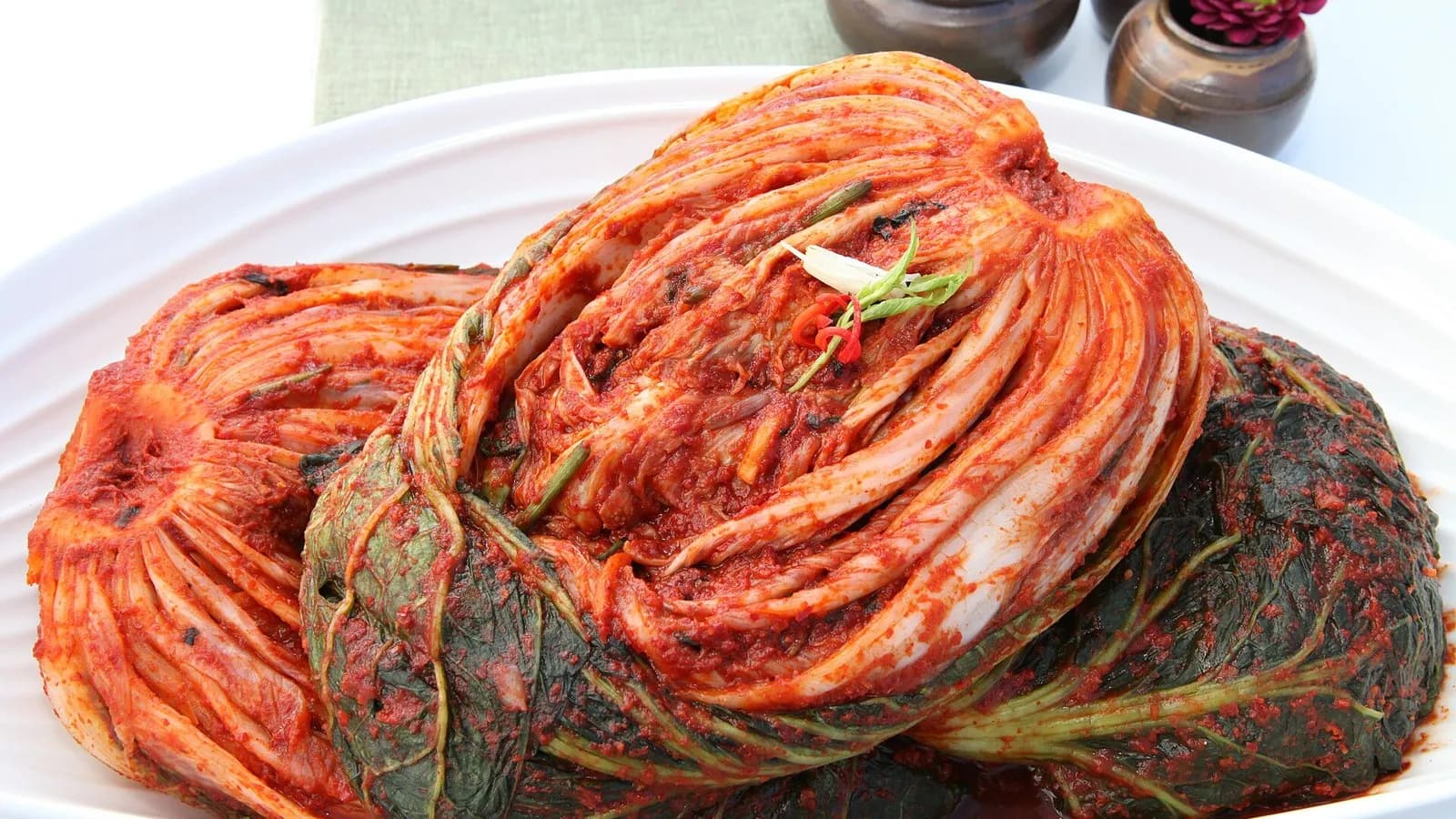
Every November, South Korea turns to a job that takes an afternoon, a lot of cabbage and a loud kitchen: kimjang, the making of winter kimchi. This year the cabbage is unusually cheap. The state buyer Korea Agro-Fisheries and Food Trade Corporation put the cost of kimjang ingredients for a household of four, based on 20 heads of napa cabbage, at 199,456 won, according to the Seoul Economic Daily on 11 November. That is 9 percent below last year, with the cabbage itself 26.5 percent cheaper at 54,980 won, while salted shrimp rose 40.2 percent and peeled garlic 21.6 percent.
Seoul is leaning into the glut. SBS reported on 3 November a record 64 billion won discount programme running from 9 November to 6 December, with up to 50 percent off sea salt, salted shrimp and anchovy sauce, and a campaign urging households to make one more head of kimchi and share it. The picture is not all rosy: fewer families make kimchi at home, and an industry official told Asia Business Daily in October that once labour is counted, buying packaged kimchi can be better value.
Kimjang is more than a chore. UNESCO inscribed it in 2013 on its list of intangible cultural heritage, describing communities that make large batches together in late autumn so every household has enough to last the winter. The recipe below is a single-head version of the classic, baechu kimchi, for a home kitchen and one big jar.
Ingredients
Makes about 1.5 kg of kimchi, enough for a 2 litre jar. Total time about 4 hours, plus 1 to 2 days of fermenting.
- 1 large napa cabbage, about 1.5 kg
- For the brine: 100 g coarse sea salt (not fine table salt), plus 1.5 litres water and 20 g more salt for sprinkling
- For the porridge: 1 tbsp sweet (glutinous) rice flour, 150 ml water
- 50 g Korean red pepper flakes (gochugaru), coarse grind
- 3 tbsp fish sauce, and 1 tbsp salted fermented shrimp (saeujeot), optional
- 6 cloves garlic, minced, and 10 g fresh ginger, grated
- 1 tbsp sugar
- 150 g Korean radish or daikon, cut in thin matchsticks
- 4 spring onions, cut into 3 cm lengths
Method
- Remove any tired outer leaves from the cabbage. Cut a 5 cm slit into the base, then pull the head apart along it into two halves, and again into quarters, keeping the core attached so the leaves hold together.
- Dissolve the 100 g salt in the water in a large bowl. Dunk each quarter, then sprinkle the extra 20 g salt between the leaves, concentrating it on the thick white stems.
- Leave the cabbage for 3 to 4 hours, turning the quarters every hour. It is ready when the thickest part of a stem bends into a U without snapping.
- Rinse each quarter three times in cold water, rubbing gently between the leaves. Taste a piece of stem: it should be pleasantly salty, not harsh. Drain cut side down for 30 minutes.
- Meanwhile, whisk the rice flour into the water in a small pan. Cook over medium heat, stirring, for 3 to 4 minutes until it thickens into a thin glossy paste. Cool completely.
- Stir the cooled porridge together with the gochugaru, fish sauce, shrimp if using, garlic, ginger and sugar, until you have a thick red paste. Fold in the radish and spring onions.
- Wearing gloves, spread the paste between every leaf of each quarter, working from the outside in and finishing with a coat on the outside. Fold the outer leaf around the quarter to make a neat parcel.
- Pack the parcels tightly into a clean jar or container, pressing down to remove air pockets and leaving 3 cm of space at the top. Rinse the bowl with 3 tbsp water and pour it over.
- Leave at room temperature for about 1 day in a warm kitchen, or 2 to 3 days in a cool one, opening the lid daily to release gas and pressing the kimchi under its liquid. Move it to the fridge once it smells pleasantly sour.
How long does kimchi take to ferment, and how long does it keep?
The first day or two at room temperature starts the fermentation, and the fridge slows it. Taste Korean Food says refrigerated kimchi keeps for about 3 to 6 months, while a home-cook guide from Kimchi Bazaar says the flavour develops over one to two weeks and is often best between two weeks and two months. As the weeks pass it grows sourer, which is when it turns into stews and fried rice.
Always open the jar slowly in the first days, because fermentation produces gas, and use clean tools every time you scoop. Cold storage was always part of the method: Wikipedia's entry on baechu-kimchi notes it was once stored underground in earthenware jars and is now kept in a kimchi refrigerator or ordinary fridge, ideally served at 4 to 10 C.
Can you change the recipe?
Yes, within limits. Leave out the fish sauce and shrimp for a vegetarian version and add 2 tbsp of light soy sauce and an extra pinch of salt. Reduce the gochugaru for a milder batch, or raise it to 80 g for a hotter one. A grated pear or apple in the paste adds a little sweetness, as many Korean cooks do. Do not use fine table salt for the brine: it dissolves fast and makes the cabbage too salty.
With cabbage this cheap and the cold arriving, the best time to make a jar is now. A single head will not feed a family through winter the way a traditional kimjang does, but it will see you through several bowls of rice and one very good fried-rice dinner.
Published in The Outspoken Digest
Editorial desk
Outspoken Digest Food DeskCooking, ingredients, restaurants and the economics of what ends up on the table.
Newsletter
The Digest, in your inbox
One edition, sent when it is ready. No noise, and your address is never passed on.
Read Next
More Recipes →
Turkey Monte Cristo Recipe: The Thanksgiving Leftovers Sandwich Chefs Are Making
Nov 27, 2026/4 min read

Scottish Shortbread Recipe: Buttery Fingers and Petticoat Tails for Christmas
Nov 27, 2026/4 min read
Honey-Glazed Ham With Orange and Cloves: A Thanksgiving Turkey Alternative That Needs No Brine
Nov 25, 2026/3 min read

Trifle Recipe: Classic English Sherry Trifle With Raspberries and Real Custard
Nov 25, 2026/4 min read