Scottish Shortbread Recipe: Buttery Fingers and Petticoat Tails for Christmas
Three ingredients, one gentle hand: a crumbly, pale gold Scottish shortbread with the 3:2:1 ratio, a rice flour option, petticoat tails and a brown butter twist.
Friday, November 27, 2026/4 min read
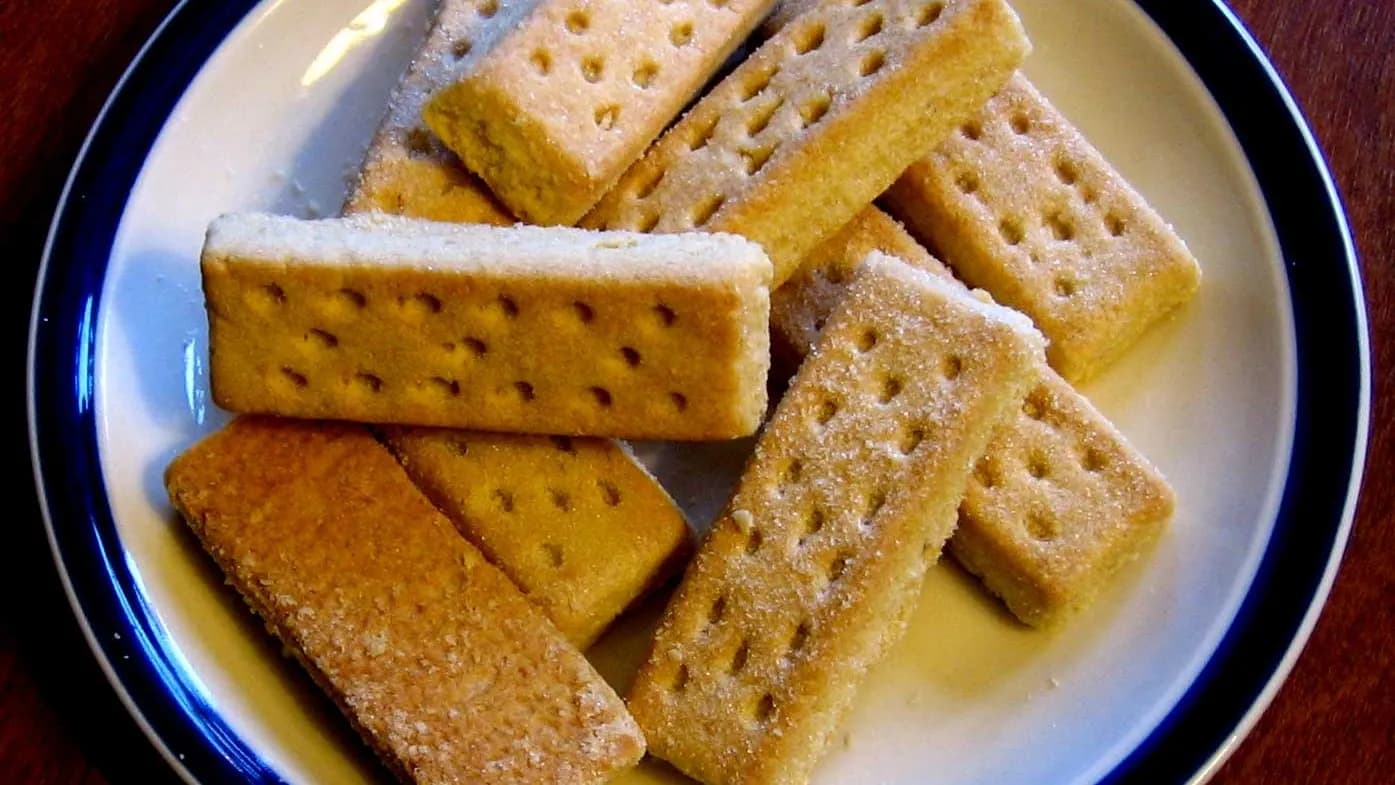
Shortbread is three ingredients and a lot of restraint. Butter, sugar and flour make a biscuit that snaps cleanly and then dissolves, and the only real skill is knowing when to stop working the dough. It is also the great Christmas biscuit of Scotland, a bake that began as a festival treat for Yule and Hogmanay, when butter and sugar were too dear for everyday use, according to Taste Scotland.
This year the shops have put it back in the spotlight. Walker's Shortbread announced a festive range in September, led by a petticoat tails tin at a recommended price of 13.50 pounds, the first time the brand has sold the shape that way. Trade magazine British Baker's Christmas 2026 trends report, published on 28 October, lists shortbread among the nostalgic classics and flags brown butter with ginger and chocolate as a flavour to watch in 2027. Homemade costs a fraction of the tin and tastes better by the second day.
It is an old biscuit. Wikipedia's history says shortbread was being made in Scotland in the twelfth century, that its first printed recipe dates from 1736, and that the popular link to Mary, Queen of Scots rests on thin evidence. The usual ratio is one part sugar to two of butter and three or more of flour, with no raising agent at all. The crumbly "short" texture comes from the fat, which stops gluten forming long strands.
Ingredients
Makes about 20 fingers. Total time about 1 hour 15 minutes, including chilling.
- 250 g plain flour
- 50 g rice flour (or use 300 g plain flour in total)
- 200 g unsalted butter, softened but not greasy
- 100 g caster sugar, plus 2 tbsp for sprinkling
- A good pinch of fine salt
Method
- Line a 20 cm by 30 cm tin, or a similar shallow rectangular tin, with baking parchment.
- Beat the butter and the 100 g of sugar for a minute or two, only until pale and combined. Do not whip air into it.
- Add the flours and salt. Mix with a wooden spoon, then your hands, just until there is no loose flour and the dough clumps when squeezed. Stop there, because extra handling toughens it.
- Press the dough into the tin in an even layer about 1 cm thick. Smooth the top with the back of a spoon.
- Chill for at least 30 minutes, so the edges stay sharp and the biscuit bakes evenly.
- Heat the oven to 150C (140C fan, gas mark 2). Prick the surface all over with a fork, which lets steam escape and keeps the shortbread flat.
- Bake for 20 to 25 minutes, until pale gold at the edges and still faintly underdone in the middle. Aim for pale gold, never brown.
- Sprinkle the 2 tbsp caster sugar over the top the moment it leaves the oven, then cut into fingers while it is still warm, within a couple of minutes. Once cold it will shatter instead of slicing.
- Leave the fingers in the tin until completely cool before lifting them out.
What is the difference between fingers and petticoat tails?
Fingers are cut from a thick slab. Petticoat tails are the older, fancier shape: a single round of dough with a crimped edge, scored into wedges before baking and cut apart as soon as it leaves the oven. The name's origin is uncertain, and Taste Scotland says it may come either from the French for little cakes or from the fluted panels of a hooped petticoat. Neither is proven. For petticoat tails, press the dough into a 20 cm round, crimp the edge with your fingertips and bake for 35 to 45 minutes.
Can you use brown butter, and how do you store shortbread?
You can, and it is the one variation worth the trouble. Brown 240 g of butter in a pan until it smells of toasted nuts, since browning cooks off water and leaves roughly the 200 g the recipe needs. Cool it until it is soft but solid, like normal softened butter, then carry on as above. If the butter is still liquid the dough will be greasy and spread.
Kept in an airtight tin, shortbread lasts about two weeks and often tastes better after a day or two. Taste Scotland adds that it freezes well, baked or as a raw shaped disc that can go straight into the oven with a few extra minutes. Note that "shortbread" is not a protected name in the United Kingdom, so the word on a packet tells you nothing about how much butter is in it. Your own tin will.
With Advent a few days away, a batch made this weekend will be at its best by the time the first calendar door opens. Wrap a few fingers in paper and a tin becomes a gift that costs far less than the shop version.
Published in The Outspoken Digest
Editorial desk
Outspoken Digest Food DeskCooking, ingredients, restaurants and the economics of what ends up on the table.
Newsletter
The Digest, in your inbox
One edition, sent when it is ready. No noise, and your address is never passed on.
Read Next
More Recipes →
Turkey Monte Cristo Recipe: The Thanksgiving Leftovers Sandwich Chefs Are Making
Nov 27, 2026/4 min read

Kimchi Recipe: Classic Napa Cabbage Baechu Kimchi as Korea's Kimjang Season Turns Cheap
Nov 27, 2026/4 min read
Honey-Glazed Ham With Orange and Cloves: A Thanksgiving Turkey Alternative That Needs No Brine
Nov 25, 2026/3 min read
Trifle Recipe: Classic English Sherry Trifle With Raspberries and Real Custard
Nov 25, 2026/4 min read