Bronze Ring Engraved With the Lighthouse of Alexandria Found in the Sunken Royal Palace on Antirhodos
Underwater archaeologists working in Alexandria's Eastern Harbour have recovered a signet ring that appears to show the vanished ancient wonder, the first such image known on a seal ring.
Tuesday, October 13, 2026/2 min read
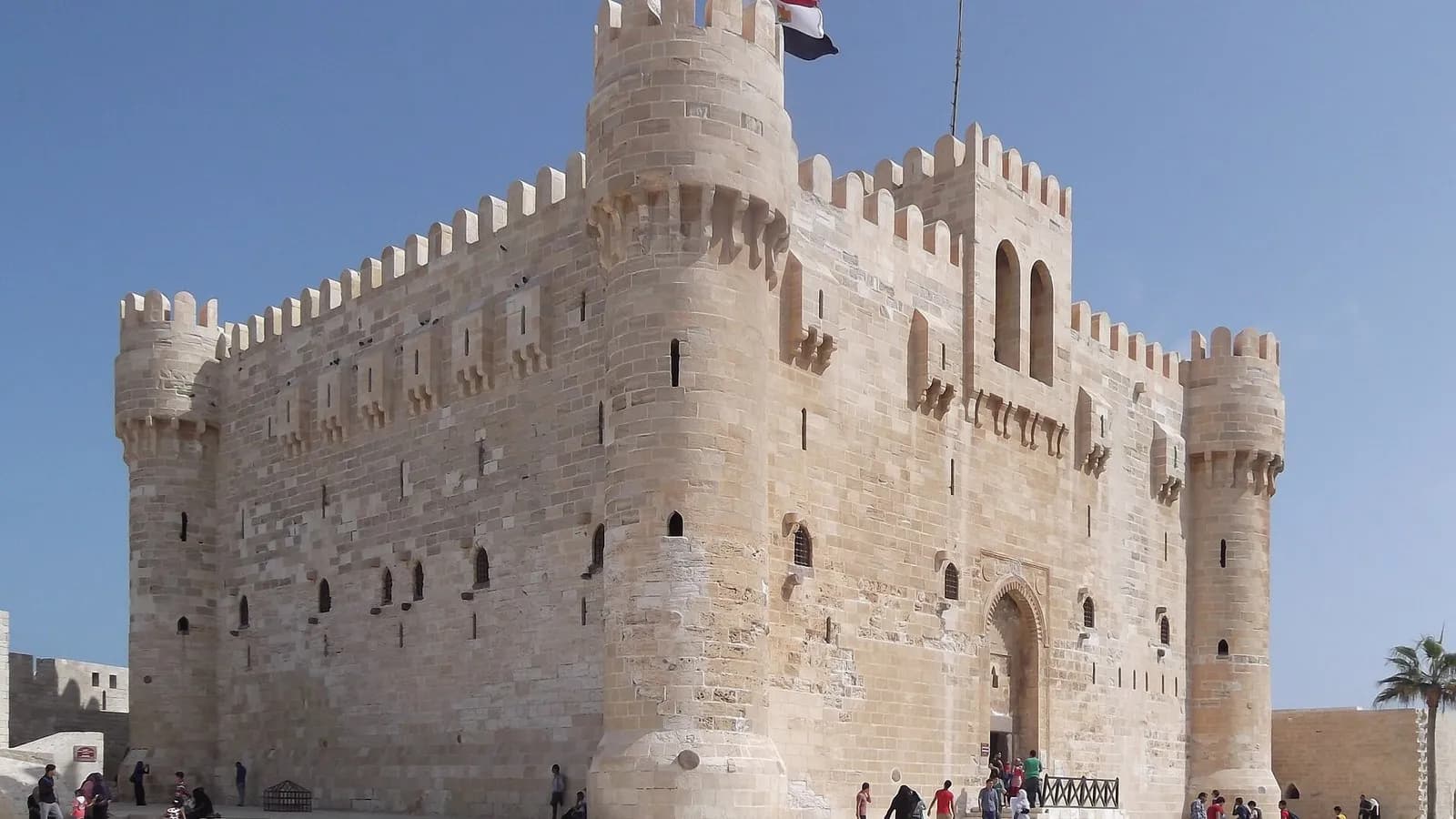
Almost nothing of the Lighthouse of Alexandria survives above or below the water, which is what makes a small bronze ring so striking. The European Institute for Underwater Archaeology (IEASM) announced on 7 October that its divers had recovered a signet ring engraved with the lighthouse, The National reported from Cairo.
Egypt's Ministry of Tourism and Antiquities called it the first time the lighthouse has been found pictured on a seal ring. The team, directed by Franck Goddio and working with the ministry, is supported by the Hilti Foundation.
Where was the ring found?
It came from Antirhodos, a now submerged island in Alexandria's Portus Magnus, the Great Harbour, once part of the royal quarters. The geographer Strabo, who visited Egypt between 29 and 25 BC, described a palace there. According to The Art Newspaper, the excavation has exposed architecture over several thousand square metres, with pottery and glass from the fourth century BC to the fourth century AD.
Goddio said the ring matters because it came from the palace, a former centre of power, and suggested the building held offices for administrative work, possibly including management of the lighthouse itself. The coverage does not say when the ring was found or at what depth.
How old is it, and who wore it?
Nobody knows yet. The engraving resembles images of the lighthouse on second-century AD coins, which points to that era, but no firm date has been given and the owner is unknown. Signet rings were pressed into wax or clay to mark documents, so such an object fits an administrative setting.
An outside specialist urged patience. Hector Williams of the University of British Columbia told The Art Newspaper that the little ring matches descriptions of the lighthouse, but that a detailed account of exactly where it was found is still needed to judge its context.
What do we know about the lighthouse itself?
The tower was completed around 280 BC under Ptolemy II on the island of Pharos and is thought to have stood more than 100 metres high. Earthquakes reduced it to ruins in the Middle Ages, and in the late 15th century the Mamluk sultan Qaitbay used its stone for a fortress on the site.
This season the mission worked at four sites in the Eastern Harbour: the temple of Isis, the palace and western mound on Antirhodos, the remains of an obelisk, and the Timonium, a palace linked to Mark Antony. The team now moves to Abu Qir Bay, where Goddio's divers found the submerged city of Thonis-Heracleion in 2000. The same team's earlier seasons turned up wicker baskets of doum palm fruit and grape seeds and a roughly 25-metre Ptolemaic galley in 2021, silver ritual instruments and a Greek sanctuary to Aphrodite in 2023, and a quartz sphinx bearing the sigil of Rameses II in 2025. A full publication of the ring, with its find spot and a firmer date, is the next thing scholars will want to see.
Published in The Outspoken Digest
Editorial desk
Outspoken Digest Science DeskReports for The Outspoken Digest across Technology, Latest Trends, Health.
Newsletter
The Digest, in your inbox
One edition, sent when it is ready. No noise, and your address is never passed on.
Read Next
More Technology →
Anthropic Researchers Warn Small AI Models Could Soon Copy Themselves Onto Smart TVs and Other Home Devices
Oct 13, 2026/3 min read

Microsoft Unveils Maia 300 With 288GB of HBM4 and a 96-Chip Rack, Claiming Up to Seven Times Maia 200 Throughput
Oct 13, 2026/2 min read

Nvidia Opens Its Vera Rubin Rack Designs to the Open Compute Project and Pushes Racks Up to 250 Kilowatts
Oct 13, 2026/2 min read
Gannets Survive 70 mph Dives Thanks to an Extra Joint Facet in Their Neck Bones, a New Study Finds
Oct 13, 2026/2 min read