Maftoul: The Hand-Rolled Palestinian Grain That Is Not Couscous
Larger, darker and nuttier than the North African version, rolled from bulgur and flour rather than semolina. Steamed over the broth it will be served with, which is the detail that carries the flavour.
Friday, August 7, 2026/3 min read
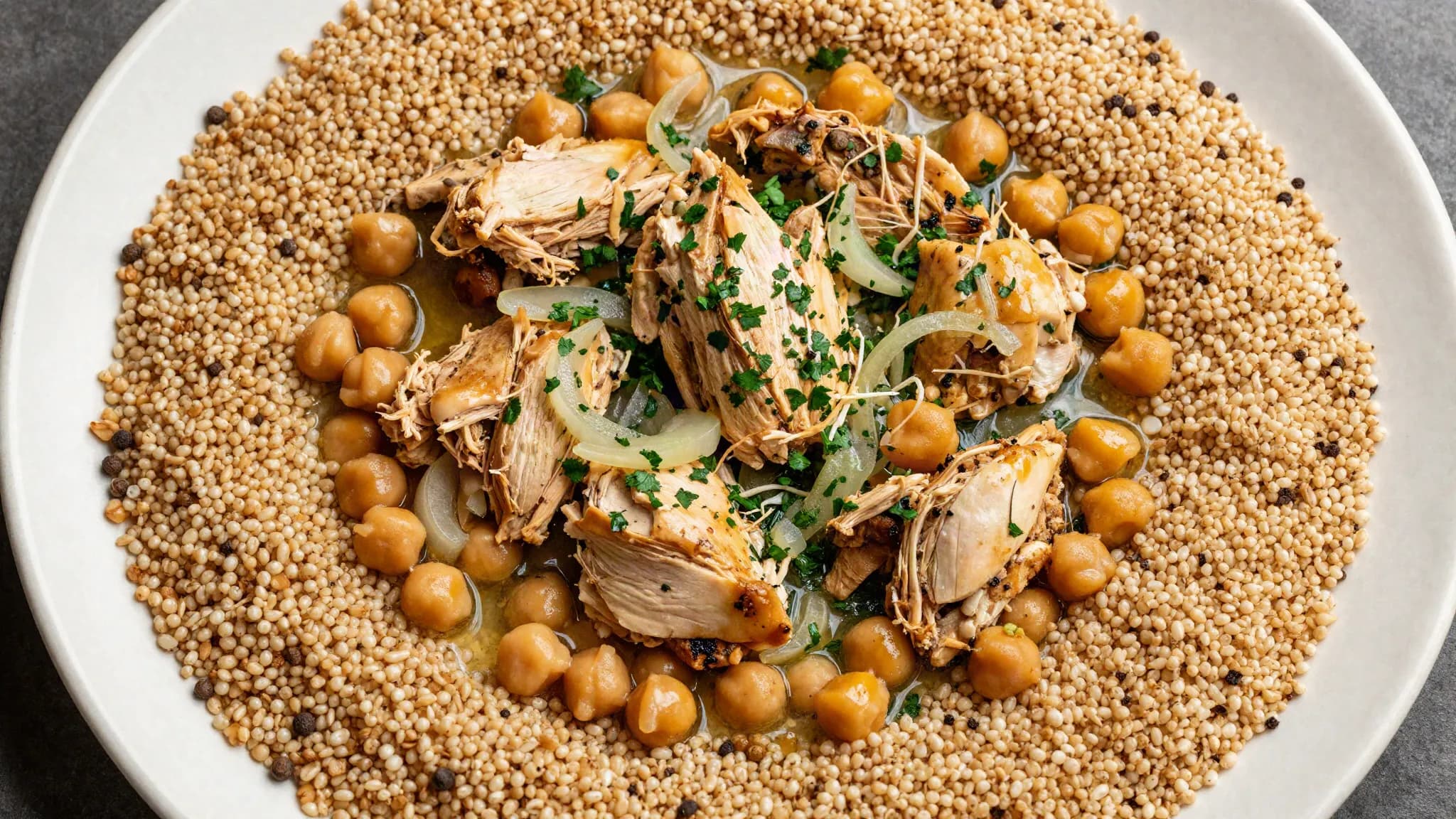
Maftoul gets translated as Palestinian couscous, which is convenient and slightly misleading. The two are cousins rather than versions of the same thing.
North African couscous is rolled from fine semolina and comes out small, pale and fluffy. Maftoul is rolled around a core of cracked bulgur wheat with flour worked onto the outside, producing pearls several times larger, darker in colour and distinctly nutty, with a chew that holds up under sauce.
The name comes from the Arabic for rolled, which describes the making: the grains are formed by hand, in a wide shallow bowl, with a circular motion that takes practice and a good deal of time. Very few people roll their own now. Good dried maftoul is widely available, and the recipe below assumes it.
Ingredients
Serves four to six.
- 400 g dried maftoul
- 1 whole chicken, jointed, or 8 chicken thighs on the bone
- 2 large onions, one quartered, one finely sliced
- 400 g cooked chickpeas, drained
- 2 tablespoons olive oil
- 1 teaspoon ground allspice
- 1 teaspoon ground cumin
- 1 teaspoon ground turmeric
- Half a teaspoon ground cinnamon
- Quarter teaspoon ground cardamom
- 1 cinnamon stick
- 2 bay leaves
- Salt and black pepper
- Flat-leaf parsley, chopped, to serve
- Toasted almonds, optional
Method
1. Build the broth
Put the chicken pieces in a large pot with the quartered onion, cinnamon stick, bay leaves, a teaspoon of salt and enough water to cover by about three centimetres.
Bring to a boil, skim the foam thoroughly, then reduce to a gentle simmer for forty minutes until the chicken is cooked through and the broth has taken on colour and body.
Lift out the chicken and set aside. Strain the broth and keep it hot. You will need it in three places: for steaming, for the stew, and for loosening at the end.
2. The onion base
In a wide pan, warm the olive oil and cook the sliced onion gently until soft and lightly golden, about twelve minutes. Do not rush this into browning; you want sweetness, not colour.
Add the allspice, cumin, turmeric, ground cinnamon and cardamom and stir for a minute until fragrant. Add the chickpeas, a good ladle of broth, and season. Simmer for ten minutes.
3. Steam the maftoul over the broth
This is the step that distinguishes a good maftoul from a boiled one.
Toss the dried maftoul with a tablespoon of olive oil so the grains are lightly coated and separate. Set a steamer, colander or couscoussier over the pot of simmering broth, making sure the base does not touch the liquid.
Add the maftoul, cover, and steam for fifteen minutes. Tip it into a bowl, break up any clumps with a fork, sprinkle over a few tablespoons of hot broth, and return it to steam for another ten to fifteen minutes until tender with a definite chew.
Steaming over the broth is what carries the flavour into the grain. Boiling maftoul in water produces something edible and comparatively flat.
4. Bring it together
Return the chicken to the chickpea pan with enough broth to keep everything moist, and warm through for ten minutes so the meat takes on the spice.
Pile the maftoul onto a wide platter, spoon the chickpeas and onions over it with plenty of the liquid, and arrange the chicken on top. Scatter with parsley and toasted almonds.
Serve with a bowl of the remaining hot broth on the side. Everyone adds their own, and most people add more than they expect to.
Notes
The most common mistake is under-seasoning the broth. It is the flavour base for the entire dish and it should taste properly seasoned on its own, before anything else meets it.
A vegetarian version works well: build the broth from onion, carrot, celery, the same whole spices and a generous quantity of chickpeas, and finish with roasted squash and plenty of olive oil.
Maftoul reheats well with a splash of broth. It sits comfortably alongside the other grain-forward dishes of the region, and if you are working your way through the Levantine repertoire, our tabbouleh and kousa mahshi both belong on the same table.
Published in The Outspoken Digest
Editorial desk
Outspoken Digest Food DeskCooking, ingredients, restaurants and the economics of what ends up on the table.
Newsletter
The Digest, in your inbox
One edition, sent when it is ready. No noise, and your address is never passed on.
Read Next
More Recipes →
Swangy Tamarind Glazed Chicken Wings for the Flavour Replacing Swicy on Fast Food Menus
Sep 29, 2026/3 min read

Baked Apple Cider Doughnuts for a Cider Season That Peaked Earlier Than the Calendar Says
Sep 29, 2026/3 min read
An Obatzda Bavarian Beer Cheese Dip for the Final Stretch of Oktoberfest 2026
Sep 29, 2026/3 min read