Authentic Lebanese Tabbouleh: Parsley Salad Proper
The real Lebanese tabbouleh is parsley, not bulgur. Learn the hand-chopping technique and why resting time makes this salad sing.
Wednesday, January 10, 2024/5 min read
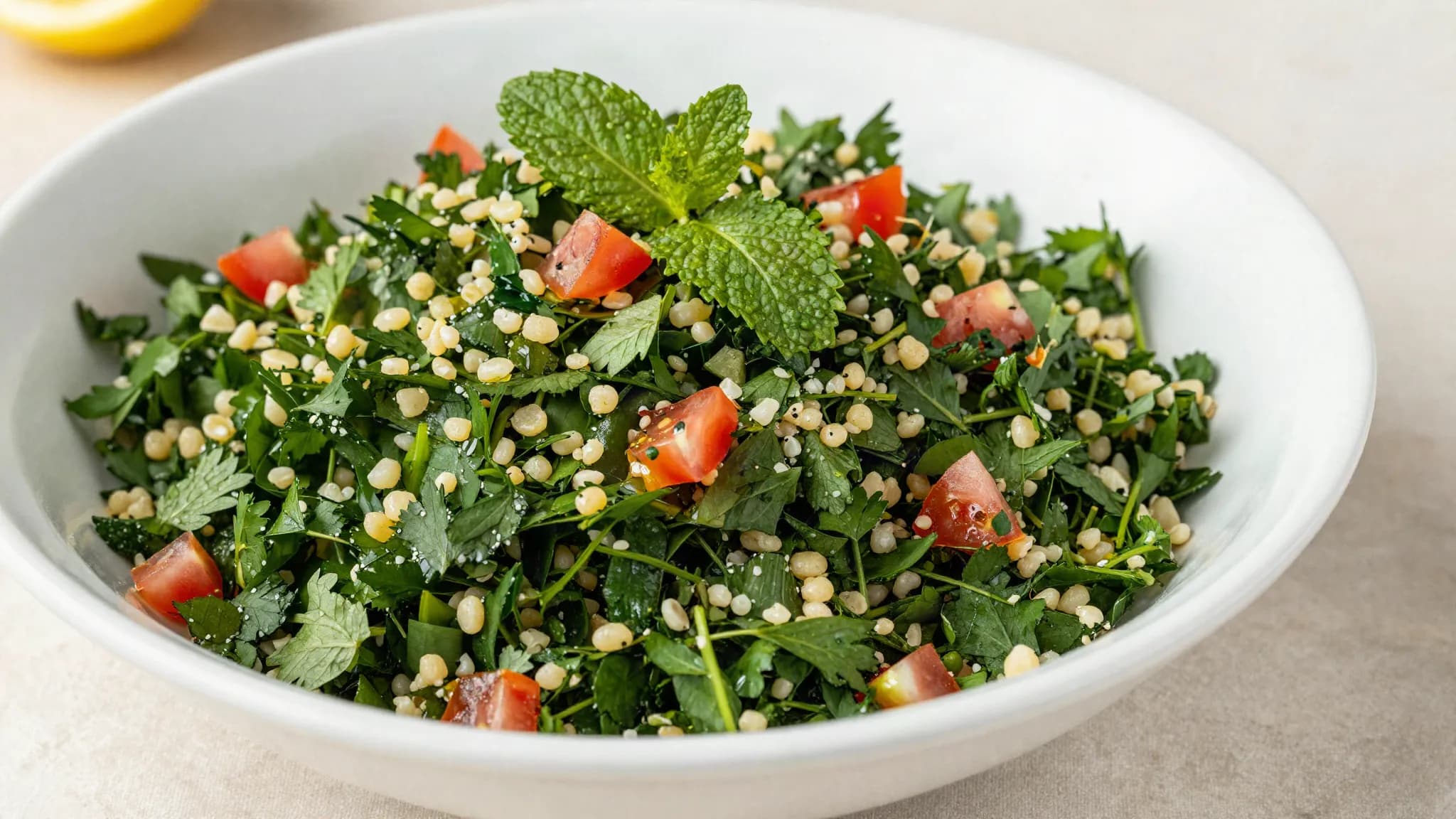
Tabbouleh is a Levantine salad of finely chopped flat-leaf parsley with tomato, spring onion, lemon and olive oil, and a small amount of fine bulgur swollen in the tomato juice. The ratio is the whole argument: it is a parsley salad containing bulgur, not a bulgur salad containing parsley, and the version sold in most supermarkets outside the region has that the wrong way round.
There is a fundamental misunderstanding in most tabbouleh recipes sold in supermarkets and reproduced in American cookbooks: they reverse the entire architecture of the dish. Authentic Lebanese tabbouleh is a parsley salad, delicate and bright, that happens to include a handful of fine bulgur for texture and substance. The bulgur is a guest, not the host. The parsley is everything. A proper tabbouleh should taste so much like springtime and fresh herbs that each bite feels like an apology to anyone who has eaten the grain-heavy versions that dominate grocery store containers.
Tabbouleh appears on Lebanese mezze spreads as a fresh counterpoint to rich and creamy dips, offering bright acidity and herbaceous vitality. The key to authentic tabbouleh is respecting the parsley's delicate structure. Finely chopped parsley, tomatoes, bulgur wheat, fresh mint, green onions, lemon and olive oil combine into a dish that sings when each ingredient is treated with care. The hand-chopping is not optional. A food processor will bruise and wilt the parsley, releasing juices that make the salad soggy and discolored. The work is meditative and worth your time.
The mint is essential but subtle, the tomatoes must be ripe and juicy, adding their moisture to the finished dish, and the lemon dressing cannot taste muted or shy. This is a salad that demands balance: the brightness of lemon cutting through the earthiness of parsley, the slight bitterness of fresh herbs tempered by the sweetness of ripe tomato. Let it rest and the flavors marry into something greater than their individual parts.
Ingredients
Serves 4 to 6 as part of a mezze platter. Total time: 30 minutes plus 15 minutes resting time.
- 150 g fresh flat-leaf parsley, washed and dried completely
- 50 g fresh mint leaves, washed and dried
- 3 medium ripe tomatoes, finely diced
- 4 green onions (scallions), white and light green parts only, thinly sliced
- 80 g fine bulgur wheat
- 150 ml fresh lemon juice (about 4 large lemons)
- 80 ml extra virgin olive oil
- 0.75 teaspoon salt, or to taste
- 0.25 teaspoon freshly ground black pepper
Method
- Place the fine bulgur in a bowl and pour enough boiling water over it to just cover. Let it sit for 5 to 10 minutes until the bulgur has absorbed the water and become tender. Drain through a fine sieve, pressing gently to remove excess moisture. Spread on paper towels to dry further while you prepare the other ingredients.
- Wash and thoroughly dry the parsley and mint. This step is non-negotiable: wet herbs will release water and make your salad soggy and discolored. Pat completely dry with paper towels.
- Hold a bunch of parsley together tightly and slice it very thin, as though you were slicing a cigar lengthwise. Then chop crosswise finely until you have uniformly small pieces. Work with perhaps one-quarter of the parsley bunch at a time. This hand-chopping technique takes 10 to 15 minutes for the full amount but preserves the delicate structure of the herb.
- Chop the mint leaves by the same method, finely and carefully.
- In a large bowl, combine the chopped parsley, chopped mint, diced tomatoes, sliced green onions, and drained bulgur. Toss gently to combine.
- In a small bowl, whisk together the lemon juice, olive oil, salt, and pepper. Pour the dressing over the tabbouleh and toss gently but thoroughly, ensuring every piece of parsley receives some dressing.
- Taste for seasoning. The salad should taste bright and lemony. Add more salt or lemon juice as needed. Let the tabbouleh rest at room temperature for 15 to 30 minutes before serving, allowing the flavors to marry and the bulgur to absorb the juices more fully.
Serving and Variations
Serve tabbouleh as part of a larger mezze platter alongside hummus, labneh, and warm pita bread. In Lebanon, it is often eaten by scooping it up with fresh lettuce leaves or romaine lettuce, which prevents the salad from drying out and adds a pleasant crisp element. Tabbouleh keeps in the refrigerator for up to 2 days in an airtight container, though the parsley will gradually fade in color and texture. Some cooks add a handful of pomegranate arils for sweetness and visual interest, or a few toasted pine nuts for crunch, though purists say the salad needs no embellishment. You can also substitute fresh cilantro for some of the parsley if desired, though this is not traditional.
Proper tabbouleh tastes like proof that simplicity and technique can create something genuinely transcendent.
What is tabbouleh?
A herb salad from the Levant, eaten as part of a mezze rather than as a side dish. It is old, it is Lebanese and Syrian in origin, and in Lebanon it is treated as close to a national dish.
Traditionally it is not eaten with a fork. It is scooped with cos lettuce leaves or with cabbage, which is also why the chop needs to be fine enough to sit on a leaf.
Why do you have to chop it by hand?
Because a food processor tears rather than cuts. Torn parsley leaks water, bruises, and turns the salad dark and soggy within minutes, and no amount of lemon rescues it.
A sharp knife and four minutes gives you clean-cut leaves that stay separate and bright. Dry the parsley completely first: wet leaves bruise as you cut them, which produces the same problem more slowly.
Is tabbouleh healthy?
Unusually so, for something that is mostly enjoyed rather than endured. It is largely raw herbs and vegetables, dressed with olive oil and lemon, with a small amount of whole grain. Parsley is a significant source of vitamin K and vitamin C.
The caveats are ordinary: the olive oil makes it more calorific than it looks, and shop-bought versions are usually heavy on bulgur and light on herbs, which changes what you are actually eating.
Can you make tabbouleh gluten free?
Yes, and it is one of the easier Levantine dishes to convert, because the grain is such a small part of it. Bulgur is cracked wheat, so it has to be replaced rather than reduced.
Toasted buckwheat groats are the closest substitute in size and bite, and buckwheat is not wheat despite the name. Quinoa and millet both work too. We set the method out in full in gluten-free buckwheat tabbouleh, including the certification point that matters if you have coeliac disease.
What is the difference between tabbouleh and fattoush?
Tabbouleh is a finely chopped herb salad bound by lemon and oil. Fattoush is a chopped vegetable salad with torn pieces of fried or toasted flatbread through it, dressed with sumac and usually pomegranate molasses.
Tabbouleh is about the parsley. Fattoush is about the bread going soft in the dressing. They appear on the same mezze table and are doing different jobs.
Published in The Outspoken Digest
Editorial desk
Outspoken Digest Food DeskCooking, ingredients, restaurants and the economics of what ends up on the table.
Newsletter
The Digest, in your inbox
One edition, sent when it is ready. No noise, and your address is never passed on.
Read Next
More Recipes →
Swangy Tamarind Glazed Chicken Wings for the Flavour Replacing Swicy on Fast Food Menus
Sep 29, 2026/3 min read

Baked Apple Cider Doughnuts for a Cider Season That Peaked Earlier Than the Calendar Says
Sep 29, 2026/3 min read
An Obatzda Bavarian Beer Cheese Dip for the Final Stretch of Oktoberfest 2026
Sep 29, 2026/3 min read