Buckwheat Tabbouleh: The Bulgur Swap That Does Not Taste Like a Compromise
Tabbouleh is a parsley salad with a little grain in it, not the other way round. That makes it one of the easiest Levantine dishes to take gluten free, provided you pick the right grain.
Tuesday, August 11, 2026/3 min read
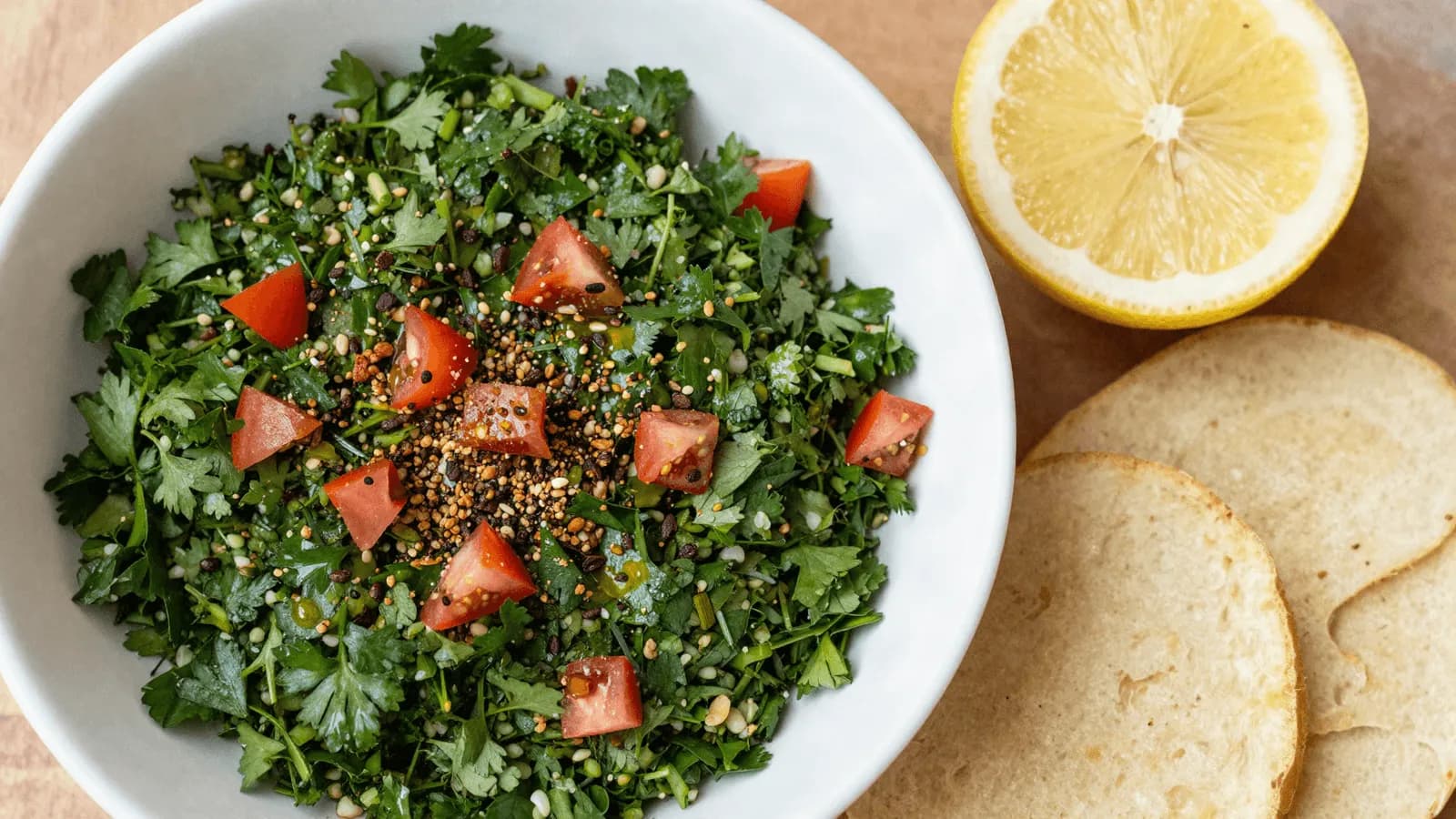
Tabbouleh gets misrepresented outside the Levant, where it often arrives as a bowl of wet bulgur with some green flecks in it. Made properly it is overwhelmingly a parsley salad, with fine bulgur present in a supporting role, swollen in the juice of the tomatoes and the lemon rather than boiled.
That proportion is good news if you cannot eat gluten. Bulgur is cracked wheat, so the classic recipe is out, but the grain is such a small share of the dish that the substitution is barely noticeable when you choose well.
Choosing the swap
Toasted buckwheat groats, sold as kasha, are the best option. Despite the name buckwheat is not wheat and contains no gluten. The groats are small, nutty, hold a little bite, and soak up dressing the way fine bulgur does.
Two alternatives if you cannot find them. Quinoa works and is widely available, though it is softer and its own flavour is more assertive. Millet is closer in size and milder, and is the better choice if quinoa's bitterness bothers you.
What does not work is rice, which goes claggy, or any of the gluten-free couscous products made from corn, which turn to paste in the lemon juice.
Ingredients
Serves four as a mezze.
- 3 tablespoons toasted buckwheat groats
- 2 large bunches flat-leaf parsley, roughly 200 g with stalks
- A small bunch of mint, about 20 g of leaves
- 4 ripe tomatoes, small and firm
- 4 spring onions, or half a small white onion
- Juice of 2 lemons, more to taste
- 60 ml good olive oil
- Salt
- A pinch of ground allspice, optional but traditional in some households
Method
1. Cook the buckwheat, briefly
Rinse the groats, then simmer in plenty of salted water for six to eight minutes until just tender with a slight bite. Drain well and spread on a plate to cool and dry.
Do not cook it to softness. Buckwheat collapses quickly and mushy grains ruin the texture of the salad more than the wrong grain would.
2. Deal with the tomatoes properly
Cut them into a very small dice, about half a centimetre. Put them in a sieve over a bowl with a pinch of salt and leave for ten minutes.
Keep the juice. That liquid, not water, is what should be flavouring the grain. Pour it over the cooled buckwheat and leave it to absorb while you do the herbs.
3. Chop the parsley by hand
This is the step that separates good tabbouleh from bad, and there is no shortcut. Wash and dry the parsley completely, because wet parsley bruises and the salad turns dark and soggy.
Gather the leaves tightly, and slice as finely as your knife allows. A food processor tears rather than cuts, releases water, and gives you green pulp. Use a sharp knife and take the four minutes.
Stalks are a matter of household preference. The fine upper stalks are fine and add texture. The thick lower ones should go.
4. Assemble late
Combine the parsley, mint, drained tomatoes, spring onions and the soaked buckwheat. Dress with lemon juice, olive oil, salt and the allspice if using.
Dress it just before serving. Tabbouleh dressed an hour ahead weeps and loses its lift.
5. Taste for acid
It should be noticeably lemony, more than feels comfortable when you first taste it, because the herbs mute the acid quickly. If it tastes balanced in the bowl it will taste flat on the plate.
Notes
Serve with cos lettuce leaves for scooping, or with a gluten-free flatbread. Our psyllium-based za'atar flatbread is built to fold without cracking, which is exactly what you need here.
It sits well on a mezze table alongside moutabal and a good hummus, both of which are naturally gluten free, and it makes a summer lunch on its own with feta.
The coeliac footnote
Buckwheat is gluten free as a plant, but it is frequently processed in facilities that also handle wheat, so buy a certified product if you have coeliac disease. The same applies to oats and to spice blends, and the reasoning is in our guide to gluten-free flours and cross-contamination.
If you are still eating gluten and suspect coeliac disease, get tested before you cut it out. The test does not work once you have stopped.
Published in The Outspoken Digest
Editorial desk
Outspoken Digest Food DeskCooking, ingredients, restaurants and the economics of what ends up on the table.
Newsletter
The Digest, in your inbox
One edition, sent when it is ready. No noise, and your address is never passed on.
Read Next
More Recipes →
Swangy Tamarind Glazed Chicken Wings for the Flavour Replacing Swicy on Fast Food Menus
Sep 29, 2026/3 min read

Baked Apple Cider Doughnuts for a Cider Season That Peaked Earlier Than the Calendar Says
Sep 29, 2026/3 min read
An Obatzda Bavarian Beer Cheese Dip for the Final Stretch of Oktoberfest 2026
Sep 29, 2026/3 min read