The Immune System Appears to Remember Obesity for Years After the Weight Has Gone
Work in EMBO Reports finds obesity leaves a chemical mark on CD4 T cells that outlasts weight loss. The authors suggest the immune system may need years of sustained maintenance to reset, and say plainly that no long term human study confirms it.
Tuesday, September 1, 2026/3 min read
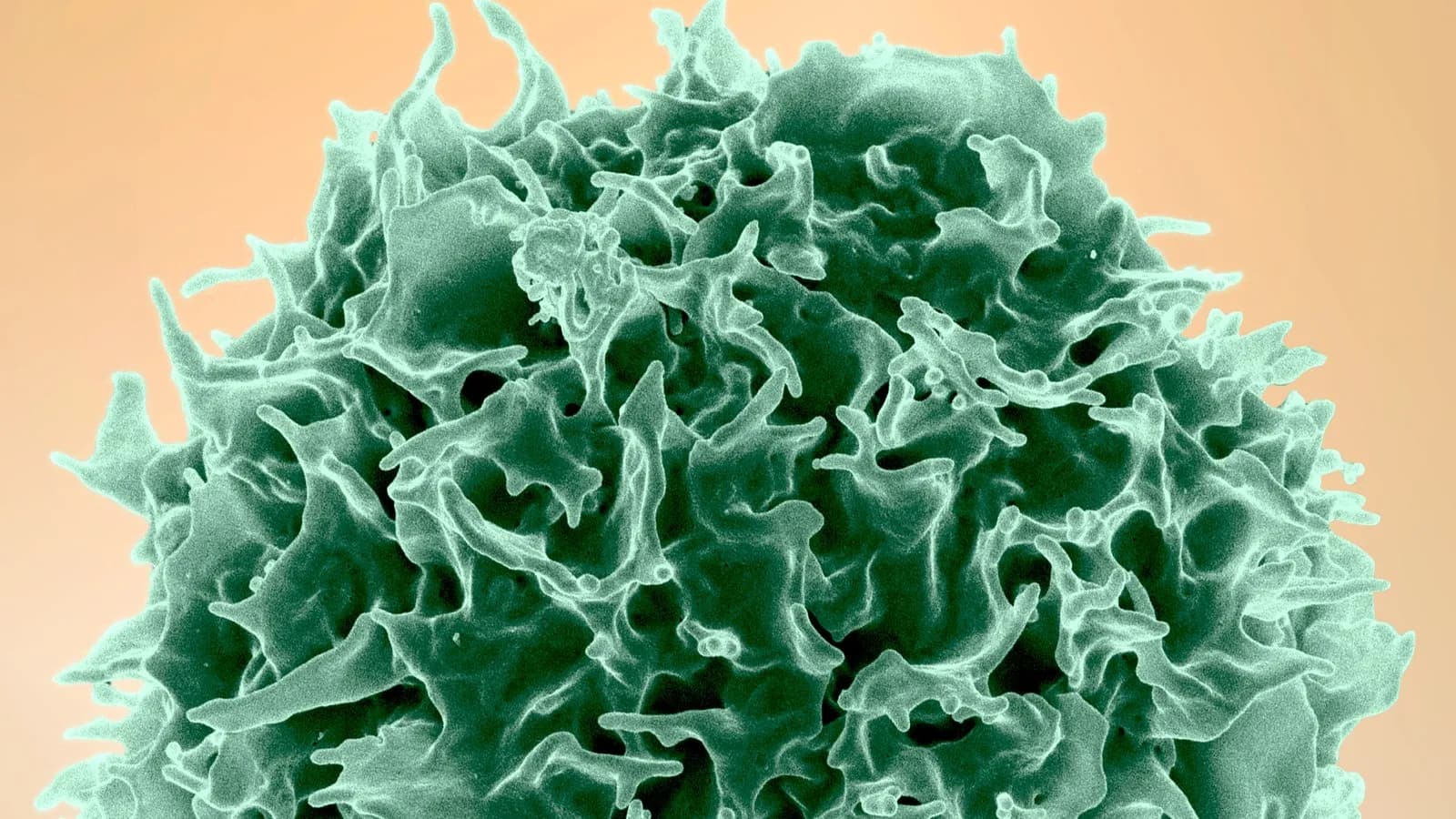
Losing weight does not immediately return the immune system to the state it was in before. According to work published in EMBO Reports earlier this year, it may take years, and the mechanism is a chemical mark left on a particular kind of white blood cell.
The cells are CD4 T lymphocytes, the coordinators of the adaptive immune response. The mark is DNA methylation, a tag that sits on the genome and changes which genes a cell will use without changing the genes themselves.
What the finding actually says
That obesity writes a pattern into those cells which persists after the weight has gone, and that while it persists, immune regulation does not return to normal.
The analysis points to two processes as the likely carriers: autophagy, the routine by which a cell clears out its own damaged parts, and immune senescence, the state in which a cell stops dividing properly and starts emitting inflammatory signals instead. Two molecular candidates are named as possible targets.
Put together, the argument is that a person with a history of obesity may remain more vulnerable to chronic inflammation, and to regaining the weight, for reasons that sit inside their immune cells rather than in their behaviour.
The number everyone will quote, and what it rests on
Five to ten years.
That is the range the authors suggest immune recovery might require, given sustained weight maintenance. It is also, in their own words, unconfirmed by long term human studies.
So it is a projection from a mechanism, not a measurement of people. That distinction is the whole difference between an interesting hypothesis and a clinical fact, and it will be the first thing lost when this reaches a headline. Anyone quoting five to ten years should be able to say what it is a range of, and the honest answer is: how long the authors think it might take, based on how slowly this kind of mark is known to fade.
The gene names in the mechanistic work follow the mouse convention, which is a fair signal that the causal parts of this were established in animals. Human relevance is inferred, as it usually is at this stage.
Why it matters more this year than it would have five years ago
Because a very large number of people are currently losing a very large amount of weight, quickly, on drugs.
If the immune system carries a memory of obesity that outlasts the weight, then the question of what happens after the weight comes off becomes a medical question rather than a cosmetic one, and the answer is not simply that the risk goes away. The person on the other side of the loss may be carrying a residual inflammatory profile that no scale will show.
That has an obvious and uncomfortable implication for how these drugs are discussed. The benefit is real and it may take longer to fully arrive than the weight took to leave. We looked at what else the evidence says about body composition in the muscle loss question, and at what actually gets measured well in this morning's piece on waist measurement.
What it is not
It is not a reason to skip losing weight, and it is not evidence that weight loss fails.
A mechanism that says benefits accrue slowly is an argument for starting sooner and for maintaining longer, not for giving up. It also cuts against the most damaging idea in this field, which is that regain is a failure of character. If the immune and metabolic systems retain a bias toward the previous state, then the person fighting that bias is fighting biology with a documented mechanism, and describing it as weak will is both cruel and wrong.
What would confirm it
The obvious study, and it is a hard one: follow people who have lost substantial weight and kept it off, sample their T cells over years, and see whether the methylation pattern fades on the timescale predicted.
That takes a decade and money nobody has committed. Until then this stays what it currently is, which is a plausible and well specified mechanism with a suggested timescale attached to it, and no human data on the timescale itself.
Published in The Outspoken Digest
Editorial desk
Outspoken Digest Health DeskMedicine, public health and the research behind the headlines, read carefully.
Newsletter
The Digest, in your inbox
One edition, sent when it is ready. No noise, and your address is never passed on.
Read Next
More Health →
Cochrane Review Finds Medical Cannabis Has No Clear Benefit for Insomnia, With Weak Evidence Either Way
Oct 13, 2026/2 min read

Lancet Commission Names 17 Threats to Global Health Through 2100, With Obesity the Largest by Burden
Oct 12, 2026/2 min read

FDA Approves Pritelivir for Herpes Lesions That Resist Standard Antivirals in Immunocompromised Adults
Oct 10, 2026/2 min read