OpenAI Is Buying Mac Minis by the Ten Thousand, Because Teaching a Model to Use a Computer Needs Computers
Training an agent to operate an operating system means running an operating system, watching the screen, taking an action and being scored, millions of times over. That work wants breadth across many machines rather than the largest possible GPU.
Outspoken Digest Technology Desk
Tuesday, September 1, 2026/3 min read
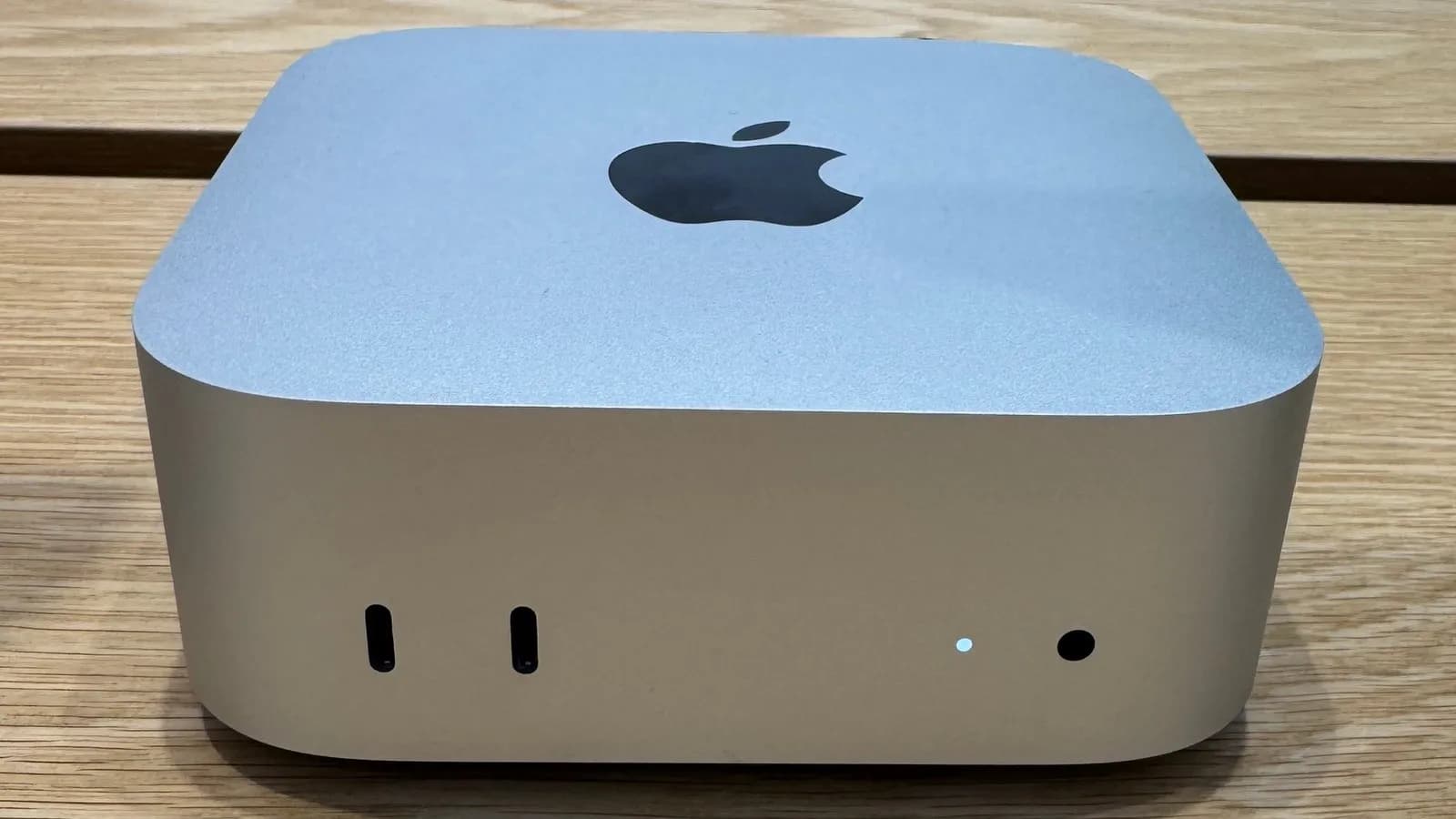
OpenAI has bought tens of thousands of Mac minis and Mac Studios to train computer-use agents, according to a report in The Information. Anthropic is reported to be doing something similar, renting Mac minis through Amazon Web Services.
It sounds like a strange purchase for a company that has spent years being defined by how many of Nvidia's chips it can get hold of. It is actually the most legible thing either company has done in a while, because of what this particular kind of training is.
Why the work is different
Teaching a model to use a computer is not teaching it to predict text.
Pre-training a large model is one enormous, tightly coupled mathematical problem, and it wants the fastest possible accelerators wired together with the fastest possible interconnect. That is what the data centre build-out of the last three years has been for, and we traced where the money went in the hardware gold rush.
Training an agent to operate a machine is a different shape entirely. The model has to run inside a real operating system, look at what is on the screen, click something, and find out whether it worked. Then again. Then a million times more. Each attempt is small, mostly waiting on an interface, and completely independent of every other attempt.
That workload does not want one enormous machine. It wants thousands of ordinary ones, each running a real desktop, all going at once.
Why Apple hardware specifically
Unified memory, and the fact that macOS is a real target.
Apple pools memory across the processor and graphics on one chip, so a modest machine can hold a large working set without the copying that separate memories force. This work is bound by memory and by the speed of the interface being driven, not by raw arithmetic, which is precisely the case where a Mac mini stops looking underpowered and starts looking well matched.
There is also the obvious point that is easy to miss. If you want an agent that can use a Mac, it has to practise on a Mac. A large fraction of the desktop software people actually want automated runs on macOS, and no amount of accelerator capacity substitutes for the operating system itself.
What it says about where agents are
That the hard part has moved.
For three years the constraint on capability was the size of the model and the compute to train it. What this purchase implies is that the constraint on agents is now experience: the number of times a system has actually tried to complete a real task in a real interface and been told whether it succeeded.
That is a slower, more physical bottleneck than buying accelerators, and it cannot be shortcut by a bigger cluster. It is also a reasonable explanation for why agentic products have been so much less impressive than the underlying models. The models are capable and inexperienced. We looked at the enterprise version of that gap in the coding agents, where the difference between a model that can write the code and a system that can finish the job is most visible.
The Apple angle nobody planned
Delivery times on high memory Mac mini and Mac Studio configurations have reportedly stretched to weeks or months, and Apple refreshed both lines on 25 August, earlier than expected.
Apple has spent this cycle being described as the company that missed the artificial intelligence build-out. It now turns out to be selling the machines that a particular and growing part of it runs on, without having positioned itself for that at all. A consumer desktop, bought by the pallet, as training infrastructure.
Whether that is a business worth anything to Apple is a separate question. Tens of thousands of Mac minis is a rounding error against iPhone revenue, and hardware bought at retail configuration prices is not a data centre contract. What it does do is put Apple silicon inside the training loop of the products its rivals are building, which is a stranger position than any of the parties involved intended.
The part to hold lightly
This is reporting, not an announcement.
Neither company has confirmed the numbers, the figure of tens of thousands is a range rather than a count, and the strategic reading above follows from the purchase being real and roughly that size. If it turns out to be a smaller pilot, the argument about where the bottleneck sits is unaffected, but the scale of the conclusion is.
Published in The Outspoken Digest
Editorial desk
Outspoken Digest Technology DeskSoftware, hardware, artificial intelligence and what they change for everyone else.
Newsletter
The Digest, in your inbox
One edition, sent when it is ready. No noise, and your address is never passed on.
Read Next
More Technology →
SpaceX Agrees to Buy a Nationwide Block of 800 MHz Spectrum, Reportedly for $8 Billion, to Back Starlink Mobile
Oct 9, 2026/3 min read

Webb and MeerKAT Find the Most Distant Fast Radio Burst Yet, From a Small Galaxy About 11 Billion Years Back
Oct 9, 2026/2 min read

Finland Orders Google to Stop Forest Clearing at Two Data Centre Sites Until Environmental Reviews Finish
Oct 9, 2026/3 min read

Manus Raised More Than $500 Million Six Months After China Forced Meta to Unwind Its $2 Billion Takeover
Oct 9, 2026/2 min read