Sabudana Khichdi Is Fasting Food, Which Is Why It Is Made of Almost Nothing but Starch
Tapioca pearls, peanuts, potato and cumin. The dish exists because Hindu fasting rules exclude grains and most spices, and the constraint produced something people now eat on days they are not fasting at all.
Friday, September 4, 2026/3 min read
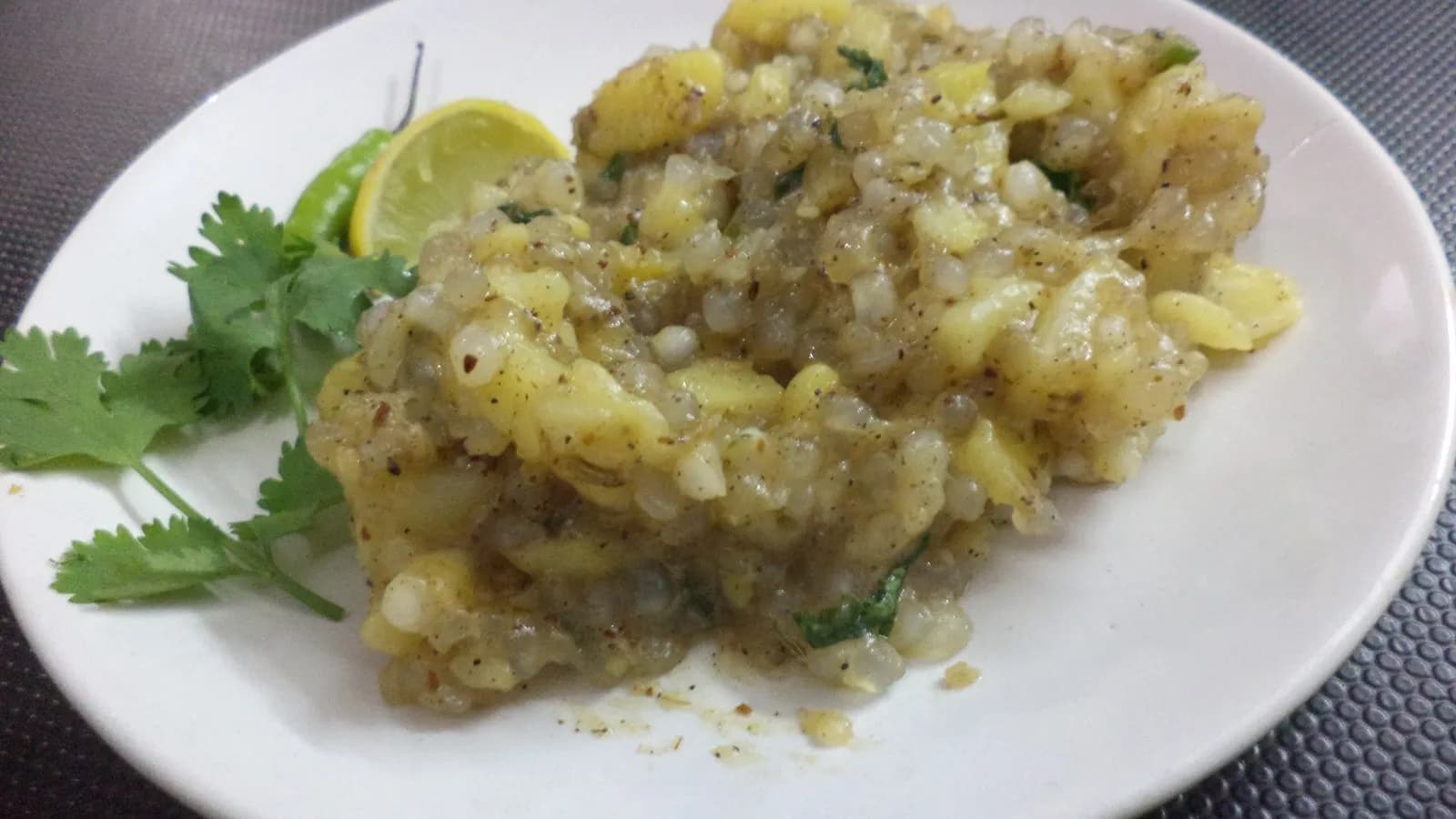
Religious fasting in India rarely means eating nothing. It usually means eating within a narrowed set of permitted foods, and the interesting thing about those constraints is that they produced a whole cuisine.
On vrat or upvas days, grains are typically excluded: no wheat, no rice, no lentils. So are onion and garlic, and often ordinary salt in favour of rock salt. What remains is potato, peanut, certain non-grain flours such as buckwheat and water chestnut, dairy, fruit, and sabudana.
Sabudana is tapioca pearl, made from cassava starch, and it is almost pure carbohydrate. That is not an accident of the recipe. It is the point: a food that provides energy without breaching the rules.
The soak is the entire recipe
Every failure of this dish happens before any heat is applied.
Sabudana khichdi goes wrong in one of two ways. Undersoaked, the pearls stay hard in the middle and are unpleasant to bite. Oversoaked, they dissolve into a single gluey mass. Both are irreversible.
The method that works: rinse the pearls in cold water three or four times, rubbing them between your fingers, until the water runs clear rather than milky. You are washing off surface starch, which is what glues them together.
Then drain them completely and add just enough fresh water to sit level with the top of the pearls, no more. Cover and leave for four to six hours, or overnight.
The test is simple. Press a pearl between thumb and forefinger. It should crush completely with no hard core, and the pearls should be separate and slightly squeaky rather than sitting in liquid. If there is water left in the bowl, drain it and leave them another half hour to absorb it.
The recipe
For two.
- 200g sabudana, soaked as above
- 100g raw peanuts
- 2 tbsp ghee or peanut oil
- 1 tsp cumin seed
- 2 green chillies, finely chopped
- 10 curry leaves, if you use them
- 1 medium potato, cut into small cubes
- 1 tsp rock salt, or ordinary salt if not observing
- 1 tsp sugar
- Juice of half a lime, and coriander to finish
Toast the peanuts in a dry pan until they smell roasted and the skins loosen, then rub off the skins and crush them coarsely. Coarse, not powdered. Half of the pleasure of this dish is the texture contrast between soft pearl and broken peanut.
Mix the crushed peanuts, salt and sugar into the drained sabudana with your hands before it goes anywhere near the pan. Coating the pearls in peanut and fat is the second defence against clumping.
Heat the ghee, add cumin, then chillies and curry leaves, then the potato. Fry the potato until cooked through and golden, about eight minutes, and cover the pan for part of it.
Add the sabudana mixture, turn the heat to medium, and stir gently for three to four minutes only, until the pearls turn from opaque white to translucent.
Then stop. Overcooked sabudana turns to glue, and the transition happens quickly. Finish with lime and coriander off the heat.
Nutrition, honestly
This is not a health food and it is not pretending to be.
Tapioca is refined starch with very little protein, fibre or micronutrient content. The peanuts contribute most of the protein and fat in the dish, which is why they are not a garnish and should not be reduced. For anyone managing blood glucose, this is a high-glycaemic meal and the peanuts and the lime are doing useful work slowing it down.
Eaten occasionally, as it traditionally is, none of that matters. Marketed as a wellness breakfast, it would be nonsense. The related question of what religious fasting does metabolically is covered in our piece on Ramadan fasting, and the trial evidence on fasting more generally is in this report.
Notes
Nylon sabudana, the common modern variety, absorbs faster than older types. Check at four hours rather than assuming overnight.
The dish is vegan if you use oil rather than ghee, which is a straightforward swap here.
Leftovers do not reheat well. Sabudana khichdi is a dish to make and eat.
Published in The Outspoken Digest
Editorial desk
Outspoken Digest Food DeskCooking, ingredients, restaurants and the economics of what ends up on the table.
Newsletter
The Digest, in your inbox
One edition, sent when it is ready. No noise, and your address is never passed on.
Read Next
More Recipes →
Swangy Tamarind Glazed Chicken Wings for the Flavour Replacing Swicy on Fast Food Menus
Sep 29, 2026/3 min read

Baked Apple Cider Doughnuts for a Cider Season That Peaked Earlier Than the Calendar Says
Sep 29, 2026/3 min read
An Obatzda Bavarian Beer Cheese Dip for the Final Stretch of Oktoberfest 2026
Sep 29, 2026/3 min read