Saudi Arabia Stopped Loading Oil at Yanbu, a Houthi Drone Was Shot Down South of Mecca, and Four Ships Crossed Hormuz
With the East-West pipeline still shut, no Saudi crude has left the Red Sea since 11 September and Europe's late-September cargoes are being cancelled. The coalition called the Mecca drone a red line. An American drone killed the crews of two IRGC boats.
Thursday, September 17, 2026/4 min read
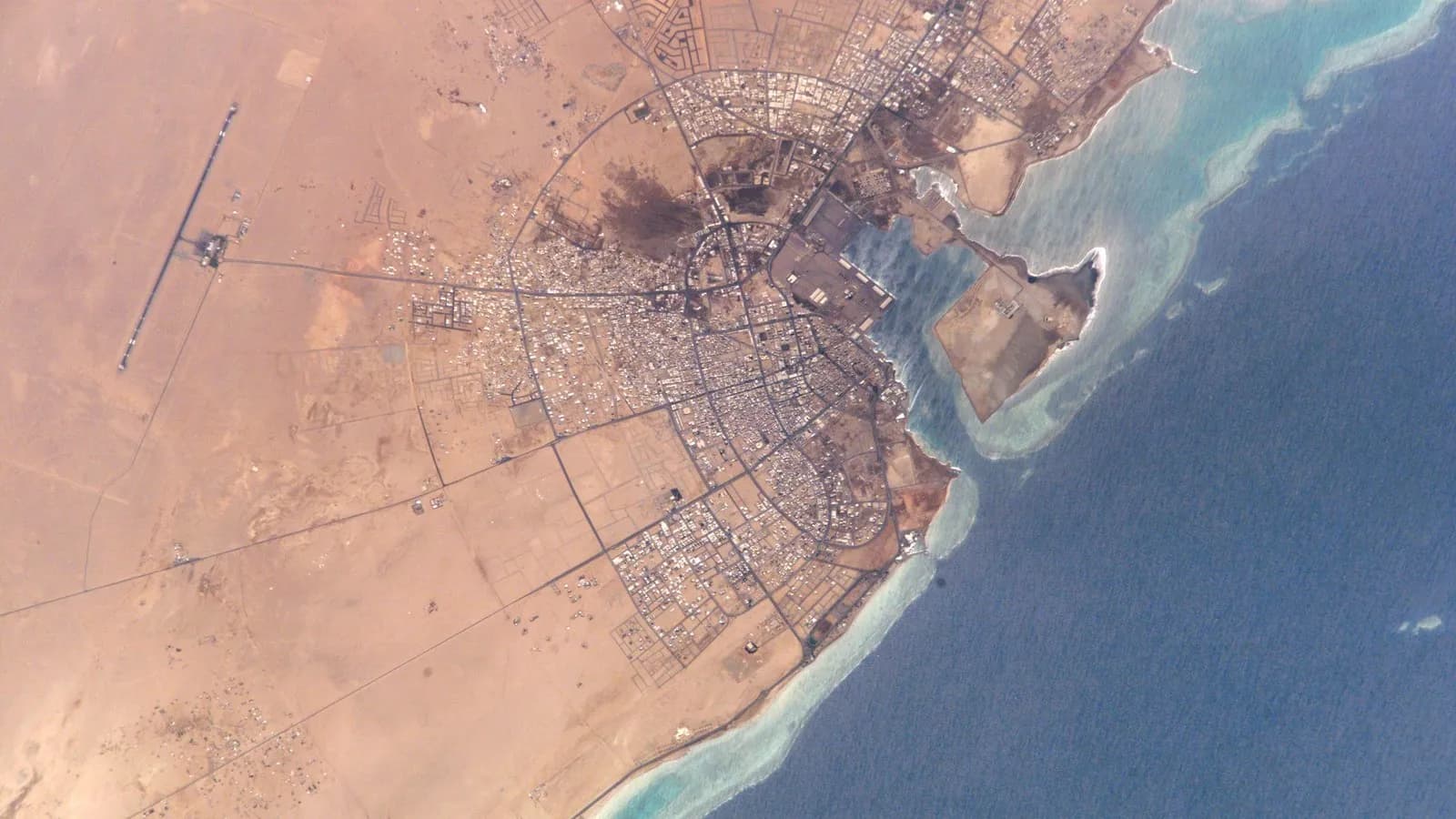
The pipeline outage we reported on Monday has now reached the tankers. Reuters' shipping sources, carried by EnergyNow and OilPrice, say Saudi Aramco has suspended crude loadings at Yanbu and cancelled some late-September cargoes bound for Europe. No Saudi crude has sailed from the Red Sea port since 11 September, the day the East-West line was shut after drones from Iraq hit its pumping stations. The American energy secretary, Chris Wright, told CNBC the line would restart "in days"; Reuters' sources still say five to six weeks, with partial pumping possible sooner. Between those two estimates lies most of the kingdom's export capacity. Tankers loaded 22 million barrels at Ras Tanura and Juaymah in the Gulf in the week to 13 September, against six or seven million a week before, according to Vortexa, but that oil still has to leave through a strait where, on Tuesday, Kpler counted four commodity vessels in total, two in and two out, none carrying crude or gas. The ten-day average had been eighteen.
The drone over the Hejaz
At ten to seven on Tuesday evening the Saudi-led coalition said its air defences had destroyed a Houthi drone "south of the city of Makkah al-Mukarramah". Its spokesman, Major General Turki al-Malki, called it "a shameful act" and "an attempt to terrorize" pilgrims, and said the security of the Two Holy Mosques was "a red line". It is the first attempt on Mecca since a ballistic missile in July 2017. The Houthis denied it outright; their spokesman Yahya Saree claimed instead to have shot down a Saudi F-15 over Marib with a locally built missile, a claim for which Reuters found no Saudi confirmation. The coalition confirmed thirteen civilians wounded and seven houses damaged at Khamis Mushait, Abha and Taif on Monday. Crown Prince Mohammed bin Salman met Admiral Brad Cooper of Central Command in Jeddah, then flew to Cairo, where Egypt declared the security of Saudi Arabia and the Gulf "an integral part of Egypt's national security". Qatar warned that closing Bab al-Mandeb would be "catastrophic for the entire world".
Central Command breaks its silence
After six days without a statement, Central Command issued three. It has now redirected 103 commercial vessels. It said the IRGC's story that the tanker El Gaia hit a mine was false: Iran hit her with a missile in August and a drone at the weekend while she lay disabled off Oman, and a regional partner is towing her. Oman's maritime centre says 23 of her crew were evacuated and two are missing. And its spokesman, Captain Tim Hawkins, confirmed that "Iranian small boats recently attempted to take possession of a U.S. unmanned surface vessel, but they were unsuccessful after CENTCOM forcefully responded". The Associated Press reported two small boats destroyed off Hormozgan; Axios' officials said an American drone fired two missiles on Monday and most of those aboard were killed. Iran's deputy governor of Hormozgan spoke of missing fishermen. The IRGC, for its part, claimed three MQ-1 drones shot down in 24 hours, one of them "under the control of Iran's integrated air defense network", which would be the first Iranian surface-to-air engagement since the war resumed. Central Command has neither confirmed nor denied it.
Diplomacy, of a kind
The Salalah meeting postponed on Saturday has a new promise if not a date. Sergei Lavrov said it was put off "for several days" and would convene "in one of the cities of the Sultanate of Oman in the near future", with Iraq now attending. Marco Rubio telephoned Oman's foreign minister to acknowledge "Oman's important role in de-escalation" and to condemn "recent Iranian attacks on commercial ships". Abbas Araghchi arrived in Beijing, eight days before Xi Jinping's visit to Washington, saying Iran "has already agreed with Oman on a plan to reopen the Strait of Hormuz". Mohsen Rezaei, secretary of the Supreme National Security Council, said the opposite in five words: "No talks until Iran's conditions are met." Wang Yi urged both sides back to the Islamabad memorandum. In Tehran, a hardline deputy's motion to declare President Pezeshkian incompetent failed after the speaker, Mohammad Bagher Ghalibaf, and most of the chamber opposed it; one member called it a coup plot.
The market
Brent settled at 108.75 dollars on Tuesday, up 3.07 and the highest close in nearly four months, and traded to about 109.25 intraday. Dated Brent went through 130 for the first time since April, Shanghai's crude contract set a record at 138, and American diesel futures settled at a record. Early on Wednesday the price eased below 108 after the American Petroleum Institute reported a 7.14 million barrel build in US crude stocks, a number the Fed would have had in front of it. The coalition's Muwaffaq Salti tally stands where it did: no Iranian missile at a host state for seven days, the longest pause since 28 August. What has changed is where the war is being fought: at sea, in Yemen, and over the Hejaz.
Published in The Outspoken Digest
Editorial desk
Outspoken Digest News DeskReports for The Outspoken Digest across Latest Trends, Sports, Nutrition, Crypto.
Newsletter
The Digest, in your inbox
One edition, sent when it is ready. No noise, and your address is never passed on.
Read Next
More Latest Trends →
Navi Pillay, the South African Jurist Who Led the UN Gaza Inquiry, Wins the 2026 Nobel Peace Prize
Oct 9, 2026/3 min read
Trump Says the US Will Not Attack Iran Before the Midterms, While Tanker Attacks Cut Hormuz Traffic to a Two-Month Low
Oct 9, 2026/3 min read

Russian Strikes Killed 22 in Pryluky and at Least 30 on Two Buses in Kramatorsk Within Two Days
Oct 9, 2026/2 min read
A Year After the Gaza Ceasefire, More Than 100 Aid and Rights Groups Say It Exists in Name Only
Oct 9, 2026/2 min read