The Lunchbox Rule That Matters Is Not the One About Sugar
New dietary guidance sets a hard number for added sugar in a school meal. The harder problem is a box that comes home full, because a nutritious lunch that goes uneaten is not a lunch.
Sunday, August 16, 2026/3 min read
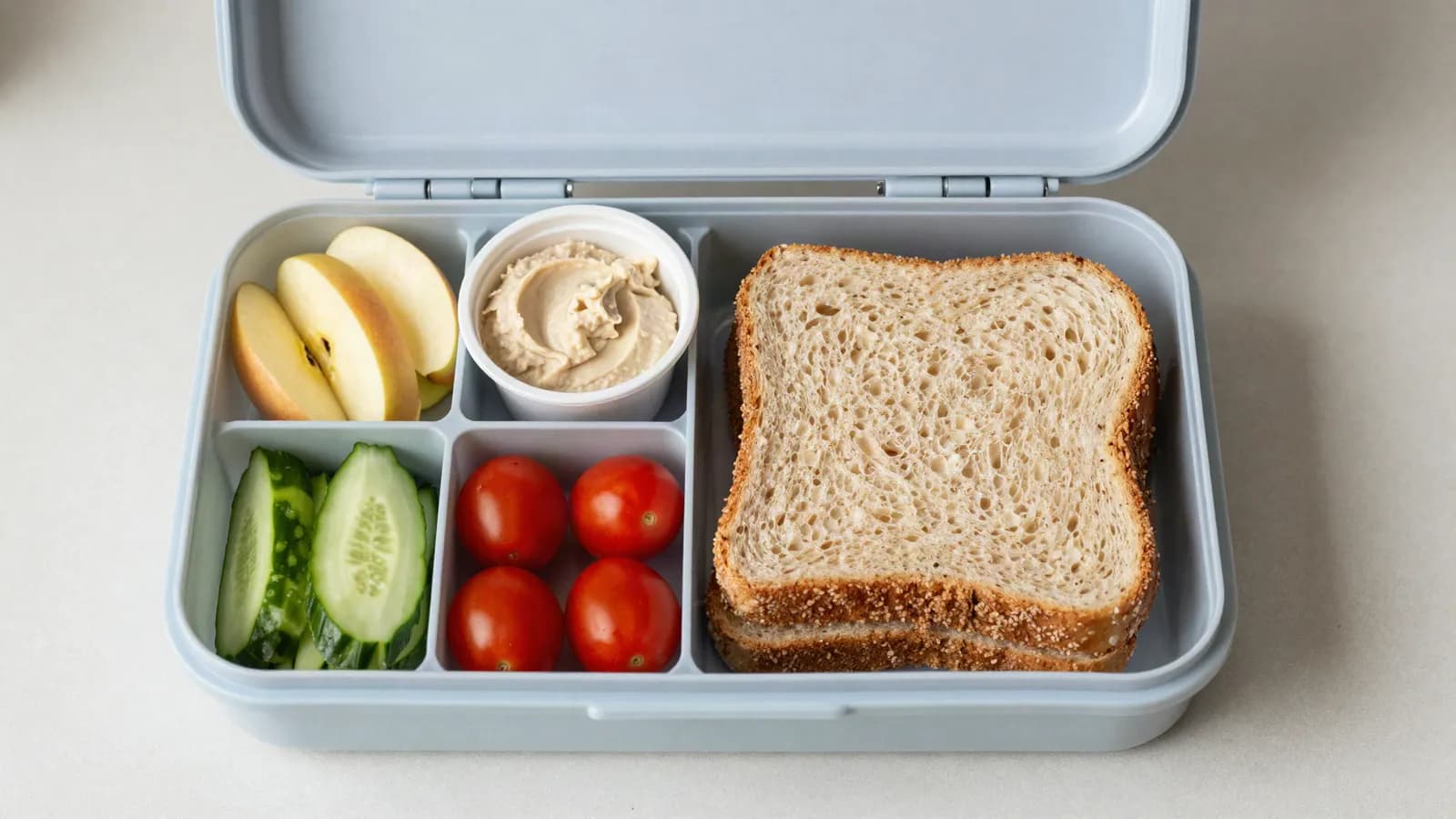
The Dietary Guidelines for Americans for 2025 to 2030 were published in January 2026, and school meal standards are being revised to follow them. Two numbers in that guidance are worth knowing even if you pack a box rather than buy a tray.
The first is a ceiling of 10 grams of added sugar in a single meal. The second is stricter and less discussed: no added sugars at all for children aged five to ten.
Why added sugar is the wrong thing to worry about first
Not because it does not matter. Because for most families it is already the easiest thing to fix, and fixing it changes less than people hope.
The failure mode of a school lunch is not usually excess sugar. It is a box that comes back nearly full, or one that is eaten in the wrong order so a child arrives at the afternoon having consumed a biscuit and a juice box and nothing else.
Children who eat a proper midday meal concentrate better, remember more and behave better in afternoon classes. That benefit belongs to the food that gets eaten, not the food that gets packed. A nutritionally exemplary lunch that returns home intact has delivered zero of it.
What actually gets eaten
Three practical patterns hold up across a lot of families and a lot of research on children's eating.
Familiar food in an unfamiliar setting. A school canteen is loud, rushed and social. It is the worst environment in which to introduce something new. Novelty belongs at the kitchen table on a Saturday. The lunchbox is for things already established as safe.
Food that can be eaten with one hand while talking. Lunch is a social event for a child, and anything requiring assembly, cutlery or concentration loses to conversation.
Volume they can actually finish. Adults consistently overpack. A box that looks slightly mean to a parent is often exactly right, and finishing it produces a competence a child enjoys.
The shape of a lunchbox that works
Rather than a list of approved foods, a structure that survives ten months.
- One thing with protein: eggs, chicken, cheese, yoghurt, hummus, beans.
- One carbohydrate that holds its texture: bread that does not go soggy, a wrap, rice, pasta, potato.
- Two things from the fruit and vegetable side, cut ready to eat.
- One thing they like unreservedly.
That last item is not a reward or a bribe. It is what makes a child open the box. Removing it, on the reasoning that everything in a lunchbox should be nutritious, is the single most common way to end up with an uneaten lunch.
Does the packed lunch need to be cold?
In a Gulf climate, yes, and this deserves more attention than it gets. A box carried from a car at 7am into a bag that sits in a warm corridor until midday is a food safety question, not a preference.
Two things do most of the work: a frozen water bottle packed against the food, and choosing fillings that tolerate the morning. Hard cheese, hummus and cooked pulses are more forgiving than cold chicken, and cooked rice is the one worth being careful with because reheated and slowly cooled rice is a genuine risk rather than a fussy one.
What about school canteens?
The revised standards are being written now, and experts have already pointed out that parts of the new guidance are hard for cafeterias to deliver, particularly the tighter sugar limits, given existing supply contracts and equipment.
That is a real constraint rather than an excuse. A kitchen serving several hundred children in forty minutes is limited by what can be batch-produced and held safely, which is why canteen menus converge worldwide on a narrow set of dishes.
The practical implication for a parent is that guidance about school food is a floor, not a description of what is on the tray. If it matters to you, the menu is a document you are allowed to ask for.
How much added sugar is allowed in a school meal?
The 2025 to 2030 guidance sets a limit of 10 grams of added sugar per meal, and recommends no added sugars for children aged five to ten. Flavoured milk in school programmes has its own product-based added sugar limits.
For the wider argument about processing and children's diets, our piece on what the ultra-processed research actually shows is the better place to start, and judging a diet claim covers the rest.
Published in The Outspoken Digest
Editorial desk
Outspoken Digest Health DeskMedicine, public health and the research behind the headlines, read carefully.
Newsletter
The Digest, in your inbox
One edition, sent when it is ready. No noise, and your address is never passed on.
Read Next
More Nutrition →
Small Pilot Trial Finds Meals or an App Slowed Weight Regain After People Stopped GLP-1 Drugs
Oct 15, 2026/2 min read
Potassium-Rich DASH Diet Did Not Raise Blood Potassium to Unsafe Levels in Adults on Blood Pressure Drugs
Oct 13, 2026/2 min read
Matched for Calories and Macronutrients, an Ultra-Processed Meal Still Drew a Bigger Insulin Response in a Small Trial
Oct 9, 2026/3 min read
A Study of 371,000 Americans Found Whole Fruit, Not Juice, Is Linked to Better Heart Health
Oct 1, 2026/2 min read