The Safety Stop: What Those Three Minutes Are Actually Doing
Three minutes at five metres is drilled into every diver and explained to almost none of them. It is not decompression, it is not required, and skipping it is not the emergency people assume.
Sunday, August 9, 2026/4 min read
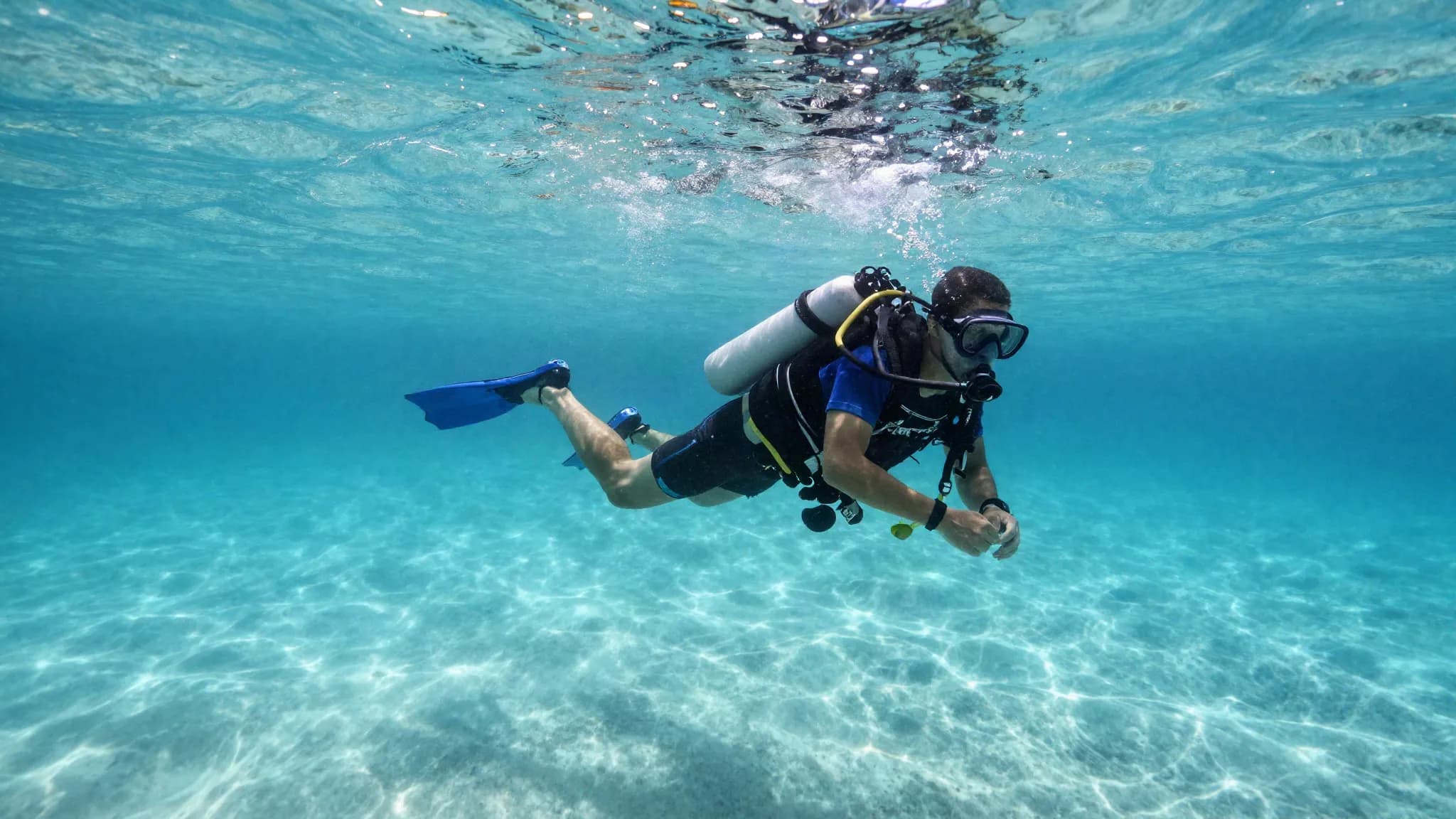
Every recreational diver is taught to hang at five metres for three minutes at the end of a dive. Very few are told why, which is how it acquired the status of a superstition: something you do because you were told to, and worry about if you miss it.
It is worth understanding properly, because knowing what it does also tells you when it matters more and when it matters less.
The difference between a safety stop and a decompression stop
This is the distinction that clears up most of the confusion.
A decompression stop is mandatory. You have absorbed enough inert gas that surfacing directly carries an unacceptable risk, and the stop is the price of the dive you have already done. Your computer will tell you it is required and will not let you clear it by ignoring it.
A safety stop is discretionary. Recreational diving is planned to stay inside no-decompression limits, meaning a direct ascent would be theoretically acceptable. The stop is an added margin on top of that.
So the honest answer to whether you can skip it is yes, within no-decompression limits, and you should not make a habit of it.
What the three minutes buy you
Three things, and only the first is the one people name.
Off-gassing. Nitrogen absorbed under pressure leaves the tissues as pressure falls. The final few metres are where the proportional pressure change is largest: going from 10 m to the surface halves the ambient pressure, which is a bigger relative change than the entire descent from 40 m to 30 m. Pausing there lets the faster tissues unload before that last expansion.
Bubble control. Even a dive well inside its limits produces small silent bubbles. They are usually harmless and filtered by the lungs. The pause gives them time to shrink and be dealt with rather than expanding through the final ascent.
Ascent discipline, which may be the real value. The stop forces you to arrive at five metres in control, neutrally buoyant, watching your computer and your buddy. Without it, the last portion of a dive is where divers get light, lose the ability to hold depth, and pop to the surface. A runaway final ascent is a far more common problem than nitrogen loading on a recreational profile.
Ascent rate matters more than the stop
If you take one thing from this, take this: a slow ascent is more protective than a fast ascent followed by a stop.
The widely taught figure is a maximum of around 9 to 10 metres per minute, and slower is better in the shallows. Many computers now warn well before that. A diver who rockets to five metres and then hangs for three minutes has still done the damaging part.
Think of the whole ascent as the decompression, with the stop as its final section, rather than treating them as separate events.
When to extend it
Three minutes is a floor, not a target. Reasons to make it five or more:
A dive near the no-decompression limit, a repetitive dive, anything deeper than about 30 m, a cold dive, hard work underwater, or a profile with any sawtooth in it. Dehydration, fatigue, age and previous decompression illness all argue for more conservatism too.
Gas permitting, extra time at five metres costs almost nothing and there is no mechanism by which it hurts. This is the cheapest safety margin in diving.
Doing it well
Arrive at depth in control rather than drifting up to it. Be neutrally buoyant and horizontal, not sculling with your hands.
Hold the depth rather than the time: bobbing between three and seven metres in swell undoes the point. In a swell, a line or a reef edge to reference is worth using, and the deeper end of the range is the safer place to sit.
Keep watching your buddy and your gas. The end of a dive is when attention drops and when most people are shallowest on air.
If you miss it
Do not descend again to make it up. If you surface unexpectedly from a no-decompression dive, stay out of the water, breathe normally, hydrate, and monitor yourself for symptoms for the next twenty-four hours. Report anything unusual to a diving physician rather than waiting to see.
For the wider picture on what actually goes wrong and how often, the fatality data is worth reading, and it consistently points at ascent behaviour and gas management rather than exotic causes. If you are still working out what your certification does and does not cover, we looked at that separately.
This article is general information about diving practice, not medical advice or a substitute for training. Follow your own computer, your agency's tables and your instructor.
Published in The Outspoken Digest
Editorial desk
Outspoken Digest Diving DeskCovers freediving, recreational and technical diving, dive medicine and the incidents the sport learns from.
Newsletter
The Digest, in your inbox
One edition, sent when it is ready. No noise, and your address is never passed on.
Read Next
More Diving →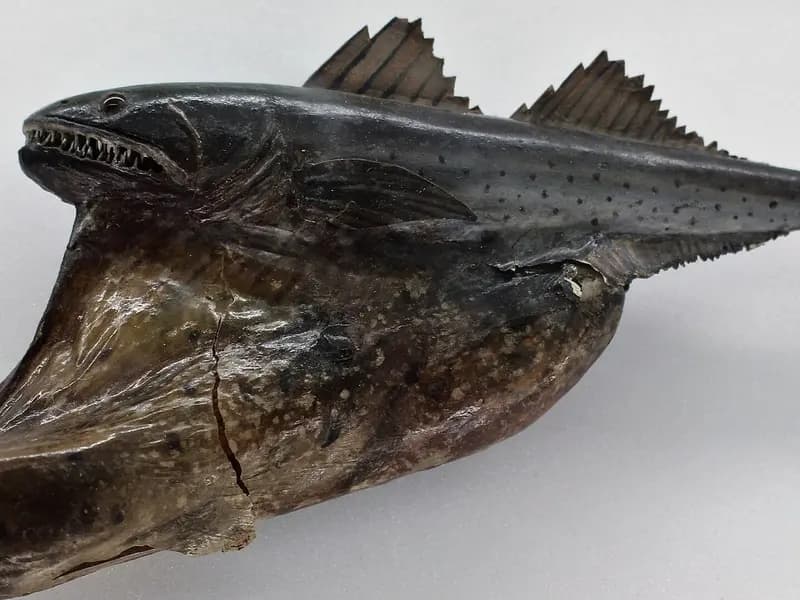
Black Swallower Filmed With a Hugely Swollen Belly 1,259 Metres Down Off Trinidad and Tobago
Oct 13, 2026/2 min read

Playing Recordings of a Healthy Reef Drew More Coral and Fish Larvae to Artificial Structures Off Hawaii
Oct 9, 2026/3 min read
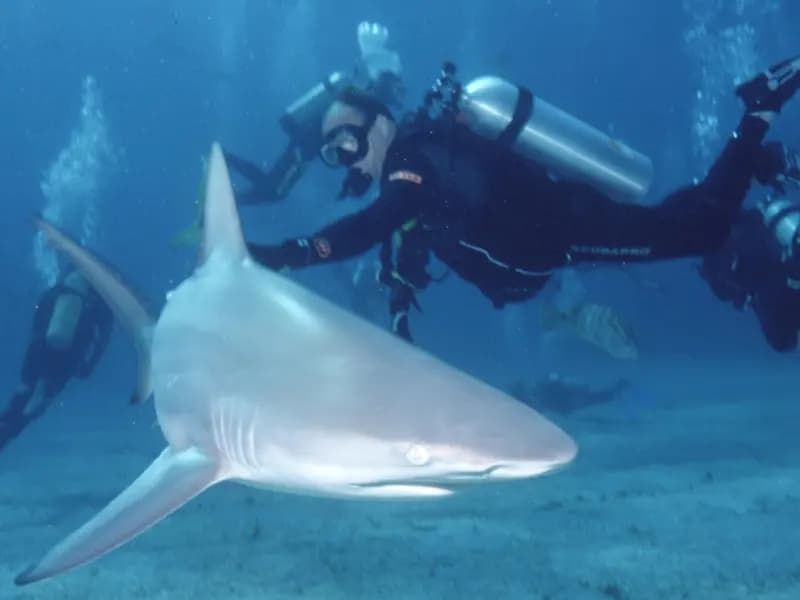
Blacktip Sharks Can Hear a Sound From Nearly 250 Feet Away and Swim Straight Toward or Away From It
Oct 1, 2026/2 min read
A Sea Turtle Species Never Recorded Nesting in the United States Laid Eggs on a Southern California Beach
Oct 1, 2026/2 min read