Silk Is Sold by a Unit Called the Momme, and Learning to Read It Is the Difference Between a Blouse and a Disappointment
One momme is the weight in pounds of a bolt forty-five inches wide and a hundred yards long, which works out to about 4.3 grams per square metre. The number decides how silk drapes, wears and washes. A guide to the weights and the weaves.
Sunday, September 6, 2026/4 min read
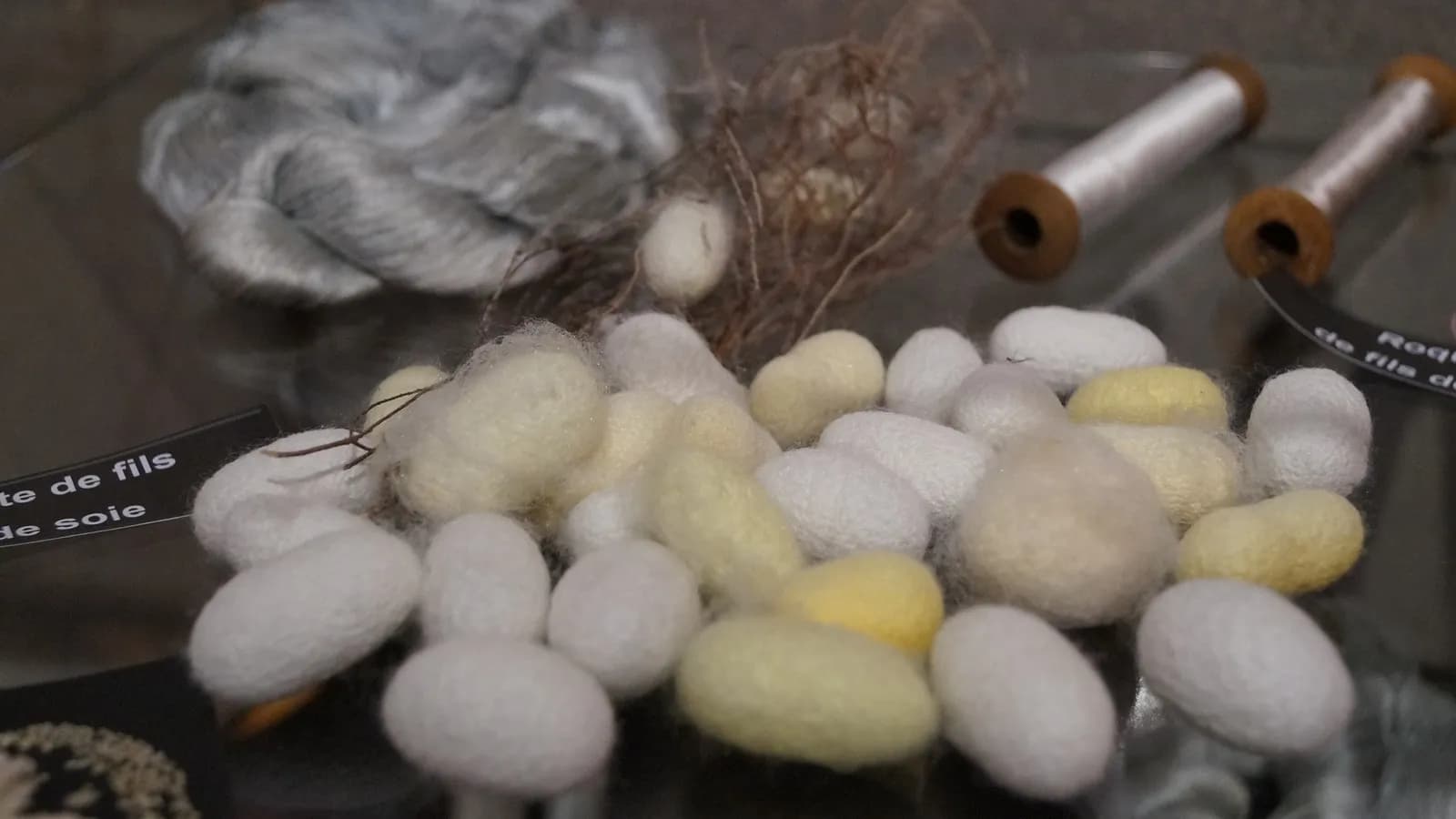
Silk is the one fabric almost everyone owns at least one piece of and almost nobody knows how to buy. It is sold under a dozen names that describe weaves rather than quality, it is priced by a unit nobody explains, and the word satin, which most shoppers take to mean silk, means nothing of the kind. None of this is difficult once it is set out.
Where it comes from
Silk is a protein fibre, mostly fibroin with a coating of a gum called sericin, extruded by the caterpillar of the domesticated silk moth Bombyx mori as it spins its cocoon. Sericulture is at least five thousand years old in China and the moth has been bred in captivity for so long that it can no longer fly or survive in the wild. The conventional process kills the pupa inside the cocoon with heat so that the single continuous filament can be unwound intact; if the moth is allowed to emerge it breaks the thread, which is why so-called peace silk, reeled from broken cocoons, is a spun rather than a filament yarn and has a slightly different, more matte character.
Several filaments are reeled together to make a thread, threads are twisted and woven, and the sericin is usually boiled off afterwards, a process called degumming that gives silk its lustre and its softness. Raw silk, with the gum left in, is stiffer and duller.
The momme
Silk fabric is priced and specified by weight, and the trade unit is the momme, abbreviated mm and pronounced mummy. The definition is archaic: one momme is the weight in pounds of a piece of silk forty-five inches wide and one hundred yards long. Work that through and one momme is approximately 4.3 grams per square metre, so a 19 momme fabric weighs about 82 grams per square metre and a 30 momme fabric about 130. The textile measurement conventions are explained in full elsewhere; what a buyer needs is the range.
- 6 to 8 momme: chiffon, gauze and organza territory. Sheer, floating, fragile.
- 12 to 16 momme: the standard for blouses, scarves, linings and most ready-to-wear. Light, fluid, and thin enough that a 12 momme charmeuse will show whatever is under it.
- 19 to 22 momme: where quality bedding and better shirting live. Enough body to hang cleanly, enough weight to survive years of washing.
- 25 to 30 momme and above: heavy charmeuse and crepe for evening wear and tailoring. Expensive because the weight is silk, and silk is priced by the gram.
For the same weave, more momme means more silk per square metre, more opacity, more durability and more money. A cheap silk shirt is usually a light one. That is not fraud, but it is worth knowing when a 14 momme blouse and a 22 momme blouse are photographed identically online.
The weaves
The names on a label describe how the thread is woven, not what it is made of, and each can be woven in silk, in polyester or in a blend.
Charmeuse is a satin weave, glossy on the face and matte on the back, with the liquid drape that most people picture when they think of silk. Crepe de chine uses highly twisted yarns for a slightly pebbled, matte surface that creases less and is more forgiving to wear. Habotai is a plain, light weave, the workhorse of linings and scarves. Twill has a diagonal rib and is what the great printed scarves are made from. Dupioni and shantung use irregular yarn from double cocoons for a crisp, slubbed surface that holds structure. Chiffon and georgette are sheer crepes.
And satin is a weave, not a fibre. A garment labelled satin with no fibre content is almost always polyester. Silk satin will say silk.
How to tell silk from polyester
The label, first, and the price second: a garment described as silk for the price of a polyester one is polyester. Beyond that, silk is warm to the touch after a moment in the hand where polyester stays cool; silk has a slightly irregular lustre where polyester is uniformly shiny; and a silk thread pulled from a seam and burned smells of hair and leaves a brittle black bead, where polyester smells chemical and melts into a hard one. Nobody does the burn test in a shop. The touch test works.
Care, which is where silk is lost
Silk is strong for its weight but it is damaged by three things: alkali, sunlight and perspiration. Ordinary detergent is alkaline; use one made for silk or wool, in cool water, by hand, with no soaking, and roll the garment in a towel rather than wringing it. Dry it out of the sun, which yellows and weakens the fibre. Iron on the reverse, damp, on the silk setting.
Perspiration and antiperspirant together are the commonest cause of a ruined silk blouse; the salts and the aluminium compounds break down the fibre under the arms and leave marks no cleaner can remove. Wash silk promptly after wearing rather than letting it sit. Dry cleaning is safe for structured pieces and for anything with a lining, but most washable silks are better hand washed, whatever the label's caution says.
Silk's place in a hot climate is more complicated than linen's, and the trade-offs between the two are set out in our fabric guide for extreme heat. In short, a light crepe de chine breathes well and dries quickly; a heavy charmeuse is for the evening and the air conditioning.
Published in The Outspoken Digest
Newsletter
The Digest, in your inbox
One edition, sent when it is ready. No noise, and your address is never passed on.
Read Next
More Fashion →
Victoria's Secret Fashion Show Heads to Los Angeles on Sunday With an All-Women Lineup and Three Angel Hopefuls
Oct 15, 2026/2 min read

Anthony Vaccarello Is Leaving Saint Laurent After a Decade, and Kering Has Not Yet Named His Successor
Oct 9, 2026/2 min read

Louis Vuitton Closes Paris Fashion Week With Hovering Cars, Paper-Light Dresses and a Louvre Courtyard Cityscape
Oct 7, 2026/2 min read

Celine Dion Made a Surprise Return to the Catwalk to Close L'Oreal's Paris Fashion Week Opening Show
Sep 29, 2026/2 min read