Loose Beats Light, and Wool Is Not the Enemy: What Actually Works at Forty Five Degrees
Most hot weather dressing advice is written for a European summer and fails here. The variables that matter in Gulf heat are fit, weave and how a fabric handles sweat, and they do not line up with the usual natural versus synthetic argument.
Friday, August 21, 2026/3 min read
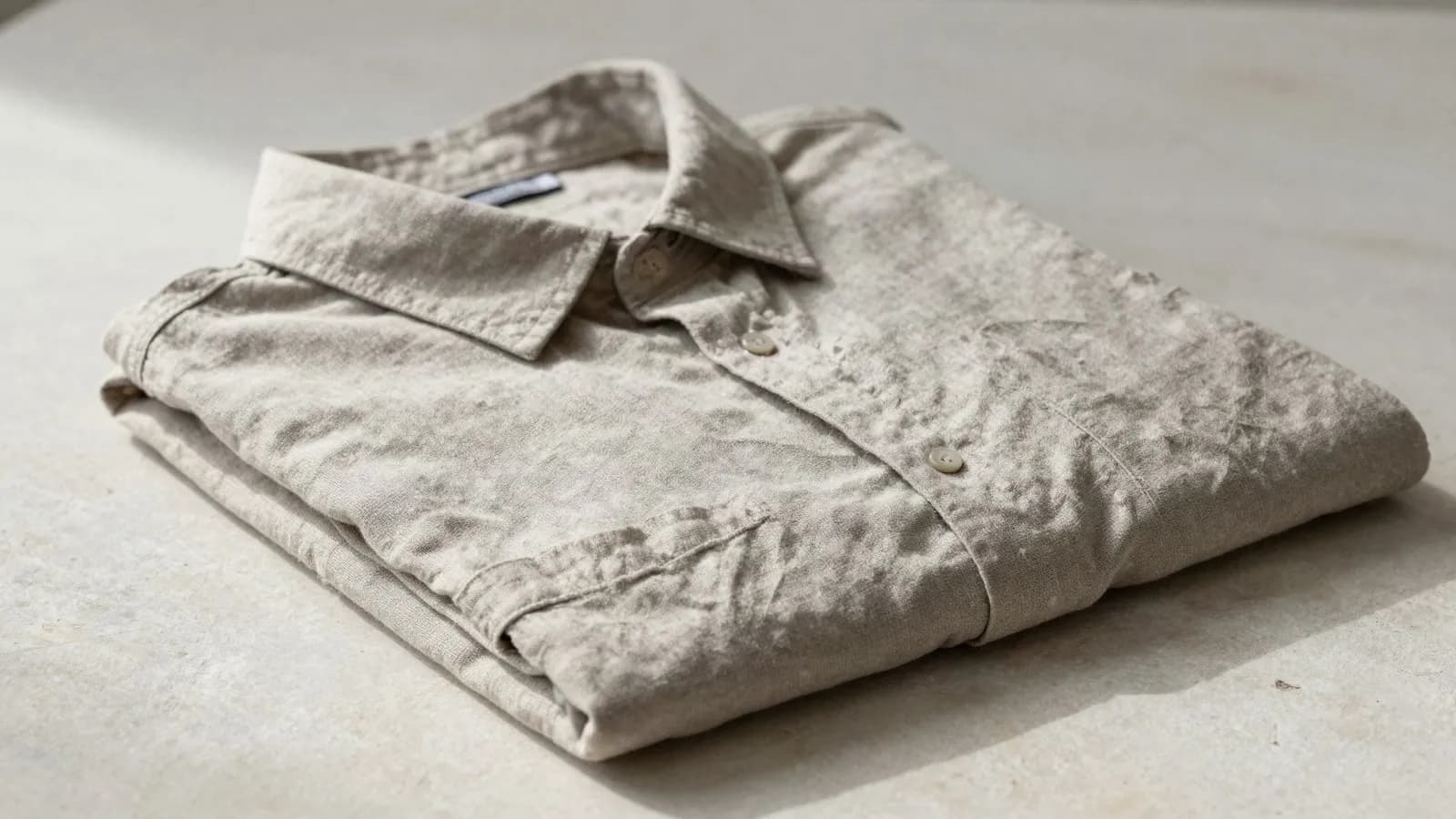
Hot weather clothing advice tends to be written by people whose hot weather is 28 degrees and dry for six weeks a year. Applied at 45 degrees with high humidity on the coast, quite a lot of it is wrong, and one piece of it is actively counterproductive.
The useful framework is not natural versus synthetic. It is three variables: how the garment fits, how the fabric is woven, and what it does with sweat.
Why does fit matter more than fabric?
Because cooling happens by evaporation, and evaporation needs air.
Sweat cools you when it evaporates off your skin, which requires moving air across a wet surface. A garment pressed flat against the body prevents that. It holds the moisture in contact with the skin, where it does nothing except make you feel wet.
A loose garment creates a layer of air between cloth and skin, and every movement pumps that air. This is why traditional clothing in hot regions across the world converged on volume rather than brevity: a full-cut robe outperforms a tight t-shirt, and it does so while also blocking direct sun.
So the first rule is that a loose synthetic often beats a tight linen, which will annoy people but is what the physics says.
What about the sun itself?
Covering up beats exposing skin, which is the second counterintuitive one.
Direct solar radiation on bare skin is a heat load. A loose, opaque, light-coloured layer blocks that load while still allowing evaporation underneath. Less skin exposed also means less sunburn, and sunburned skin regulates temperature worse.
Colour matters less than people think once the garment is loose. Light colours reflect more, dark colours absorb more but can radiate more too, and with enough air gap the difference narrows. Fit and weave outrank colour.
How do the fabrics actually compare?
Linen is the strongest performer and deserves its reputation. The fibre is stiff, so it stands away from the skin rather than clinging, the weave is naturally open, and it absorbs a lot of moisture before feeling damp. It creases, and that is the cost of everything that makes it work.
Cotton depends entirely on the weave. An open weave in a loose cut is excellent. A dense jersey t-shirt is not: cotton holds moisture and, once saturated, stays wet against the skin and stops evaporating. This is the fabric most people reach for and it is only sometimes the right answer.
Wool is the one nobody believes. A high twist, open weave, lightweight wool performs very well in heat because the fibre moves moisture vapour away from the skin rather than holding liquid against it, and it resists odour. Desert cultures have used wool for a very long time and did not do so out of stubbornness.
Synthetics divide sharply. Technical fabrics engineered to wick and dry fast are genuinely good in dry heat and for anything active. Cheap polyester in a dense weave is the worst option available: it does not absorb, it does not breathe, and it holds odour.
Viscose and rayon feel cool to the touch and behave inconsistently, often clinging once damp.
What about humidity?
It changes the answer, and this is where general advice fails the coastal Gulf.
In dry heat, evaporation is fast, so wicking fabrics that move sweat to the surface work brilliantly. In high humidity, the air is already close to saturated and evaporation is slow no matter what you wear. Wicking has less to work with, and the priority shifts almost entirely to air movement, which means fit, openness and coverage.
Practically: inland, technical fabrics and light layers do well. On the coast in August, loose and open beats clever every time.
What does this mean for a working wardrobe?
Choose the cut first, then the cloth, then worry about the label.
For formal wear, unlined or half-lined construction in a high twist wool or a wool-linen blend, cut with room in it, which is precisely why the move away from the slim suit is good news in this climate. For daily wear, loose weaves, natural fibres in open constructions, and enough coverage to keep the sun off.
And check the composition rather than the marketing, because a garment sold on a summer-feeling description is frequently a dense polyester blend. The care side of this matters too, since heat, sweat and sun degrade clothing quickly, which is its own subject in caring for clothes in extreme heat.
The summary is short. Loose, opaque, open weave, natural fibre if the weave is good. Everything else is detail.
Published in The Outspoken Digest
Newsletter
The Digest, in your inbox
One edition, sent when it is ready. No noise, and your address is never passed on.
Read Next
More Fashion →
Victoria's Secret Fashion Show Heads to Los Angeles on Sunday With an All-Women Lineup and Three Angel Hopefuls
Oct 15, 2026/2 min read

Anthony Vaccarello Is Leaving Saint Laurent After a Decade, and Kering Has Not Yet Named His Successor
Oct 9, 2026/2 min read

Louis Vuitton Closes Paris Fashion Week With Hovering Cars, Paper-Light Dresses and a Louvre Courtyard Cityscape
Oct 7, 2026/2 min read

Celine Dion Made a Surprise Return to the Catwalk to Close L'Oreal's Paris Fashion Week Opening Show
Sep 29, 2026/2 min read