Fifty Nine Per Cent of What the World Wears Is Polyester, and Eighty Eight Per Cent of That Is Fossil Fuel
Global fibre production hit 132 million tonnes in 2024. Recycled fibres remain under eight per cent of it, and the recycled polyester share actually fell. The wardrobe is a petrochemical product and the labels rarely say so.
Thursday, August 20, 2026/3 min read
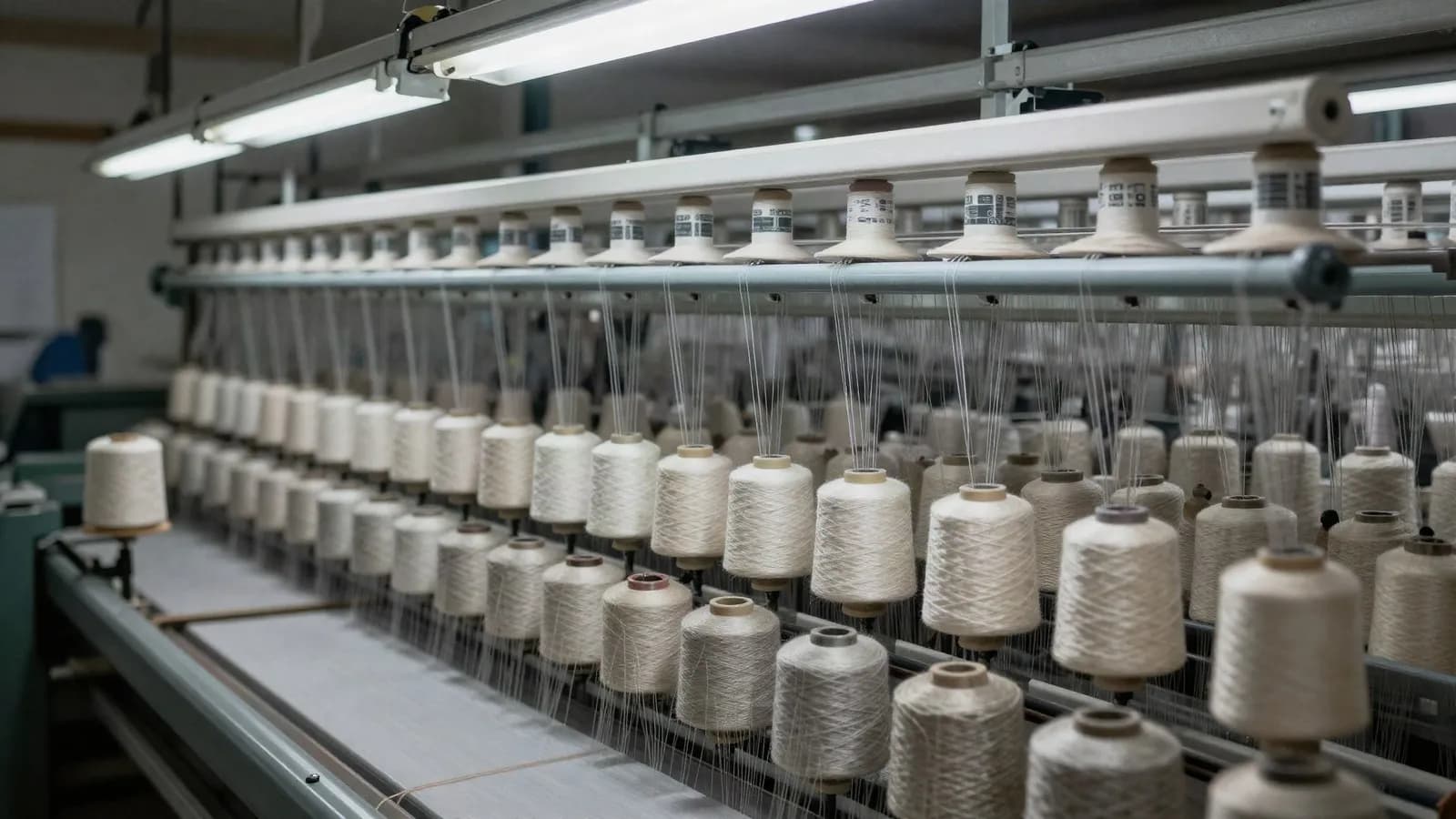
Ask someone what their clothes are made of and most will name cotton first. It is the fibre with the marketing, the one associated with softness and nature and the phrase natural fabric.
It is not what they are wearing. Polyester makes up 59 per cent of total global fibre output, and 88 per cent of that polyester is fossil-based. The wardrobe is a petrochemical product, and it has been for years.
What do the numbers actually say?
Textile Exchange tracks this annually, and the 2025 edition of its Materials Market Report is the most complete picture available.
- Global fibre production reached 132 million tonnes in 2024, a record.
- Polyester production rose from around 71 million tonnes in 2023 to around 78 million in 2024.
- Recycled fibres of all kinds remain under 8 per cent of the total.
- Recycled polyester grew in absolute terms, from about 8.9 to 9.3 million tonnes, but its share fell from 12.5 to 12 per cent, because virgin production grew faster.
That last line is the one worth sitting with. An entire decade of sustainability commitments, and the recycled share of the dominant fibre went down, not because recycling shrank but because the denominator outran it.
Why does polyester win?
Because on every axis a manufacturer cares about, it is better.
It is cheap and its price is relatively stable. It does not crease, it dries quickly, it holds colour, it holds a printed pattern, it can be engineered to be stretchy or stiff or waterproof, and it does not require land, irrigation or a growing season. Cotton needs all four and takes a year.
None of that is a conspiracy. Polyester solved real problems, and a wardrobe that does not need ironing is a genuine improvement in most people's lives. The trouble is what happens at both ends of its life.
Is recycled polyester the answer?
Less than the label implies, and the detail that undercuts it is not obscure.
Around 98 per cent of recycled polyester is made from plastic bottles, not from old clothes. That means it is not a closed loop for textiles at all. It is a bottle being diverted out of a functioning bottle-to-bottle recycling stream and turned into a garment, after which it is very unlikely to be recycled again.
Bottle-to-bottle recycling can be repeated. Bottle-to-garment is usually a one way trip that ends in landfill, and it lets the garment carry a recycled claim while making the plastic system slightly worse. Genuine textile-to-textile recycling exists but remains a small fraction, largely because separating blended fibres at scale is still unsolved.
What does this mean for what you buy?
Fewer slogans, more label reading, and a realistic sense of what any single purchase changes.
Check the composition, not the marketing. The fibre content label is regulated and the front of the garment is not. A piece described as having a natural feel is frequently a polyester blend.
Blends are the recycling problem. A cotton-polyester mix is currently very hard to separate. A garment made of one fibre has a future that a blend does not.
Polyester is not always the wrong choice. For activewear, outerwear and anything that needs to dry fast, it outperforms the alternatives and a natural fibre substitute would be worse in use. The problem is polyester in garments that had no functional reason for it, which is most of them.
The number of wears is still the dominant variable. A synthetic garment worn two hundred times has a better footprint per wear than a linen one worn twice, which is the whole logic of cost per wear.
The honest conclusion
There is no version of this where consumer choice fixes a 132 million tonne production system, and it is dishonest to imply otherwise.
What the numbers do support is a more modest claim: the industry's stated direction and its measured output are moving opposite ways, and any brand describing progress should be asked which of those two it is referring to. Ambition has been abundant for a decade. The share of recycled fibre in the world's clothes is still under eight per cent.
Published in The Outspoken Digest
Newsletter
The Digest, in your inbox
One edition, sent when it is ready. No noise, and your address is never passed on.
Read Next
More Fashion →
Victoria's Secret Fashion Show Heads to Los Angeles on Sunday With an All-Women Lineup and Three Angel Hopefuls
Oct 15, 2026/2 min read

Anthony Vaccarello Is Leaving Saint Laurent After a Decade, and Kering Has Not Yet Named His Successor
Oct 9, 2026/2 min read

Louis Vuitton Closes Paris Fashion Week With Hovering Cars, Paper-Light Dresses and a Louvre Courtyard Cityscape
Oct 7, 2026/2 min read

Celine Dion Made a Surprise Return to the Catwalk to Close L'Oreal's Paris Fashion Week Opening Show
Sep 29, 2026/2 min read