The Slim Suit Is Finally Over, and What Replaced It Asks More of the Wearer Than of the Tailor
Menswear has spent two years moving from ultra-slim to relaxed but refined, and the shift is harder than it sounds. A narrow suit hides its faults on the hanger. A generous one does not.
Friday, August 21, 2026/3 min read
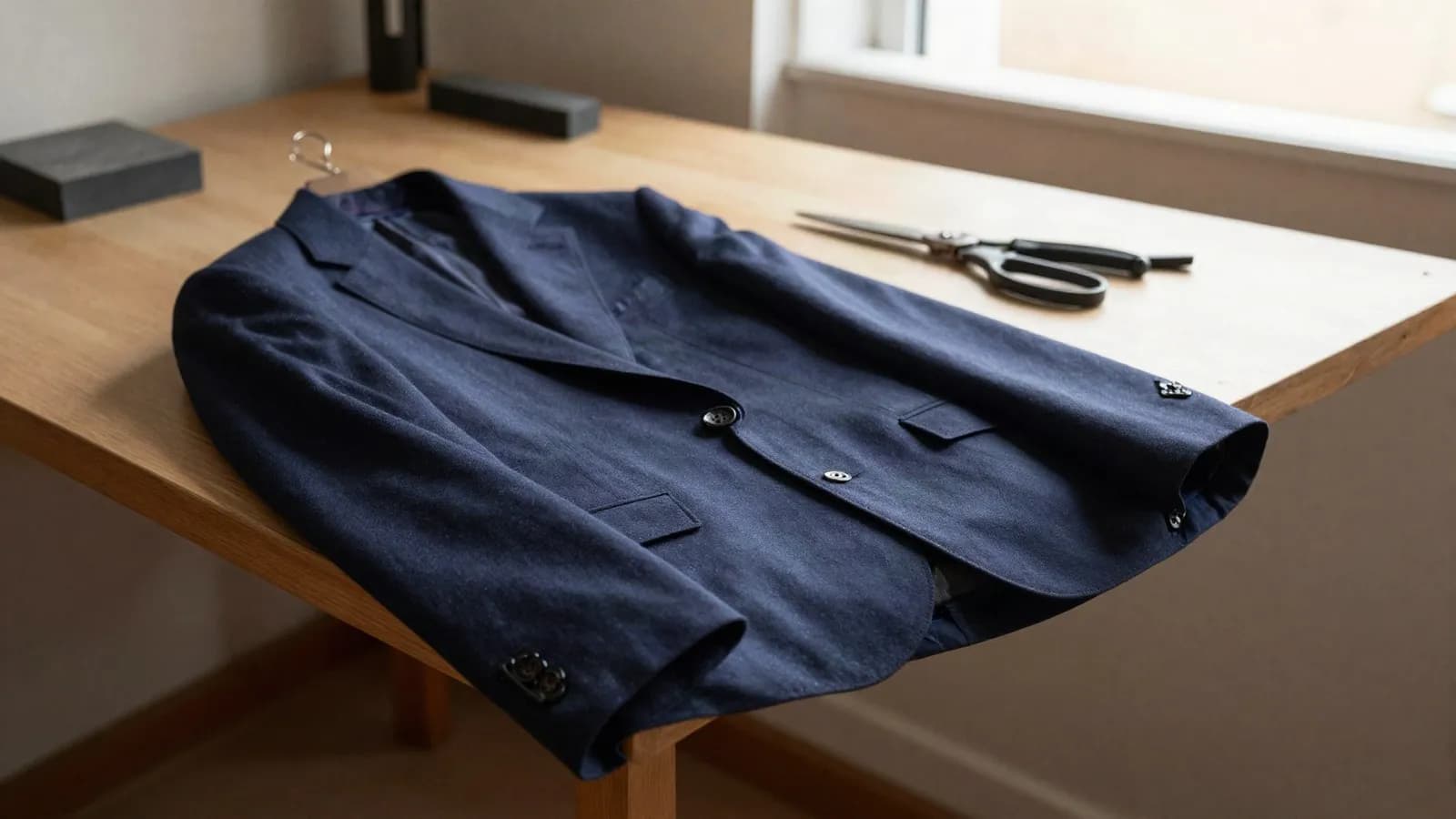
For about fifteen years there was one correct men's suit. Narrow lapel, short jacket, tight through the seat and thigh, trouser cut close to the ankle with no break. It began as a corrective to the enormous tailoring of the 1990s and ended as a uniform that suited a fairly small number of body types.
That period has closed. The direction of travel across recent seasons has been away from ultra-slim and toward something the trade keeps describing as relaxed but refined, which is a vague phrase covering a fairly specific set of changes.
What has actually changed on the garment?
Five things, and they compound.
- The shoulder has softened. Less structure, less padding, a line closer to the body's own slope rather than a constructed one.
- The jacket is longer. Enough to cover the seat again, which is what the length was always for.
- The lapel is wider, which balances the longer body and stops the whole thing reading as undersized.
- The trouser has volume, cut fuller through the thigh, often pleated, falling straight rather than tapering hard.
- The break is back. The trouser touches the shoe again instead of hovering above the ankle.
None of this is a return to the 1990s. The proportions are more considered than that, and the fabric weights are lighter.
Why is a fuller cut harder to wear?
Because volume exposes proportion, and slim fit concealed it.
A tight garment gets its shape from the body inside it. If the jacket is cut close, it will follow the wearer whether or not the pattern was any good. That is why the slim era was so democratic in one narrow sense: an inexpensive slim suit and a good one looked more similar than they should have.
A generous cut has to hold its own shape. The line of a full trouser is created by the cut and the cloth, not by the leg, which means a cheap fabric collapses and reads as sloppy rather than relaxed. The gap between a good relaxed suit and a bad one is visible from across a room.
This is why the shift has revived interest in alterations. The two changes that do the most are trouser length and sleeve length, both cheap, both routinely wrong off the peg, and both more noticeable now that the silhouette is not doing the work.
Is this just a cycle repeating?
Partly, and it is worth being honest that fashion cycles do not require a justification.
But there is a functional argument alongside the aesthetic one. The occasions that demand a suit have changed. Fewer men wear one five days a week and more wear one for specific events, which means the garment is now bought for a wedding, a conference or a formal dinner rather than as workwear.
A suit worn occasionally is bought differently. It has to last several years without looking dated, it will be worn for long stretches in a single day, and comfort matters more than it does in something worn briefly. A softer, fuller cut serves that pattern better than a rigid slim one, which is the same logic that has pushed the wider move toward tonal dressing and less rigid formality.
Does it work in Gulf heat?
Better than the slim suit did, which is not a small point in this region.
A close-cut jacket in a fused, synthetic-blended cloth is genuinely unpleasant above about 35 degrees. It traps air against the body and the fusing does not breathe. A fuller cut in an open-weave natural cloth allows air to move, which is the entire principle behind loose clothing in hot climates and has been for a very long time.
The practical specification for this climate is unlined or half-lined construction, high twist wool, linen or a wool-linen blend, and a cut with room in it. Wool is counterintuitive in heat and it works, because it moves moisture rather than holding it against the skin. The same reasoning applies to how clothes survive a Gulf summer at all.
What should you buy?
One suit that fits properly, in a plain colour, altered by someone competent.
Navy or charcoal, a mid-weight cloth that is not shiny, sleeves ending where the wrist does, trousers touching the shoe. That specification has outlived every silhouette argument of the past thirty years and will outlive this one.
The rest is timing, and the honest position on timing is that a suit bought at the extreme of any silhouette dates fastest. The relaxed cut is a correction, and corrections overshoot. Buying the moderate version of the current direction is the same discipline as buying fewer and better, applied to proportion instead of price.
Published in The Outspoken Digest
Newsletter
The Digest, in your inbox
One edition, sent when it is ready. No noise, and your address is never passed on.
Read Next
More Fashion →
Victoria's Secret Fashion Show Heads to Los Angeles on Sunday With an All-Women Lineup and Three Angel Hopefuls
Oct 15, 2026/2 min read

Anthony Vaccarello Is Leaving Saint Laurent After a Decade, and Kering Has Not Yet Named His Successor
Oct 9, 2026/2 min read

Louis Vuitton Closes Paris Fashion Week With Hovering Cars, Paper-Light Dresses and a Louvre Courtyard Cityscape
Oct 7, 2026/2 min read
Celine Dion Made a Surprise Return to the Catwalk to Close L'Oreal's Paris Fashion Week Opening Show
Sep 29, 2026/2 min read