Silver Went to $121 and Came Most of the Way Back. The Shortage That Did It Has Not Gone Away
Silver set a record just under $122 an ounce in late January, then lost close to half of it. The London squeeze behind the spike has eased rather than ended, and the metal is still up almost 74 per cent on the year.
Tuesday, August 18, 2026/5 min read
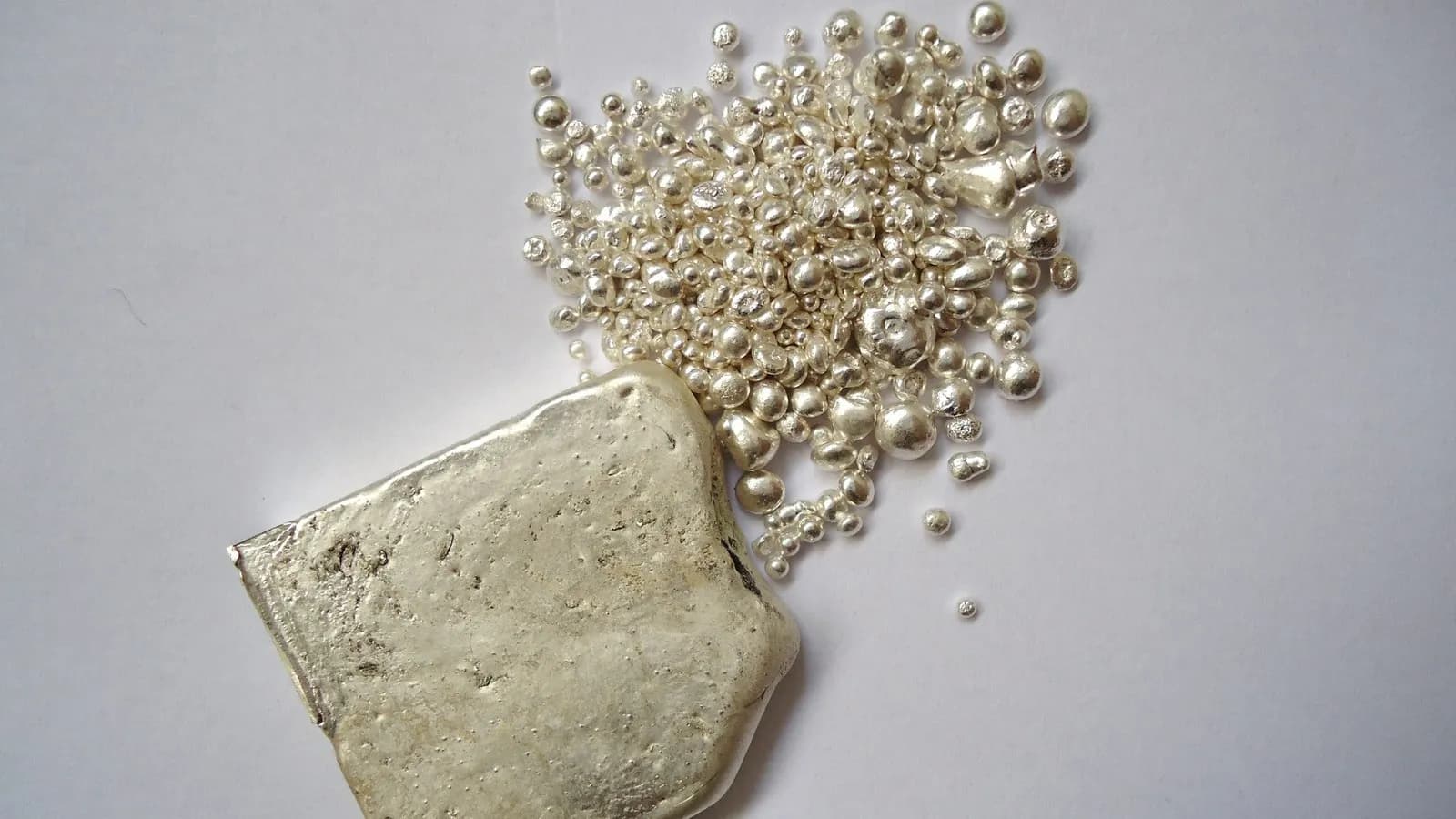
If you bought silver on the last Thursday of January you have spent seven months underwater. If you bought it a year ago you are up almost three quarters. Both of those sentences are true today, which is the whole problem with the way this metal is being discussed.
Silver trades at $64.95 an ounce this morning. Its record, set in late January, was $121.64. That is a fall of roughly 47 per cent from the high and a gain of 73.7 per cent over twelve months, and anyone telling you a story about silver is choosing which of those two numbers to lead with.
What actually happened to the silver price in 2026?
The short version: a physical shortage in London met a market that trades far more silver on paper than it holds in metal, and the two facts collided.
Through the autumn of 2025 the cost of borrowing silver in London went from negligible to extraordinary. Lease rates, which in a normal year sit below 1 per cent, spiked toward 39 per cent. That is not a market pricing risk. That is a market that cannot find the metal.
The trigger was a surge in Indian demand landing on a London vault system whose genuinely available metal, the free float, had been running down for years. By the end of September 2025 that float was estimated at around 136 million ounces. Daily turnover in the London over the counter market averaged roughly 450 million ounces. You can sell silver you do not have for a very long time, right up until somebody asks for it.
Somebody asked for it. The price went to $121.64 in the last days of January, and on 30 January it broke. Metal moved back from New York to London, the borrowing cost collapsed, and the speculative position that had built up on the way up was cleared out on the way down.
Why did silver spike so much harder than gold?
Because silver is a smaller market wearing two hats, and neither of them fits properly.
Gold is essentially a monetary asset. Central banks hold it, and when investors want it the mine supply barely matters because most of the gold ever mined still exists and can be sold. Our earlier account of gold's own record and retreat is a story about interest rates and official demand.
Silver is a monetary asset that is also an industrial input, and roughly half of it gets used up. Solar panels, electric vehicles and now the electrical infrastructure going into artificial intelligence data centres consume it and do not give it back. When investment demand arrives on top of industrial demand that cannot be postponed, there is no comfortable release valve. The price is the release valve.
That is why silver rose harder, and it is exactly why it fell harder too.
What is a structural deficit, and does it actually matter?
The Silver Institute and the consultancy Metals Focus have the market heading into a sixth consecutive year in which demand exceeds new supply. Since 2021, roughly 762 million ounces have been drawn out of existing stockpiles to cover the gap.
Here is the part worth understanding, because it is where most commentary goes wrong in both directions.
A deficit does not mean the world runs out of silver. Above-ground stocks are enormous and a high enough price will always shake some loose from jewellery, from investors and from industrial recycling. The deficit is not a countdown to zero.
What it does mean is that the buffer absorbing every shock gets thinner each year. A market with a deep free float can take a surge in Indian demand without noticing. A market that has been drawing down for five years cannot. The deficit does not set the price. It sets how violently the price moves when something happens.
Is the silver squeeze over?
Eased, not ended, and the distinction is the only forecast in this piece worth anything.
The free float in London has partly rebuilt since the September 2025 trough. Borrowing costs are nowhere near 39 per cent. On the surface the market looks normal again.
Underneath, the twelve month lease rate has been sitting near 1.63 per cent, which is roughly 55 per cent above its five year average. That is a market that is functioning but still tight, in the way a river can be flowing again and still be well below its banks. Nothing about the underlying arithmetic has changed: industrial demand is not falling, mine supply does not respond quickly, and the buffer is thinner than it was in 2020.
Why is silver up 15 per cent this month if the story is over?
It is up 15.19 per cent over the past month and 73.72 per cent over the year because the industrial case never depended on the squeeze.
Solar installation did not stop. The AI build-out that is reshaping power and land markets runs on an enormous amount of conductive metal. Meanwhile the monetary case has been getting louder as bond yields climb and the arguments about government borrowing get harder to ignore.
The squeeze was an event. The demand is a trend. Confusing the two is what left people buying at $121.
What should a reader actually take from this?
Three things, none of them a recommendation.
- Silver is not a safer version of gold. It is a more volatile one with an industrial cycle bolted on. Anyone holding it as a quiet store of value has misread the instrument.
- Percentage moves in this metal need a start date attached. Down 47 per cent from January and up 74 per cent from last August are the same market. Any figure quoted without its window is being used to sell you something.
- The condition that produced January still exists. A thin float and a market that trades multiples of it in a day is a structure that can seize again. It does not have to. It can.
The Silver Institute publishes its supply and demand work openly at silverinstitute.org, and it is a better starting point than any forecast with a target price on it. For the wider picture, our companion pieces on platinum, palladium and rhodium and on what a gold price target is actually worth cover the rest of the complex.
Published in The Outspoken Digest
Editorial desk
Outspoken Digest Markets DeskReports for The Outspoken Digest across Business, Crypto.
Newsletter
The Digest, in your inbox
One edition, sent when it is ready. No noise, and your address is never passed on.
Read Next
More Business →
Kospi Plunges Almost 8 Percent and the Nikkei Falls 5 Percent as the Tech Sell-Off Spreads to Asia
Oct 15, 2026/2 min read
Hot September Inflation Report Hands the S&P 500 Its Worst Day Since July as AI Stocks Sink
Oct 15, 2026/3 min read
Jio Platforms Sets IPO Price Band at Rs 1,065 to Rs 1,119, Opening Subscription on 21 October
Oct 14, 2026/2 min read
Starbucks Says It Is Not Buying Chipotle, Ending a Four-Day Takeover Story and Costing Chipotle About 4 Percent
Oct 13, 2026/2 min read