The AI Race Is Now a Race for Electricity, Land and Cold Water
One operator has raised around eleven billion dollars since late 2023 and another is weighing a hundred-billion-dollar listing. The scarce resource stopped being chips some time ago.
Outspoken Digest Technology Desk
Saturday, August 15, 2026/4 min read
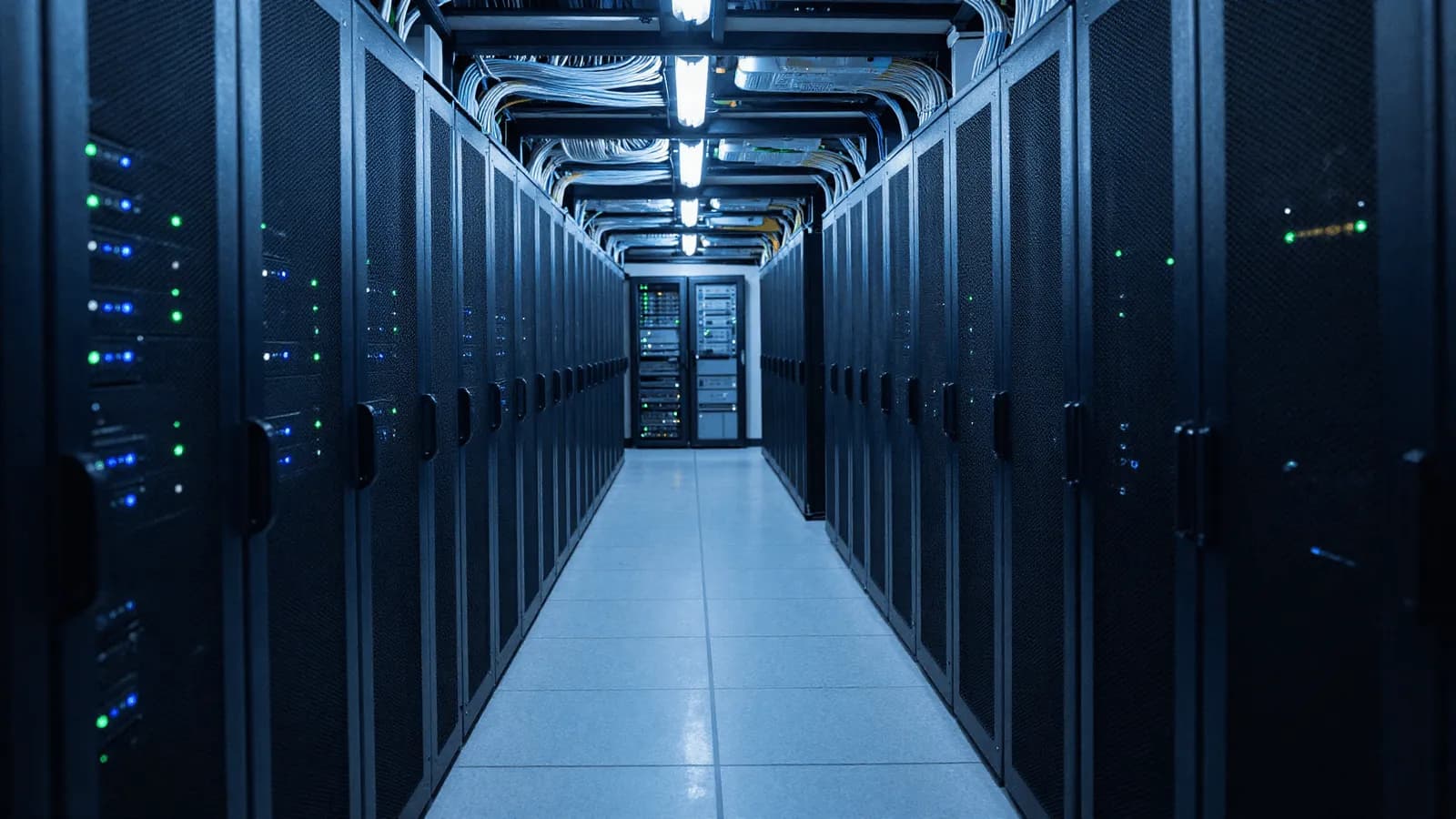
For about two years the story of AI infrastructure was a story about chips. Who could get them, how many, and at what price.
That constraint has not disappeared but it is no longer the one that decides where capacity gets built. The binding limits now are electricity, land, cooling and the time it takes to connect to a grid, and the capital moving into those problems is extraordinary.
The money
Vantage has raised roughly $11 billion since late 2023 as cloud providers and AI companies compete for electricity, land, cooling capacity and high-density server space. One data centre company is weighing an initial public offering that would value it at around $100 billion.
Those are infrastructure numbers rather than technology numbers. They belong in the same category as ports, pipelines and power stations, and the investors writing them are increasingly the same institutions.
Why power is the real ceiling
A modern AI training cluster draws power at a density that traditional data centres were never designed for. Racks that once consumed five to ten kilowatts now run at many multiples of that, and the facility has to both deliver that power and remove the resulting heat.
Delivering it is the harder half. You cannot simply request another hundred megawatts from a utility. In most developed grids there is a connection queue, and the wait is measured in years rather than months. Transmission capacity has to exist, substations have to be built, and in many jurisdictions the generation itself has to be procured.
This is why site selection has quietly become the most valuable skill in the sector. A parcel of land with an existing high-capacity grid connection, water rights and permissive zoning is worth vastly more than the same land without them. It is also why decommissioned industrial and power-generation sites have become prized, which is exactly the logic behind the Terafab site on a former coal plant reservoir.
The cooling problem
Air stops working at these densities. The industry is moving to liquid cooling, either cold plates attached directly to chips or full immersion, and that is a genuine architectural change rather than an upgrade.
Liquid cooling means plumbing through the data hall, different failure modes, different maintenance, and retrofit costs that frequently exceed the value of the existing building. A great deal of the world's installed data centre estate cannot be economically converted, which is one reason so much capital is going into new construction rather than upgrades.
Water consumption is the associated political problem. Evaporative cooling uses a lot of it, and communities in water-stressed regions have begun to object. Closed-loop systems avoid this and cost more.
The stranger ideas
The constraints have pushed operators towards options that would have sounded eccentric three years ago.
Offshore and subsea facilities, where seawater does the cooling for free. Siting next to dedicated generation, including revived nuclear plants. And most ambitiously, moving compute off the planet entirely, where solar panels are dramatically more productive and there is no night. That field has moved from concept to hardware faster than most people realise, and we cover where it actually stands in data centres in orbit.
None of these is currently cheaper than a conventional facility with a good grid connection. They are being explored because good grid connections are running out.
Why can't they just build more data centres?
Because the physical inputs are constrained in ways that capital cannot immediately fix. Grid connection queues in major markets run for years. Suitable land near transmission infrastructure is finite. Transformers and high-voltage equipment have long manufacturing lead times and their order books are full. Skilled electrical construction labour is scarce. Money accelerates some of this and none of it instantly, which is why the sector's growth rate is now set by supply chains rather than by demand.
What does this mean for electricity prices?
It is becoming a live political question. Large new industrial loads placed onto grids that were not planned for them put pressure on generation and transmission, and the cost of the resulting upgrades has to be allocated between the new industrial customer and everyone else. Several jurisdictions are now actively arguing about that allocation. Expect the phrase data centre to appear in domestic energy policy debates far more often over the next few years than it has to date.
Where the Gulf fits
Unusually well, on the specific constraints that matter.
The region has spare generation capacity, sovereign capital willing to fund infrastructure at scale, cheap land, permissive permitting and a strategic interest in hosting compute rather than renting it. What it does not have is cool ambient temperatures or abundant fresh water, which raises the cooling burden considerably.
The trade is real but the direction is clear, and the crossover between energy and compute is now large enough that it will be a subject at ADIPEC in November rather than only at technology events. Sovereign capital has been pointing this way for a while, as we noted in Gulf sovereign capital in the next decade.
The question nobody has answered convincingly is what happens to all of it if the demand curve for AI compute bends. Infrastructure built for twenty-year returns is being financed on the assumption of a workload that has existed for three.
Published in The Outspoken Digest
Editorial desk
Outspoken Digest Technology DeskSoftware, hardware, artificial intelligence and what they change for everyone else.
Newsletter
The Digest, in your inbox
One edition, sent when it is ready. No noise, and your address is never passed on.
Read Next
More Technology →
Anthropic Researchers Warn Small AI Models Could Soon Copy Themselves Onto Smart TVs and Other Home Devices
Oct 13, 2026/3 min read
Microsoft Unveils Maia 300 With 288GB of HBM4 and a 96-Chip Rack, Claiming Up to Seven Times Maia 200 Throughput
Oct 13, 2026/2 min read
Nvidia Opens Its Vera Rubin Rack Designs to the Open Compute Project and Pushes Racks Up to 250 Kilowatts
Oct 13, 2026/2 min read

Bronze Ring Engraved With the Lighthouse of Alexandria Found in the Sunken Royal Palace on Antirhodos
Oct 13, 2026/2 min read