Tesla and SpaceX Are Building a Chip Plant on a Dead Coal Reservoir
Sixteen point eight billion dollars for the first phase, a hundred million square feet when finished, and a site chosen because a shuttered power station left behind exactly what a fab needs.
Outspoken Digest Technology Desk
Friday, August 14, 2026/4 min read
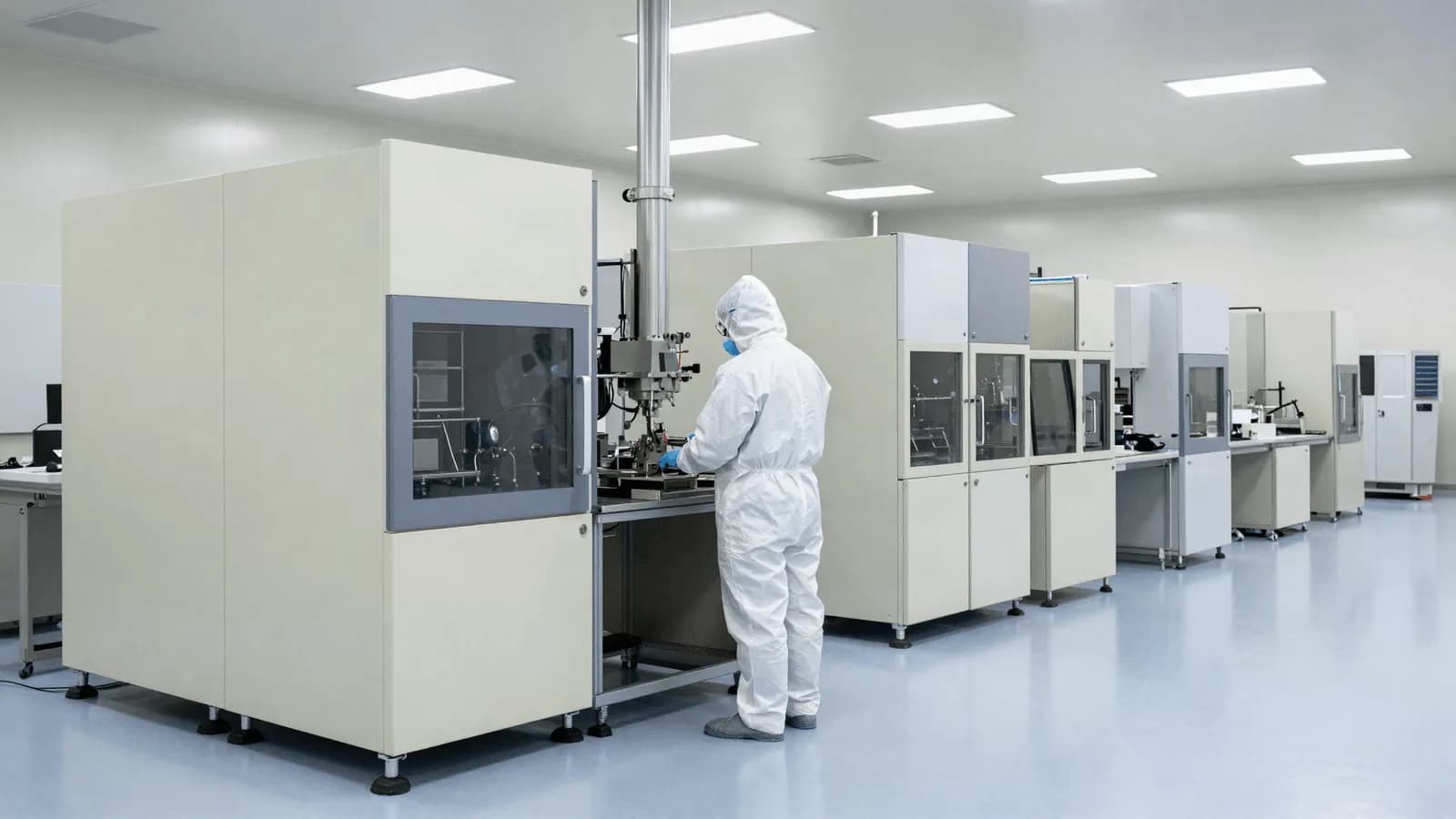
The Gibbons Creek Reservoir in Grimes County, Texas, was built to cool a coal-fired power station. The plant shut in 2018 and the water stayed.
On 6 August, Tesla and SpaceX confirmed that site for Terafab, a jointly developed semiconductor plant with an initial investment of $16.8 billion. The choice of location is not sentimental. A decommissioned thermal power site comes with cooling water, grid interconnection and industrial zoning already in place, and those three things are the hardest part of siting a fab.
The scale
The finished site is described as spanning more than 100 million square feet, which the companies characterise as the largest chip manufacturing facility anywhere. The first phase is expected to create at least 3,000 jobs, and company filings have suggested total spending across all phases could reach as much as $119 billion.
Those later numbers deserve the scepticism that all multi-phase industrial announcements deserve. Phase one at $16.8 billion is a committed figure with a confirmed site. A $119 billion total is a projection contingent on more than a decade of decisions nobody has made yet.
Vertically integrated, which is the unusual part
The genuinely interesting claim is not the size. It is that Terafab is planned to combine logic, memory, packaging and testing under one roof.
That runs directly against how the semiconductor industry has organised itself for forty years. The modern chip supply chain is radically specialised: one company designs, a foundry fabricates, a memory specialist makes the DRAM, an assembly and test house in another country does the packaging. Each step happens where it is cheapest and most expert, and the resulting chain crosses many borders multiple times.
Pulling all of it onto one site is a deliberate rejection of that model. The rationale is presumably the same one that produced Tesla's approach to batteries and SpaceX's approach to launch: if the supply chain will not move at your pace, own it.
The reason nobody else does this is that each of those disciplines is genuinely difficult and the capital requirements compound. A company that is excellent at logic fabrication is not automatically competent at advanced packaging, and the industry specialised because specialisation worked.
What the chips are for
Not for sale, at least initially. The stated purpose is silicon for Tesla's Optimus robots and Cybercabs, and for SpaceX's planned space-based data centres.
That last item is the one worth pausing on. Putting compute in orbit has moved from speculation to prototype hardware over the past year, and it creates demand for chips optimised for a genuinely unusual environment: extreme power efficiency, radiation tolerance, and thermal behaviour in vacuum where there is no air to move heat into. We cover where that field actually stands in data centres in orbit.
Designing your own silicon for a workload nobody else has is a defensible reason to build a fab. Whether it justifies this one is a different question.
Why build a fab instead of buying chips?
Control of supply and control of design. The past few years have made clear that advanced chip capacity is a strategic constraint rather than a purchasable commodity, and that companies without their own capacity queue behind those with it. There is also a specificity argument: chips for humanoid robots and orbital compute are unusual enough that a general-purpose foundry roadmap may never prioritise them. The counter-argument is that fabs are among the most capital-intensive and least forgiving industrial projects in existence, and the list of firms that decided to build their own and regretted it is long.
Is Texas becoming a semiconductor hub?
It already is one, and this accelerates it considerably. Texas offers cheap land, a permissive permitting environment, existing semiconductor operations, and above all its own electricity grid with spare industrial capacity. Power availability is now the binding constraint on both chip fabrication and data centre construction, and states that have it are winning projects on that basis alone. That same logic is reshaping where AI infrastructure gets built globally, as we set out in the data centre race.
What could go wrong
Fabs are notorious for two things: cost overruns and schedule slippage. Announced budgets for advanced facilities have a poor record of surviving contact with construction, and the gap between groundbreaking and volume production at acceptable yield is routinely years longer than announced.
Water is the other question. A reservoir built for a coal plant is a real asset, but semiconductor fabrication consumes ultrapure water at enormous rates and Texas has a contested water outlook. Reusing an existing cooling reservoir is a smart answer to that. It is not an unlimited one.
Then there is the simplest risk. This is two companies with the same principal, one of which is publicly traded, committing very large capital to a business neither has operated before. The engineering ambition is not in doubt. The execution is the entire question.
Published in The Outspoken Digest
Editorial desk
Outspoken Digest Technology DeskSoftware, hardware, artificial intelligence and what they change for everyone else.
Newsletter
The Digest, in your inbox
One edition, sent when it is ready. No noise, and your address is never passed on.
Read Next
More Technology →
Anthropic Researchers Warn Small AI Models Could Soon Copy Themselves Onto Smart TVs and Other Home Devices
Oct 13, 2026/3 min read
Microsoft Unveils Maia 300 With 288GB of HBM4 and a 96-Chip Rack, Claiming Up to Seven Times Maia 200 Throughput
Oct 13, 2026/2 min read
Nvidia Opens Its Vera Rubin Rack Designs to the Open Compute Project and Pushes Racks Up to 250 Kilowatts
Oct 13, 2026/2 min read

Bronze Ring Engraved With the Lighthouse of Alexandria Found in the Sunken Royal Palace on Antirhodos
Oct 13, 2026/2 min read