Sunglasses: UV400, Polarisation, Lens Categories, and Why Dark Is Not the Same as Protective
A dark lens without ultraviolet filtering is worse than no lens, because the pupil opens behind it. The protection is a coating that costs pennies, the tint is a comfort choice, and polarisation solves glare while causing problems with screens.
Wednesday, April 22, 2026/3 min read
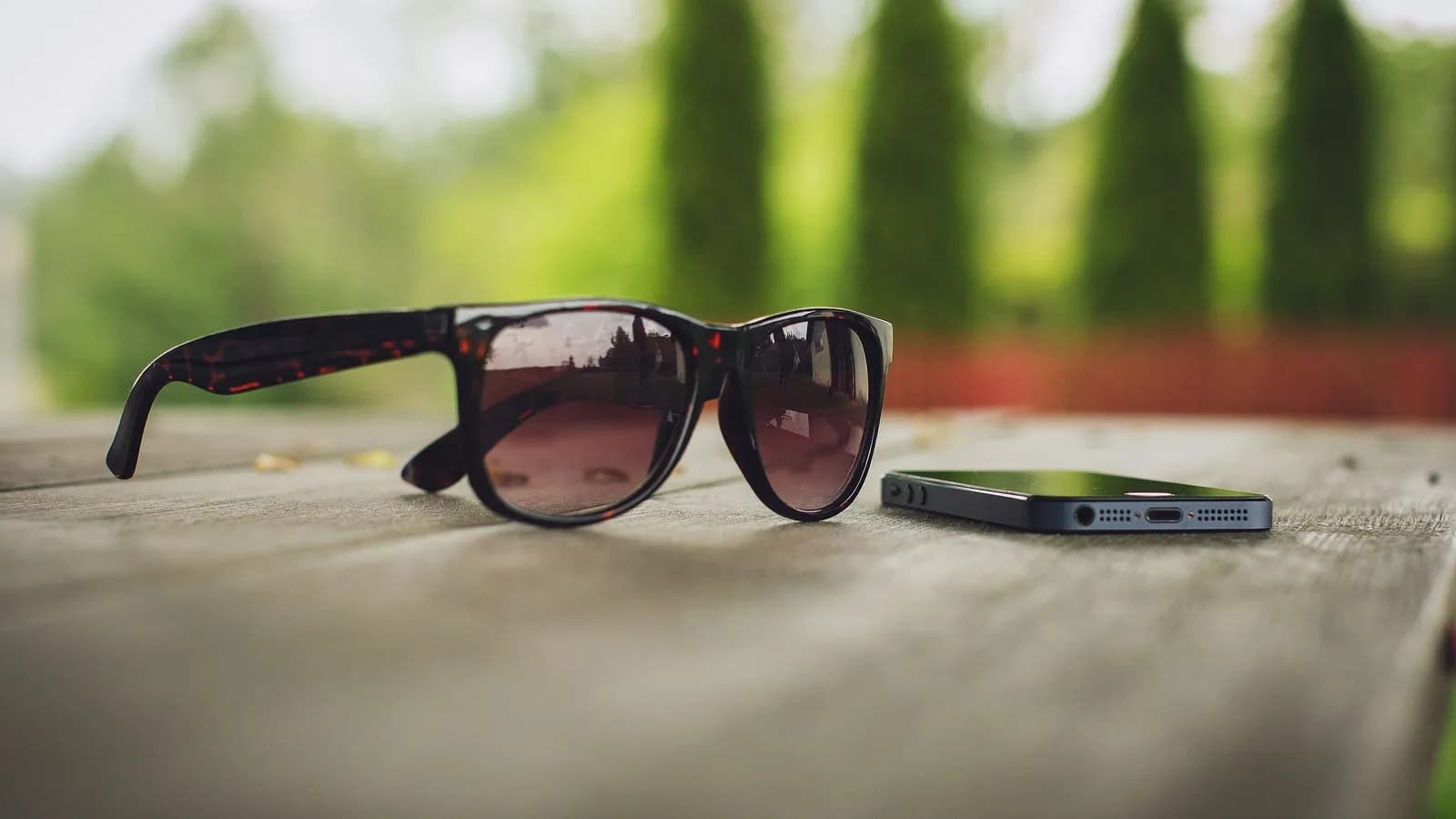
Ultraviolet light damages the eye the way it damages skin, cumulatively and without pain at the time. It contributes to cataracts, to the growth on the white of the eye called pterygium that is common in sunny, windy places, and probably to macular degeneration; a day on water or snow without protection can produce photokeratitis, a sunburn of the cornea that feels like sand in the eyes. The World Health Organization's guidance on UV puts eye protection alongside sunscreen, and for the same reason: the exposure in the Gulf, the Mediterranean summer and at altitude is high enough that the damage is a matter of years, not chance. The purpose of sunglasses is to stop that light. Everything else about them is secondary, and the market is arranged to make you forget it.
The protection
Ultraviolet is filtered by a coating or an additive in the lens material, not by the tint. A clear lens can block all of it; a nearly black lens can block none. Look for "UV400", which means the lens blocks wavelengths up to 400 nanometres, the whole UVA and UVB range, or for "100% UV protection", or for the CE mark in Europe and the ANSI Z80.3 standard in the United States, both of which require UV filtering. Cheap sunglasses from a reputable retailer almost always meet this, because the coating costs almost nothing; the ones to distrust are unlabelled market-stall glasses with a dark lens and no standard, which are the worst thing you can put on your face in strong light. A dark lens makes the pupil dilate, and a dilated pupil behind an unfiltered lens admits more UV than a squinting eye with no glasses at all.
The categories
European lenses carry a filter category from 0 to 4 that describes darkness, not protection. Category 0 is clear or barely tinted. Category 1 is light, for overcast days. Category 2 is medium, the everyday city lens. Category 3 is dark, for bright sun, beaches and most of the year in the Gulf, and is what most sunglasses are. Category 4 is very dark, for glaciers, high mountains and open ocean, and is illegal for driving in most jurisdictions because it cuts too much light for a shaded road or a tunnel. The tint colour is largely taste: grey keeps colours true, brown and amber increase contrast and suit driving and golf, green is a compromise, and the yellow and rose lenses marketed for sport brighten flat light but are poor in strong sun.
Polarisation
Light reflected from a flat surface, water, a wet road, a car bonnet, becomes horizontally polarised, and a polarising filter cuts it while passing the rest. The effect on glare is dramatic: anglers see fish, drivers see the road through reflections, and divers on a boat see the reef below. The costs are that polarised lenses make many LCD screens, including some car dashboards, petrol pumps and phone screens at certain angles, go dark or show rainbow patterns; that they hide the sheen on ice and on some wet surfaces, which skiers and some pilots prefer to see; and that they add to the price. They are worth it on water and for driving in low sun and unnecessary for walking around a city. Polarisation is independent of UV protection; a polarised lens still needs the UV400 label.
Frame and fit
Light comes in around a frame as well as through it, and a small fashion frame that sits away from the face admits enough from the sides and above to undo much of the lens. Larger lenses, wraparound shapes and frames that sit close to the brow protect more; a hat does the rest. Fit is a matter of the bridge sitting without pinching, the arms not pressing behind the ears, and the frame not slipping when you look down. Materials are taste and budget: acetate is heavier and more colourful, injected nylon is light and tough for sport, metal is thin and bends. Lenses are glass, which scratches least and breaks, or polycarbonate and the newer resins, which are light and impact-resistant and scratch, though coatings help. Prescription sunglasses are available in all of it and are worth having for anyone who otherwise squints through clip-ons. The brand on the arm sets the price and says nothing about the filtering, as our guide to judging what you buy would predict; the label inside the arm is the one to read. Our guide to extreme heat puts the eyes in the context of the rest of the body on a 45-degree day.
Published in The Outspoken Digest
Editorial desk
Outspoken Digest Style DeskReports for The Outspoken Digest across Fashion, Design, Lifestyle.
Newsletter
The Digest, in your inbox
One edition, sent when it is ready. No noise, and your address is never passed on.
Read Next
More Fashion →
Anthony Vaccarello Is Leaving Saint Laurent After a Decade, and Kering Has Not Yet Named His Successor
Oct 9, 2026/2 min read

Louis Vuitton Closes Paris Fashion Week With Hovering Cars, Paper-Light Dresses and a Louvre Courtyard Cityscape
Oct 7, 2026/2 min read

Celine Dion Made a Surprise Return to the Catwalk to Close L'Oreal's Paris Fashion Week Opening Show
Sep 29, 2026/2 min read

Louise Trotter Doubled Down on Colour and Oversized Bags for Her Latest Bottega Veneta Show in Milan
Sep 27, 2026/2 min read