We Wrote That Third Places Were Coming Back. The Census Data Says They Were Disappearing.
A visible revival of cafes, clubs and community spaces is real, and so is a measured decline in how many exist. Both can be true at once, and the difference between them is a question about who gets one.
Monday, August 24, 2026/4 min read
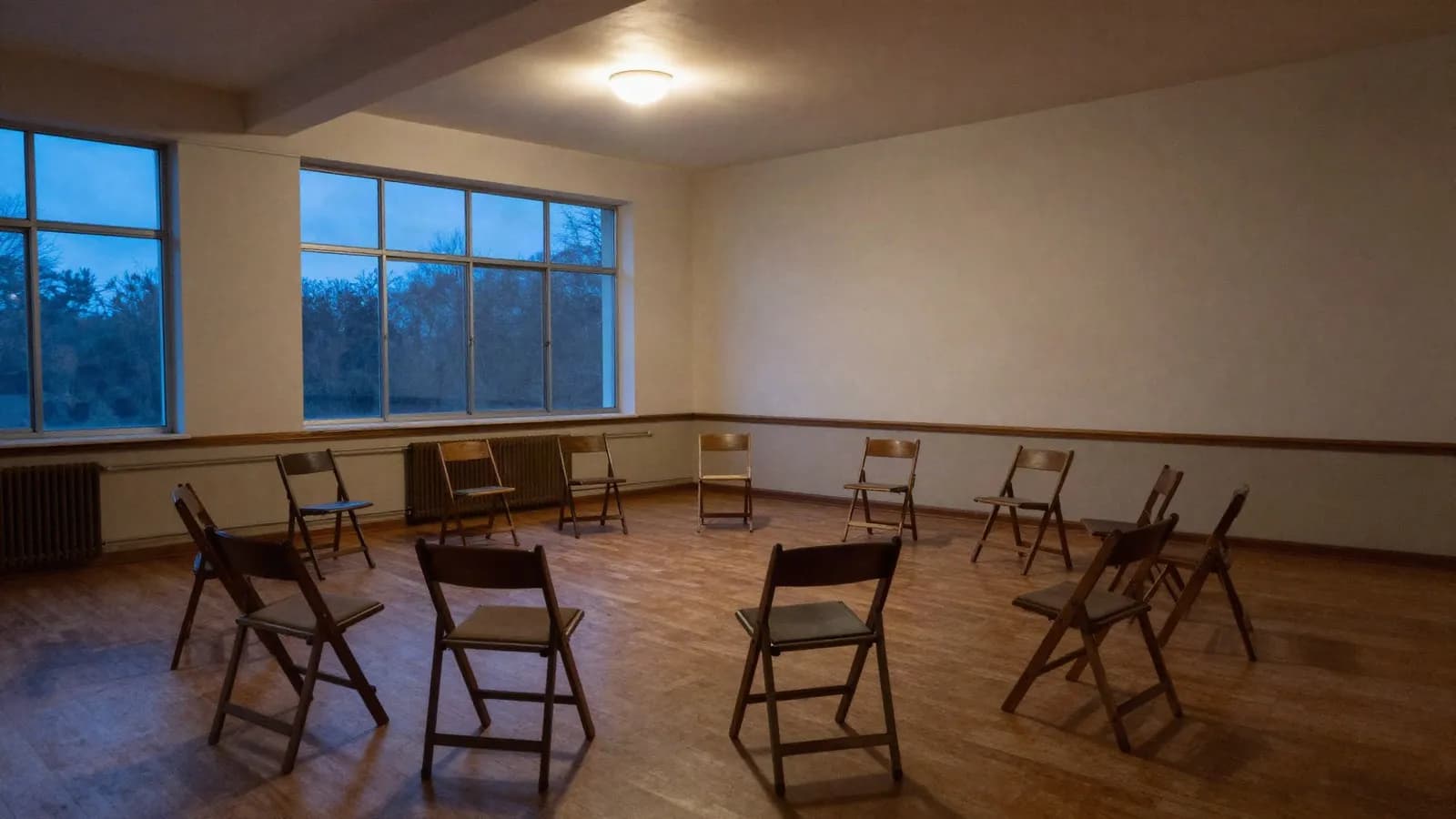
We have argued on this site that third places are returning: that cafes, clubs, libraries and community spaces are being rediscovered by people who have had enough of choosing between home and work. That case is set out in our piece on the revival, and the cultural evidence for it is easy to find.
The measured evidence points the other way, and it is worth taking that seriously rather than quietly not mentioning it.
What does the data show?
A decline in availability, unevenly distributed.
Research by Finlay and colleagues, working from census tract level data, found a rapid fall in the availability of third places between 2019 and 2021. The decline was not spread evenly. Majority Black areas had fewer libraries. Areas with lower educational attainment and rural areas had fewer civic and social organisations. The researchers noted that the overall decline was likely to fall hardest on precisely those communities.
That is a different kind of claim from a cultural observation. It counts buildings and organisations rather than describing a mood.
How can both stories be true?
Because they are measuring different things in different places.
The revival is real and it is concentrated. It is happening in dense, relatively affluent urban districts, where a run club, a book shop with a back room or a new independent cafe is commercially viable because enough people with disposable income live within walking distance.
The decline is also real and it is broader. A public library, a union hall, a church basement, a community centre: these are not businesses. They exist because somebody funds them, and when funding contracts they close, quietly, without a launch or a write up.
So the visible version of third places is increasingly the commercial version, and the commercial version follows purchasing power. What looks like a revival from inside a city centre can be a net loss once you count the institutions that never had a marketing budget.
The distinction matters because the two types do different work. A paid third place selects for people who can pay. A free one does not, and that is most of the point of it.
Why is this being treated as a health question?
Because the health bodies now class it as one.
On 30 June 2025 the World Health Organization Commission on Social Connection published its flagship report, naming social connection a global public health priority. It found that about one in six people worldwide, some 16 per cent, experienced loneliness across the period from 2014 to 2023, and that more than 871,000 deaths a year are associated with it, which the Commission framed as roughly a hundred an hour. Loneliness was most commonly reported among adolescents, at almost 21 per cent of thirteen to seventeen year olds.
The word associated is doing necessary work in that sentence, and it should not be upgraded to caused. Loneliness travels with poverty, illness, disability and age, all of which independently affect mortality, and disentangling them is genuinely hard. What the figure establishes is scale, not mechanism.
What do people say about their own lives?
That the difficulty is in meeting people at all.
Survey work published this year found that around 66 per cent of Europeans think it is harder to meet new people now than in the past, and that more than half are dissatisfied with their social relationships. Seventy two per cent said they would like more real world experiences, and 63 per cent expressed a wish to belong to a community organised around a shared interest.
The last of those is the most practically useful finding in the whole literature. People are not asking for more socialising in the abstract. They are asking for a reason to be in the same room repeatedly, which is what a shared interest provides and what an invitation does not.
What actually works, then?
Repetition and low stakes, rather than events.
The defining property of a third place is not that it is sociable. It is that you can go without arranging anything, that the same people are there most times, and that leaving early costs nothing. That combination is what allows an acquaintance to become something more without anyone deciding it should.
Almost every designed solution to loneliness fails on one of those three. An event requires arranging. An app supplies novelty rather than repetition, which is why the category has grown into a market without solving the problem, as we looked at in companion apps and the loneliness market.
The workplace used to supply repetition by default, which is one of the least discussed consequences of the change in where people work, covered in what the evidence shows about hybrid arrangements. Removing the commute removed a great deal of unplanned contact along with it, and nothing was designed to replace it.
The correction we owe
Our revival piece was not wrong, but it was partial.
Third places are having a cultural moment and are being rebuilt in the places best able to pay for them. The infrastructure version, the kind you do not have to buy anything to use, has been shrinking, and shrinking fastest where it was already thinnest.
Reporting only the first is how a genuine trend becomes a misleading one. The interesting question for the next few years is not whether third places are back. It is whether the ones coming back are open to the people who lost theirs.
Published in The Outspoken Digest
Editorial
Outspoken Digest EditorialThe Digest's own desk: the pieces that do not sit in one section.
Newsletter
The Digest, in your inbox
One edition, sent when it is ready. No noise, and your address is never passed on.
Read Next
More Lifestyle →
Street Fighter Wins the Weekend With $31 Million, but an Elizabeth Holmes Documentary Opens to $15 Million
Oct 19, 2026/2 min read
Street Fighter Opens With $4 Million in Thursday Previews as Critics Split on the Video Game Reboot
Oct 16, 2026/2 min read

Two Stolen Renoirs Found Behind a Cinder-Block Wall as Police Say Suspects Eyed the Fondation Maeght
Oct 15, 2026/2 min read

Hulu Orders Ryan Coogler's X-Files Reboot to Series With Danielle Deadwyler and Himesh Patel
Oct 14, 2026/2 min read