The UAE Now Earns Four Fifths of Its Economy Outside Oil
Non-oil activity reached 79.4 percent of national output in the first quarter, growing at 4.8 percent while the overall economy grew 3. The gap between those figures is the story.
Outspoken Digest Gulf Economics Desk
Thursday, August 6, 2026/4 min read
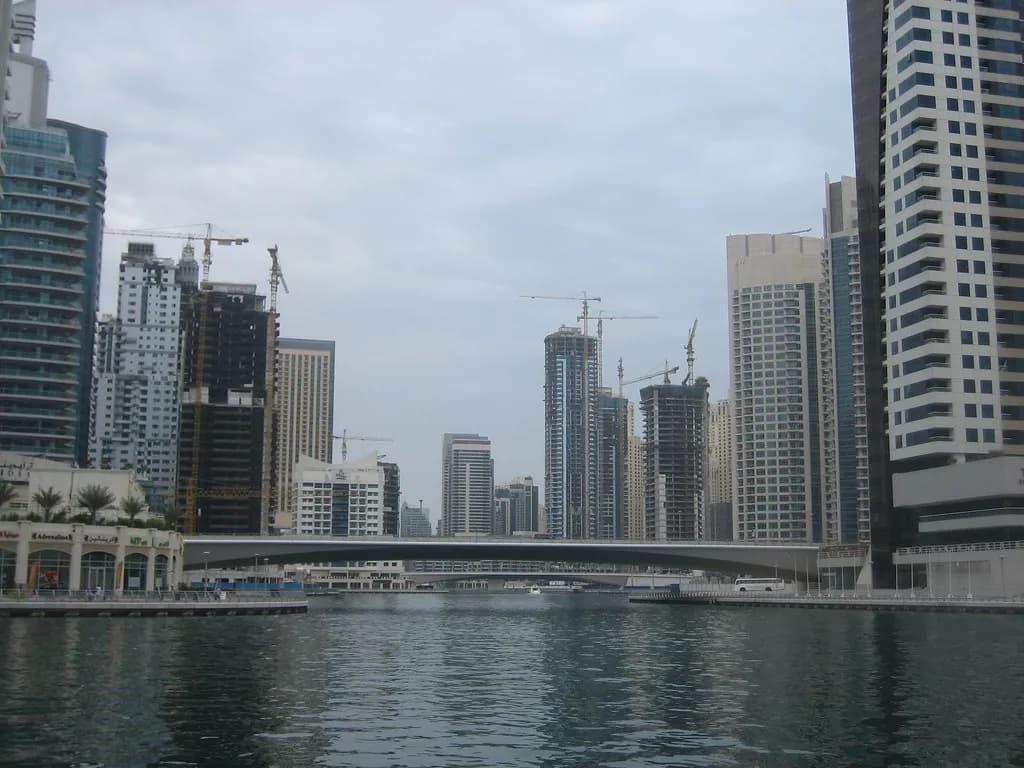
Diversification is the most repeated word in Gulf economic policy and one of the hardest to verify. Every state claims it. The question is always what the number actually is.
For the UAE in the first quarter of 2026, the number is 79.4 percent. That is the share of the national economy coming from non-oil activity, and real GDP over the same period reached AED 485 billion, about 132.06 billion dollars at constant prices.
The two growth rates that matter
Overall real GDP grew 3 percent year on year. Non-oil GDP grew 4.8 percent.
The gap between those two figures is the whole diversification argument in one line. When the non-oil economy grows faster than the total, its share rises mechanically, and the composition of the economy shifts without anyone needing to announce it.
That is a slow process by design. A share moving a percentage point or two a year does not make headlines, but sustained across a decade it changes what a country is. Regional coverage from AGBI and Arabian Business has tracked the same trajectory across successive quarters.
What the non-oil economy is actually made of
This is where the headline figure needs care, because non-oil is a category defined by what it excludes rather than what it contains.
It covers logistics, financial services, tourism, real estate, construction, retail and manufacturing. Some of that is genuinely independent of hydrocarbons. Some of it is downstream of oil revenue in ways the accounting does not capture: construction funded by state spending, retail supported by wages paid from that spending, real estate valued on the expectation of both.
None of that makes the figure wrong. It makes it a measure of economic composition rather than a measure of independence from oil, and those are different claims.
The corporate activity underneath
The quarter has come with deal flow consistent with the picture. Dubai Investments completed a full acquisition of Clemenceau Medical Center Dubai, moving from a 20 percent holding to 100 percent, in a healthcare sector that has been a consistent target for domestic capital.
Healthcare is a useful example of what real diversification looks like. It generates recurring domestic revenue, it employs skilled workers, and its demand is driven by population and demographics rather than by commodity prices.
The regional comparison
Saudi Arabia is running the same strategy at a larger scale and from a more concentrated starting point. Saudi Aramco reported adjusted net income of 67.2 billion dollars for the first half of 2026, having maintained crude supply through unprecedented disruption to shipping in the Strait of Hormuz.
That figure is worth putting next to the diversification story rather than against it. Hydrocarbon revenue at that scale is what funds the transition, and the awkward truth of Gulf diversification is that it is financed by the thing it is designed to reduce dependence on.
The UAE's advantage is that it started earlier and from a broader base, with Dubai in particular having built trade and services capacity over decades rather than years.
What could interrupt this
Three things, in rough order of probability.
The first is regional security. Shipping disruption through Hormuz raises costs across every import dependent sector, and the non-oil economy is considerably more import dependent than the oil economy is.
The second is real estate concentration. Property is a large component of non-oil GDP in the UAE, and it is cyclical in a way that logistics and healthcare are not. A property correction would take a meaningful bite out of the non-oil figure without anything happening to the underlying diversification effort.
The third is the oil price itself, through the funding channel. Lower hydrocarbon revenue means less state capital available for the projects that generate non-oil growth, which is the uncomfortable circularity in the whole model.
How the UAE got here earlier than its neighbours
The head start is geographic and historical rather than strategic genius. Dubai's oil reserves were always modest compared with Abu Dhabi's, which forced a trade and services economy decades before diversification became regional policy.
Ports, free zones, aviation and re-export trade were built because there was no alternative, and they compound. A logistics hub becomes more valuable as more traffic passes through it, which is a very different growth curve from an extractive industry where each barrel is worth what the market says that day.
Coverage across regional business media, including TradeArabia, has tracked how much of the current non-oil expansion runs through those established channels rather than through newly created sectors.
The employment question underneath the number
GDP composition and labour market composition are not the same thing, and the second is the harder problem.
An economy can shift its output away from hydrocarbons while its citizens remain concentrated in public sector employment funded by hydrocarbon revenue. That is a live issue across the Gulf, and it is why nationalisation of the private workforce appears in every state's planning documents.
The measure that would settle it is the share of nationals employed in private, non-oil, non-government roles. It moves more slowly than GDP composition and it is reported less prominently, which is usually a sign that a number is uncomfortable.
What to watch next
Watch the non-oil growth rate rather than the share. The share is an output of the two growth rates and moves slowly; the growth rate is the leading indicator and turns first.
Watch also which sectors are driving it quarter to quarter. Non-oil growth led by logistics, manufacturing and services is a different and more durable proposition than non-oil growth led by construction and property, even though both produce the same headline percentage.
Four fifths is a real achievement measured against where the UAE started. Whether it is four fifths of an economy that would survive a sustained oil downturn is a question the figure cannot answer on its own.
Published in The Outspoken Digest
Newsletter
The Digest, in your inbox
One edition, sent when it is ready. No noise, and your address is never passed on.
Read Next
More Business →
Wall Street Week Ahead: A Fed Decision on Wednesday, Alphabet, Microsoft and Amazon Report, and Oil Near $117
Oct 26, 2026/2 min read

Dow Sheds More Than 600 Points as Brent Passes $116 and Houthi Attacks Rattle Wall Street
Oct 24, 2026/2 min read
Meta Reports $64.6 Billion Revenue and Negative Free Cash Flow, and Plans a New Class of Non-Voting Shares
Oct 23, 2026/2 min read

Nasdaq Falls 2.6% and Chip Stocks Plunge as Brent Oil Jumps to $113 and Treasury Yields Slide
Oct 23, 2026/2 min read