The World Number One Has Withdrawn and the Defending Champion Has Not Played in Four Months
Jannik Sinner is out of the US Open with a knee injury. Carlos Alcaraz arrives as defending champion with no warm up tournament behind him. The draw is made on 27 August and the men's title is genuinely hard to call.
Monday, August 24, 2026/3 min read
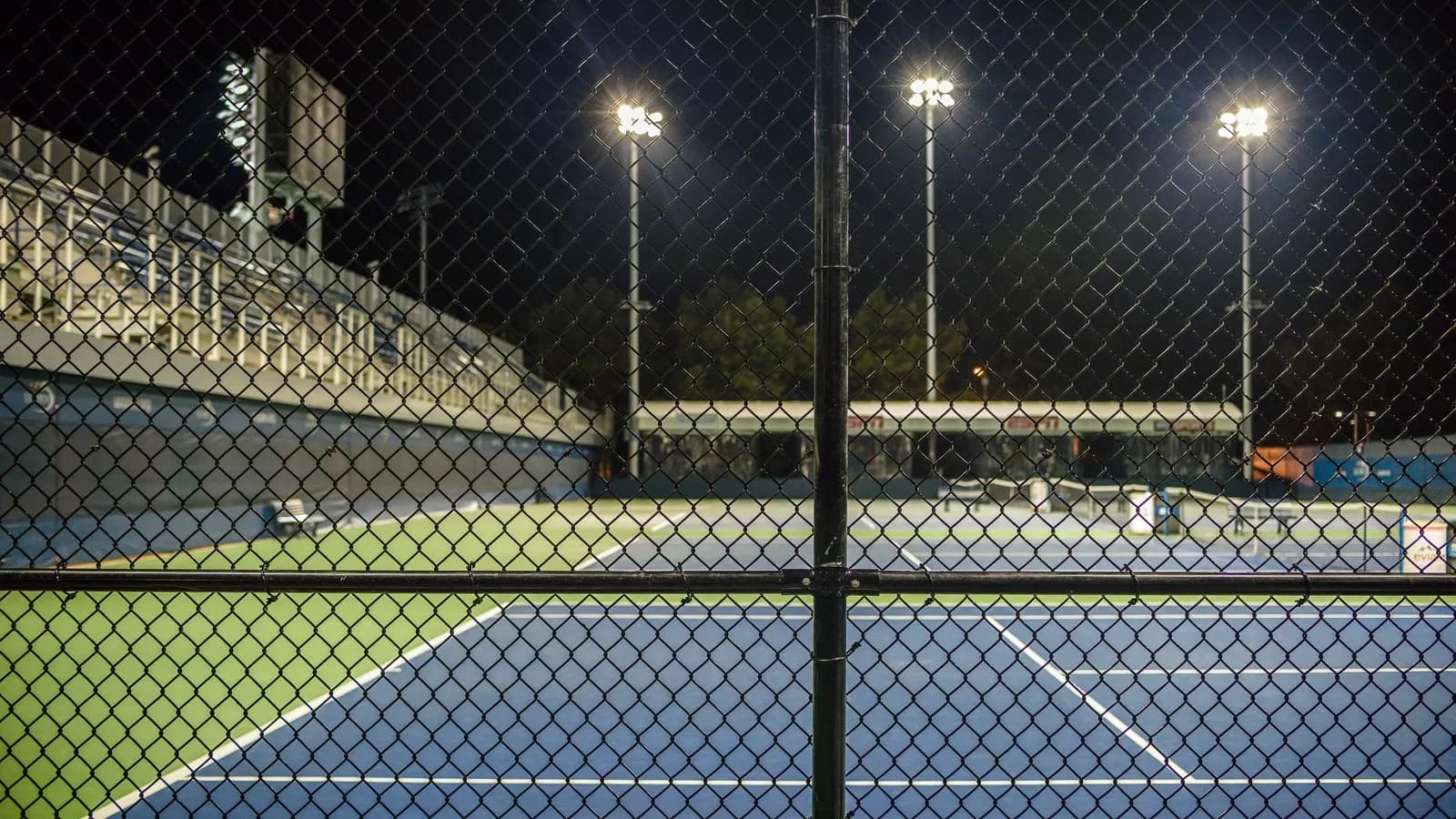
The final grand slam of the season begins on 30 August, with the draw made on Thursday 27 August. The women's final is on Saturday 12 September and the men's on Sunday 13 September.
It arrives in an unusual condition. The world number one is not playing, and the defending champion has not competed in four months.
Who is missing and who is back?
Jannik Sinner, the world number one, has withdrawn with a knee injury. That removes the player who would otherwise have been the obvious favourite.
Carlos Alcaraz, the defending champion, is playing. He returns from a four month injury layoff without a warm up tournament, which is a significant qualification on any prediction about him. With Sinner out he has become a clear favourite in the betting at around +140, with Alexander Zverev next at about +300.
Those two facts sit awkwardly together. A player is the strong favourite for a two week, best of five sets tournament having played no competitive matches since the spring.
Why does the lack of a warm up matter so much?
Because hard court tennis punishes match rustiness in a specific and physical way.
Training replicates strokes. It does not replicate the decisions a player makes in the fourth hour of a match against an opponent who has found a pattern that works. Nor does it replicate the accumulated load of playing five days out of seven on a surface that returns everything into the joints.
The men's draw is best of five sets from the first round. A returning player who might comfortably win a best of three in week one can find the same match becomes a four hour examination of a knee, an ankle or a back that has not done that work in months.
This is why the honest position on Alcaraz is that his ceiling is the highest in the field and his floor is unusually low, and nobody, including his own team, knows which one arrives.
What about the women's draw?
Better formed, and closer.
Aryna Sabalenka is setting the pace, with Iga Swiatek immediately behind her having just won the National Bank Open. Both are fit, both have played, and neither carries the question mark hanging over the men's favourite.
That is worth saying plainly, because women's tennis often gets described as unpredictable when the more accurate description this year is that it has two clear leaders in form. The unpredictability is on the other side of the tournament.
What makes this draw genuinely open?
Three separate uncertainties stacking on one another.
The absent favourite. Sinner's withdrawal does not simply promote one player. It redistributes an entire quarter of the draw and changes who meets whom and when.
The untested favourite. Alcaraz's form is unknown rather than poor, which is a different kind of risk for anyone reading the field.
The draw itself, made on 27 August. In a tournament with no dominant player, the draw does an unusual amount of the work. Landing in the same quarter as an in form seed matters more when there is no obvious champion to lose to later anyway.
How to watch it
Two markers are worth more than the results in the opening days.
Watch Alcaraz's match durations rather than his scorelines. A player returning from injury who wins in straight sets in under two hours is in a completely different position from one who wins in four sets in three and a half. The second is a warning about week two even when it appears in the win column.
And watch the seeds who arrive with matches behind them. In a slam where the top of the field is compromised, the players who benefit are usually not the biggest names but the ones who have quietly played a full hard court swing and are sharp.
Tennis is one of the sports the region has invested in heavily over the past decade, alongside motorsport and golf, a story we set out in the Gulf's sporting decade. It is also, this fortnight, a reminder of how quickly a season's expected outcome can be rearranged by two injuries, in the same way that a rule change rearranged the Formula One championship.
Published in The Outspoken Digest
Newsletter
The Digest, in your inbox
One edition, sent when it is ready. No noise, and your address is never passed on.
Read Next
More Sports →
Edwards Scores 45 as Timberwolves Rout Heat on Giannis Antetokounmpo's Debut, and Pistons Rally From 22 Down
Oct 22, 2026/2 min read
Rice Rescues Arsenal With an 82nd-Minute Equaliser at Bayern Munich After Kane's Penalty Made It 2-1
Oct 22, 2026/2 min read
Rays and Brewers Meet in a World Series Neither Franchise Has Ever Won, With Game 1 on Friday
Oct 21, 2026/2 min read
Liverpool Come From Two Goals Down to Beat Villarreal 4-3 on a Champions League Night of 40 Goals
Oct 21, 2026/2 min read