Wetsuit Thickness, Fit and Neoprene: a Buying Guide That Starts With the Water Temperature
A wetsuit that fits badly is a wetsuit of any thickness that does not work. Match millimetres to the water, check the fit at the neck, the small of the back and the wrists, and know which neoprene you are paying for.
Tuesday, April 7, 2026/4 min read
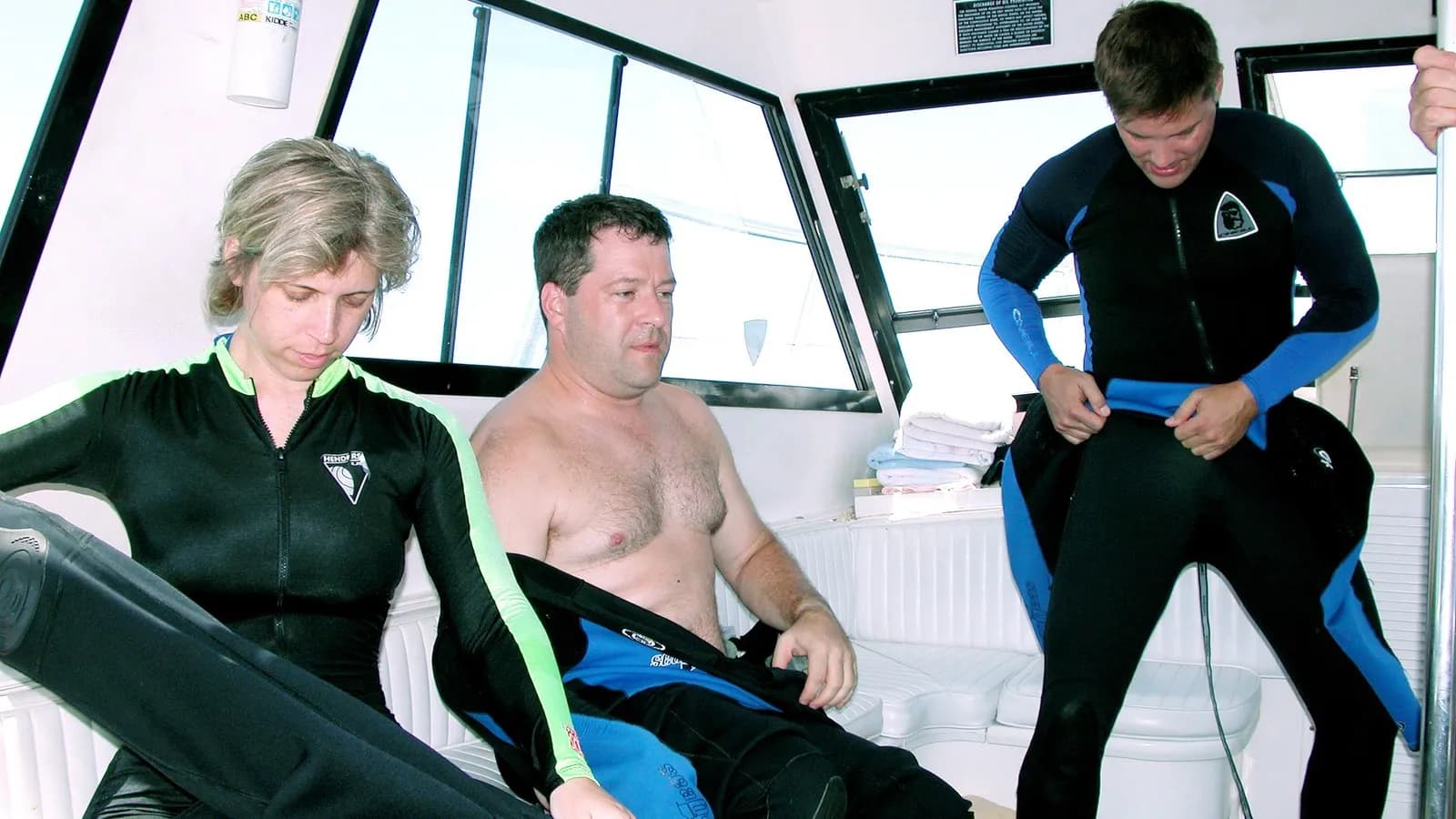
A wetsuit does not keep water out. It lets a thin layer in, the body warms it, and the neoprene, closed-cell foam full of tiny gas bubbles, slows the heat's escape. Two things follow. First, the suit works only if that layer of water stays put, which is a question of fit; a loose suit pumps cold water through with every movement and a 7 mm suit that flushes is colder than a 3 mm that seals. Second, the insulation is the gas in the foam, which compresses with depth, so the suit's warmth at 30 metres is a fraction of its warmth at the surface. Every buying decision runs through those two facts, and Divers Alert Network's resources on thermal stress explain why they matter for safety and not only comfort.
Thickness by water
Above 28 degrees, the Red Sea and the Gulf in summer, the Maldives, most of Southeast Asia: a rash vest or a 1 to 2 mm shorty, worn for sun and sting protection as much as warmth. 24 to 28: a 3 mm full suit for most people, a shorty for the warm-blooded. 20 to 24, the Mediterranean in summer, the Red Sea in winter, the Canaries: 5 mm, and a hooded vest under it for anyone who feels the cold or plans repeat dives. 15 to 20: 7 mm with hood and gloves, or a semi-dry, which is a 7 mm suit with better seals and a dry zip that reduces flushing. Below about 14, the wetsuit is at its limit and the drysuit argument begins. These are starting points; women, thin people, older divers and anyone doing three dives a day should go up a step, and freedivers, who move less and stay shallower, wear thinner open-cell suits that would be impractical for scuba.
Fit
Snug everywhere, tight nowhere, and no gaps. The places to check in the changing room: the small of the back, where a badly cut suit leaves a pocket that fills with cold water on descent; the neck, which should seal without choking when you look down; the wrists and ankles, which should grip the skin; the armpits and crotch, which should be up where they belong so the arms and legs move freely. Raise your arms above your head; if the suit rides up at the crotch by more than a couple of centimetres, it is too short in the body. Crouch; if it pulls hard across the knees, the legs are too short. A new suit should feel a size too small on land and right in the water, because neoprene relaxes when wet and compresses at depth. Sizing charts differ between brands and between men's and women's cuts; women's suits are cut for hips and bust and a woman in a men's suit will have the back pocket problem in reverse. Made-to-measure suits cost more than off the peg and less than most regulators, and for anyone who is not an average shape they are the single best upgrade in diving.
Neoprene
Standard neoprene is petroleum-based and comes in grades of density and stretch; the stretchier suits are more comfortable and compress more at depth. Limestone neoprene, made from calcium carbonate, has a higher proportion of closed cells, is warmer per millimetre and compresses less, and costs more; it is what the better suits use and the label will say so. Yamamoto is a Japanese maker whose numbered grades appear on freediving suits. Natural rubber suits have arrived in the last few years with a lower environmental footprint and similar performance. Lining matters too: a plush or fleece inner is warmer and slower to dry; an open-cell inner, unlined, seals to the skin like a second skin and needs lubricant to put on, which is why freedivers use it and scuba divers mostly do not. Glued and blind-stitched seams keep water out; flatlock seams, sewn straight through, leak and belong on warm-water suits only. Taped seams on the inside are the top grade.
Zips, and everything else
Back zips are easier to get in and out of with help; front zips are easier alone and seal better; a chest zip on a semi-dry is the warmest arrangement. Knee pads for wreck divers. A hood that is part of the suit is warmer than a separate one and less versatile. Rinse in fresh water after every dive, dry inside out in shade, never in a hot boot or on a radiator, hang on a wide hanger by the waist not the shoulders, and store flat or hung; folded neoprene creases permanently. A good suit lasts five to eight years of regular diving and then loses its loft and its seal, and a diver who is suddenly cold in a suit that used to be warm should suspect the suit before the water. Our weighting guide covers what to do when the new, thicker suit changes everything else.
Published in The Outspoken Digest
Newsletter
The Digest, in your inbox
One edition, sent when it is ready. No noise, and your address is never passed on.
Read Next
More Diving →
Playing Recordings of a Healthy Reef Drew More Coral and Fish Larvae to Artificial Structures Off Hawaii
Oct 9, 2026/3 min read
Blacktip Sharks Can Hear a Sound From Nearly 250 Feet Away and Swim Straight Toward or Away From It
Oct 1, 2026/2 min read
A Sea Turtle Species Never Recorded Nesting in the United States Laid Eggs on a Southern California Beach
Oct 1, 2026/2 min read
Marine Surveyors Confirmed Living Coral Off Benin, More Than Sixty Years After the Reef Was Presumed Dead
Sep 29, 2026/2 min read