Shawarma Is Not an Arabic Word, and the Dish Is Younger Than Almost Everyone Assumes
The name is a loanword from Turkish, the technique is a nineteenth century invention, and the man usually credited with it was a butcher in Bursa who turned the spit on its end. Here is where shawarma actually comes from.
Friday, August 21, 2026/4 min read
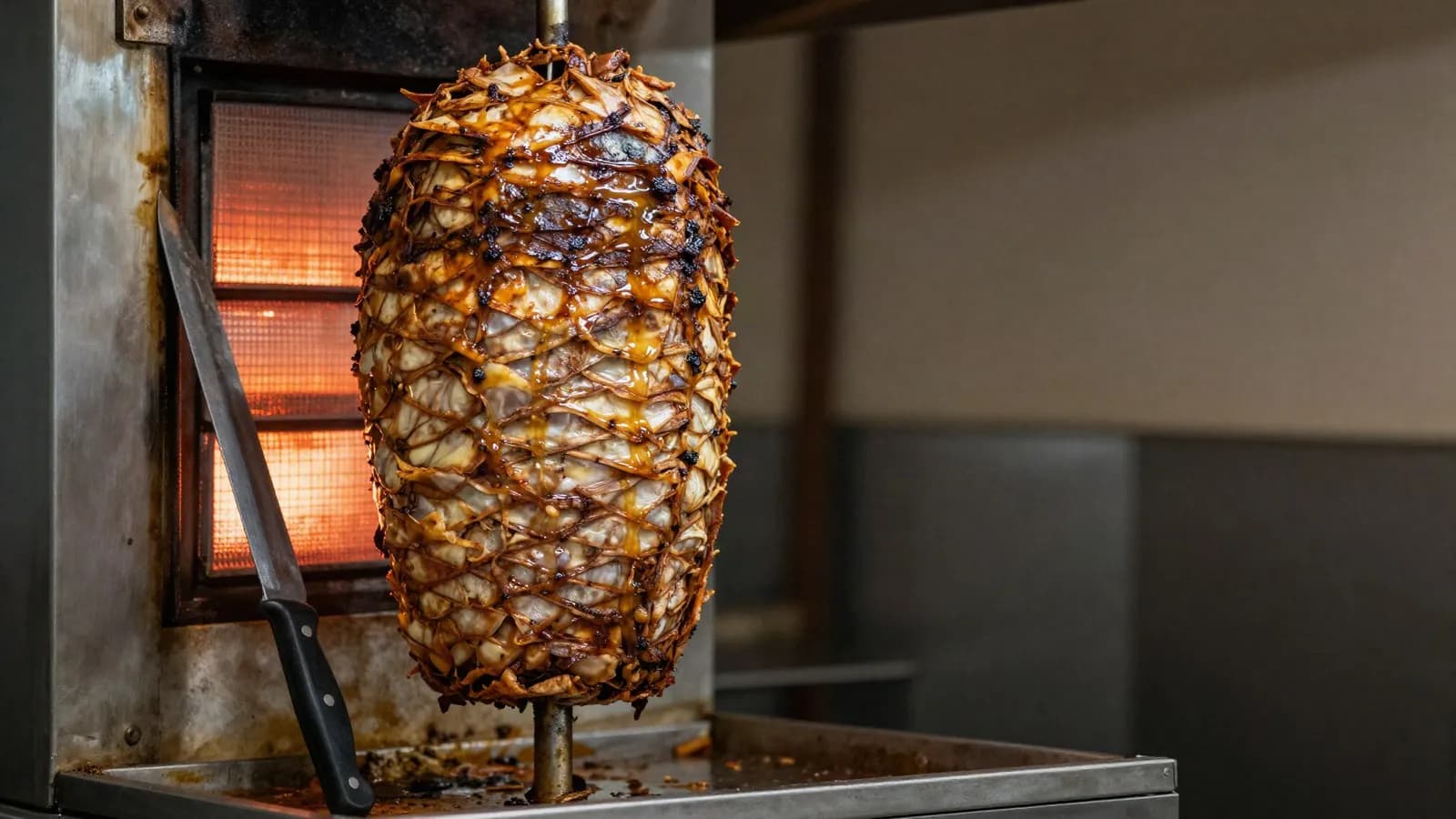
Shawarma feels ancient. It is sold from the same kind of shopfront in Beirut, Amman, Dubai and Berlin, it is carved by hand from a column of meat that looks like it has always existed, and most people assume it goes back to some deep antiquity of the Levant.
It does not. The dish as anyone would recognise it is a nineteenth century invention, and the word for it was borrowed from another language.
What is shawarma?
Meat stacked in layers on a vertical spit, rotated slowly against a heat source, and shaved off in thin slices as the outer surface cooks.
That description is the whole thing, and it is worth being precise about it because everything else varies. The meat may be chicken, lamb, beef or a mix. The seasoning changes from country to country and shop to shop. It may be served in flatbread, in a wrap, on a plate with rice, or over chips.
What makes it shawarma is the method: vertical, turning, carved to order. The vertical part is the innovation, and it is the reason the dish exists at all.
Where does shawarma come from?
The Ottoman Empire in the nineteenth century, and the technique spread outward from there.
Cooking meat on a spit is genuinely ancient and belongs to no one. What was new was turning the spit upright. Standing the stack on its end changes the physics: fat renders and runs down through the layers below instead of dripping into the fire, the outer surface crisps while the interior stays moist, and the cook shaves off only what has finished cooking rather than waiting for a whole joint.
The innovation is generally attributed to a butcher named Iskender, whose shop was in the city of Bursa. He took the meat off the bone, layered it onto an upright spit, cooked it slowly and carved it to order. From there the method travelled through the Ottoman world.
What does the word shawarma mean?
Turning. It is a loanword, and the etymology is the clearest evidence of the route the dish took.
The Turkish name for the dish is doner kebab, from donmek, to turn. When the method reached Syria, Lebanon and Jordan, the Arabic name that emerged was shawarma, borrowed from the Turkish cevirme, which also means turning.
So the name is not describing the meat, the bread or the spices. It is describing the motion of the spit. Everybody who named this dish named it after the same thing, in their own language, which tells you they all understood the rotation to be the point.
Why did it spread so far so fast?
Because it solves a restaurant problem better than almost anything else.
A vertical spit is a machine for serving meat quickly to a queue. The stack cooks continuously through service, so there is no waiting for a joint to finish. Portions are carved to order, so waste is low. One person can run it. And a tall column of glistening meat turning in a window is the most effective advertising a small shop has ever had.
That combination of speed, low waste and visibility is why the format survived every migration it made, and why it is now one of the most widely eaten street foods on earth. It also travelled with people rather than with cookbooks, which is why the same technique surfaces under four different names in four different cuisines.
Is shawarma Turkish or Arab?
The honest answer is that the question is framed badly, and it is worth saying why.
The technique is Ottoman and the name is Turkish. The dish called shawarma, as it is seasoned, sauced and served across the Levant and the Gulf, is Arab. Those two statements do not compete. Levantine cooks did not receive a finished object and reheat it. They took a method and built something else with it: different marinades, garlic sauce and toum, pickles, tahini, the bread it goes into and the way it is eaten.
Food history is almost always a story of borrowing, and dishes that travel are the ones that got adapted rather than preserved. Treating that as a threat to ownership misunderstands how cuisine works.
How is it seasoned?
This is where the regional identity actually lives, more than in the spit.
Levantine chicken shawarma leans on garlic, lemon and a warm spice mix, usually including allspice, cinnamon, cardamom and black pepper, and it is very often finished with toum, the emulsified garlic sauce that is closer to the soul of the dish than the meat is. Beef and lamb versions lean darker, with cumin, coriander and sometimes a little vinegar.
The Gulf versions tend to be milder and more heavily sauced, and Turkish doner is generally more restrained in spicing, which is a real difference of philosophy rather than an accident.
If you want to try the seasoning without the spit, the domestic version is genuinely achievable, and our chicken shawarma recipe uses an oven and a stack rather than a rotisserie. The comparison worth reading alongside it is shish tawook against shawarma, which are constantly confused and are not the same thing at all.
Published in The Outspoken Digest
Editorial desk
Outspoken Digest Food DeskCooking, ingredients, restaurants and the economics of what ends up on the table.
Newsletter
The Digest, in your inbox
One edition, sent when it is ready. No noise, and your address is never passed on.
Read Next
More Recipes →
Cheesy Ramen on the Stove: Instant Noodles in a Real Cheese Sauce in Ten Minutes
Oct 18, 2026/3 min read
Beer-Battered Jalapeno Cheese Curds: The Wisconsin Bar Snack, Fried Properly at Home
Oct 18, 2026/3 min read
A Thanksgiving Turkey Sub With Hot Stuffing, Cranberry and Gravy to Dip
Oct 17, 2026/3 min read

Pecan Pie Bars With a Shortbread Base and a Caramel Filling That Slices Cleanly
Oct 17, 2026/3 min read