Trump Barred CNN, MS NOW and Politico From the White House. Reporters Were Turned Away; a Judge Hears It Wednesday
The announcement came on Truth Social on Friday, citing fake news; on Saturday three correspondents had their hard passes taken at the gate. The outlets sued on First Amendment and due process grounds. Fox News journalists objected. The judge is Trump's.
Tuesday, September 22, 2026/3 min read
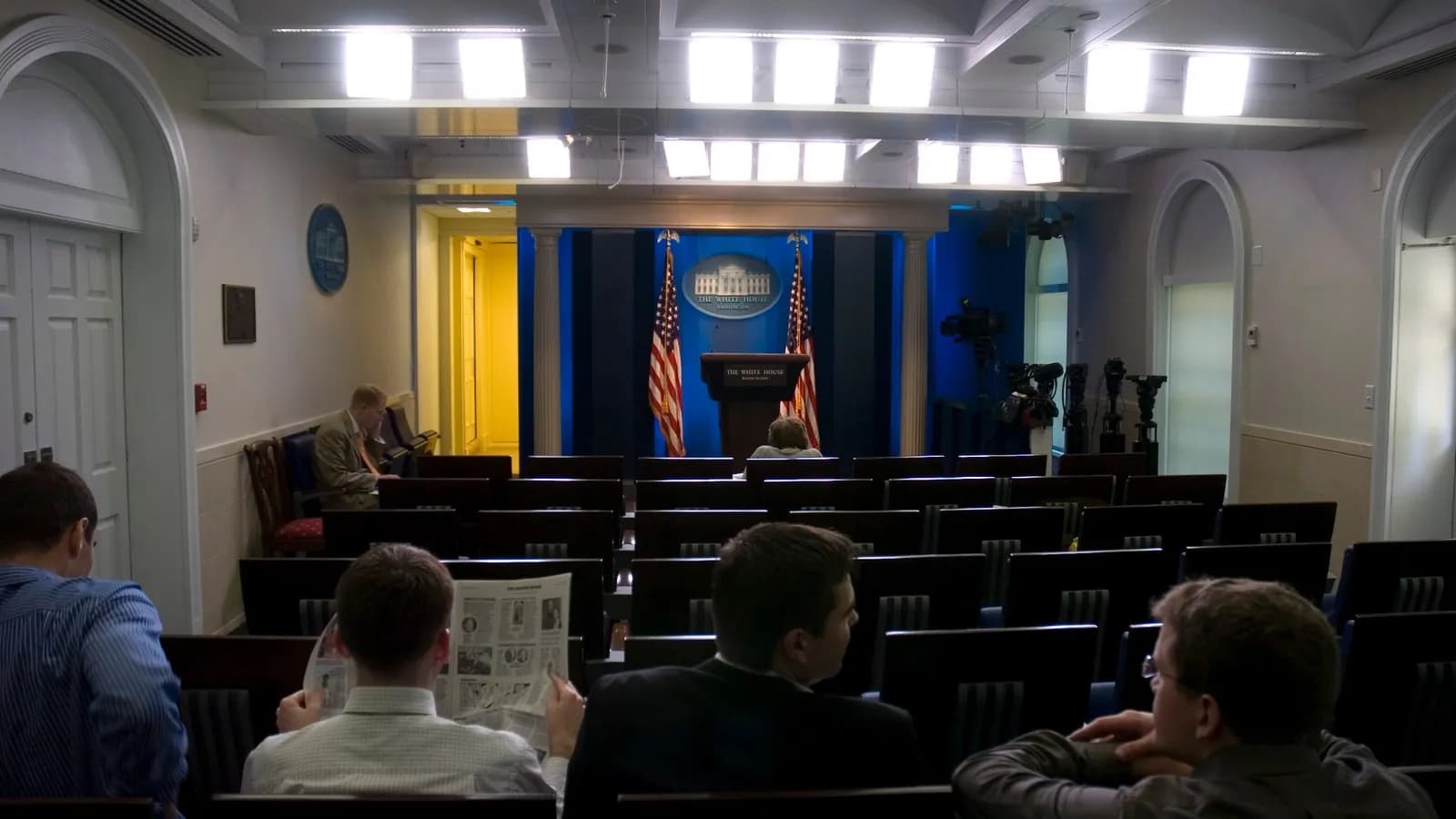
On Friday evening Donald Trump posted on Truth Social that CNN, MS NOW and Politico would be banned from the White House for what he called their "constant 'reporting' FAKE NEWS!", and threatened that other outlets could follow. On Saturday morning it happened. MS NOW's Akayla Gardner, CNN's Betsy Klein and Politico's Cheyenne Haslett were stopped at the gate; Klein and Haslett had their credentials confiscated. An MS NOW photographer was refused; a producer was let through. By Sunday the three organisations had filed a 27-page complaint in the US District Court for the District of Columbia against the president, his communications director Steven Cheung, the Secret Service director Sean Curran and the chief of staff Susie Wiles, arguing that the ban violated their due process rights and the First Amendment's protection of newsgathering, and asking for a temporary restraining order restoring the hard passes. NBC and NPR have the filing and the scene at the gate.
The law
The precedent the outlets rely on is nearly fifty years old. In Sherrill v. Knight in 1977 the DC Circuit held that a White House press pass could not be denied without notice of the reason, a chance to respond and a written decision, and that the reason could not be the reporter's viewpoint. Every administration since has lived with that ruling, including this one in its first term, when CNN's Jim Acosta got his pass back within days on the same grounds. The administration's argument, as JD Vance framed it on Sunday, is that the president is not "banning media outlets" but denying "special access", and that a hard pass is a privilege. That is the argument Sherrill rejected. The difference this time is scale: three organisations at once, by presidential post, with the reason stated in the post.
The judge
The case went to Judge Timothy Kelly, appointed by Trump in 2017, who ordered the administration to respond by Tuesday and set a hearing for Wednesday. Kelly has ruled against the administration before, on the January 6 cases among others, and the speed of his order suggests he regards the question as urgent. A restraining order would restore the passes pending a full hearing; a refusal would leave the three outlets covering the White House from outside the fence through UN week and the Xi visit.
Who objected
The White House Correspondents' Association called the removal unconstitutional. Journalists at Fox News, which is not affected, criticised the decision publicly, which is the detail that matters most politically; the press corps has been divided on many things this year and was not divided on this. New York's mayor, Zohran Mamdani, who met Trump at Gracie Mansion on Monday, said he disagreed. On the other side, Treasury Secretary Scott Bessent spoke of legacy media "bias" and Senator John Barrasso defended the move on Meet the Press. Trump later described the three outlets as "a threat to our National Security", which is a new justification and one the government will have to substantiate on Wednesday if it intends to rely on it.
What it is for
The White House briefing room seats 49 and the president speaks to reporters most days; the three outlets will continue to report on him from the pool feed, the transcripts and their sources, and their audiences will not notice the difference. The point of a ban is not to stop the coverage. It is to make every other outlet with a hard pass consider what it would take to lose one, in a week when the president has also proposed turning the Memorial Bridge arch into a military installation and told a watchdog that a 400 million dollar super PAC is "my money that I control". Sherrill v. Knight exists because a previous White House tried something smaller. Wednesday will show whether it still holds.
Published in The Outspoken Digest
Editorial desk
Outspoken Digest News DeskReports for The Outspoken Digest across Latest Trends, Sports, Nutrition, Crypto.
Newsletter
The Digest, in your inbox
One edition, sent when it is ready. No noise, and your address is never passed on.
Read Next
More Latest Trends →
Navi Pillay, the South African Jurist Who Led the UN Gaza Inquiry, Wins the 2026 Nobel Peace Prize
Oct 9, 2026/3 min read

Trump Says the US Will Not Attack Iran Before the Midterms, While Tanker Attacks Cut Hormuz Traffic to a Two-Month Low
Oct 9, 2026/3 min read
Russian Strikes Killed 22 in Pryluky and at Least 30 on Two Buses in Kramatorsk Within Two Days
Oct 9, 2026/2 min read

A Year After the Gaza Ceasefire, More Than 100 Aid and Rights Groups Say It Exists in Name Only
Oct 9, 2026/2 min read