Agent Observability Is Becoming Part of the Developer Stack
Logs are no longer enough when coding agents choose tools and revise plans. Teams need traces that explain goals, actions, evidence, cost and escalation.
Outspoken Digest Editorial Desk
Monday, July 27, 2026/2 min read
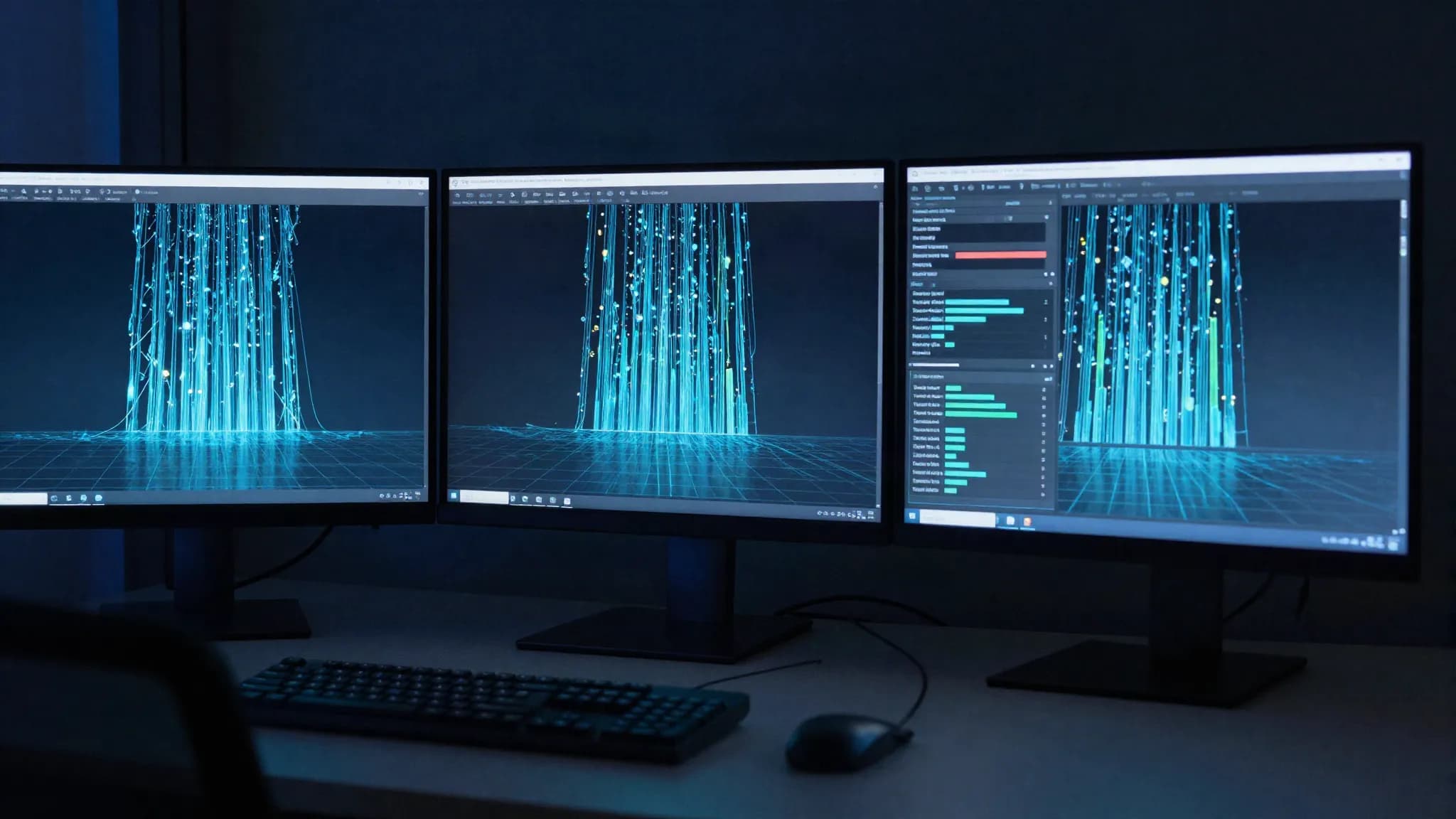
Traditional software monitoring asks whether a request was fast, successful and available. Agentic software adds a harder question: why did the system choose that action? A coding agent may search, edit, run a tool, revise its plan and ask another agent for help before producing a result. If those steps disappear into one transcript, teams cannot debug reliability or cost.
Why this is landing now
OpenTelemetry Generative AI Conventions provides the factual starting point. Observability is expanding from infrastructure signals into decision traces. A useful trace connects the user's goal to model calls, tool inputs, tool results, state changes, verification and the final outcome. It also records budgets and human interventions. That makes it possible to distinguish a weak model response from a broken tool, stale context, a misleading test or a permission boundary that worked as intended.
More telemetry can create its own danger. Agent traces may contain source code, customer data, credentials or private reasoning artifacts. Capturing everything by default is not observability; it is uncontrolled retention. Teams need deliberate redaction, access control and sampling, especially when logs leave the environment where the code lives.
What to notice before copying it
For developers, the practical test is whether the idea improves clarity, verification or maintainability after the first impressive demo. Sustainable adoption should make a team easier to understand, not more dependent on hidden magic.
Begin with five fields for every run: goal identifier, step type, tool name, verification result and cost. Add links to the commit or artifact produced. Track repeated attempts and reasons for stopping. Build dashboards around outcomes, not token volume alone: successful verified changes, human rework, escaped defects and time to escalation reveal more than raw activity.
A compact reader's checklist
- Trace goals, tools, evidence and exits together.
- Redact sensitive content before export.
- Measure verified outcomes and human rework.
What the wider evidence adds
Claude Code: How It Works adds a second, independent lens. OpenTelemetry's emerging semantic conventions for generative AI aim to give tools a shared language for model operations and agent spans. The value of a standard is portability. Teams can compare behavior across providers and frameworks without rebuilding every trace from scratch, while still keeping domain-specific checks close to their own product.
That context turns a passing headline into a more useful question: which part changes behavior, and which part is simply memorable language? Readers do not need to adopt every new idea. They need enough detail to test the strongest claim in proportion to its cost and risk.
The part worth resisting
A trace can explain what the system recorded, not prove that the system understood the task. Observability must connect to evaluation. Sample completed runs, compare them with user outcomes and keep a route for people to report subtle failures. The most dangerous agent is not the one that crashes visibly; it is the one that finishes confidently with weak evidence.
The lasting idea
The best response is neither instant enthusiasm nor reflexive dismissal. Try the smallest honest version, observe what improves and keep the parts that still make sense when the novelty fades. That is how a trend becomes knowledge, a purchase becomes personal style or a new technical practice becomes dependable engineering.
Published in The Outspoken Digest
Editorial
Outspoken Digest Editorial DeskThe Digest's own desk: the pieces that do not sit in one section.
Newsletter
The Digest, in your inbox
One edition, sent when it is ready. No noise, and your address is never passed on.
Read Next
More Technology →
Some White Dwarfs Would Look Green, Pink or Purple, Warwick Astronomers Calculate
Oct 15, 2026/2 min read
Oxford Physicists Reproduce the Aharonov-Bohm Effect on a Hybrid Quantum Computer
Oct 15, 2026/2 min read
Japan Will Fund Up to $21 Billion for Two GlobalFoundries Chip Plants in New York
Oct 15, 2026/2 min read
Apple's $299 HomeView Smart Display Takes Preorders, but Not in the European Union
Oct 15, 2026/2 min read