Avgolemono: The Greek Soup That Teaches the One Technique Every Cook Should Know
Chicken broth, rice, eggs and lemon, brought together into something silky without a drop of cream. The whole dish turns on tempering the eggs so they thicken rather than scramble, and once learned that skill goes everywhere.
Sunday, September 6, 2026/3 min read
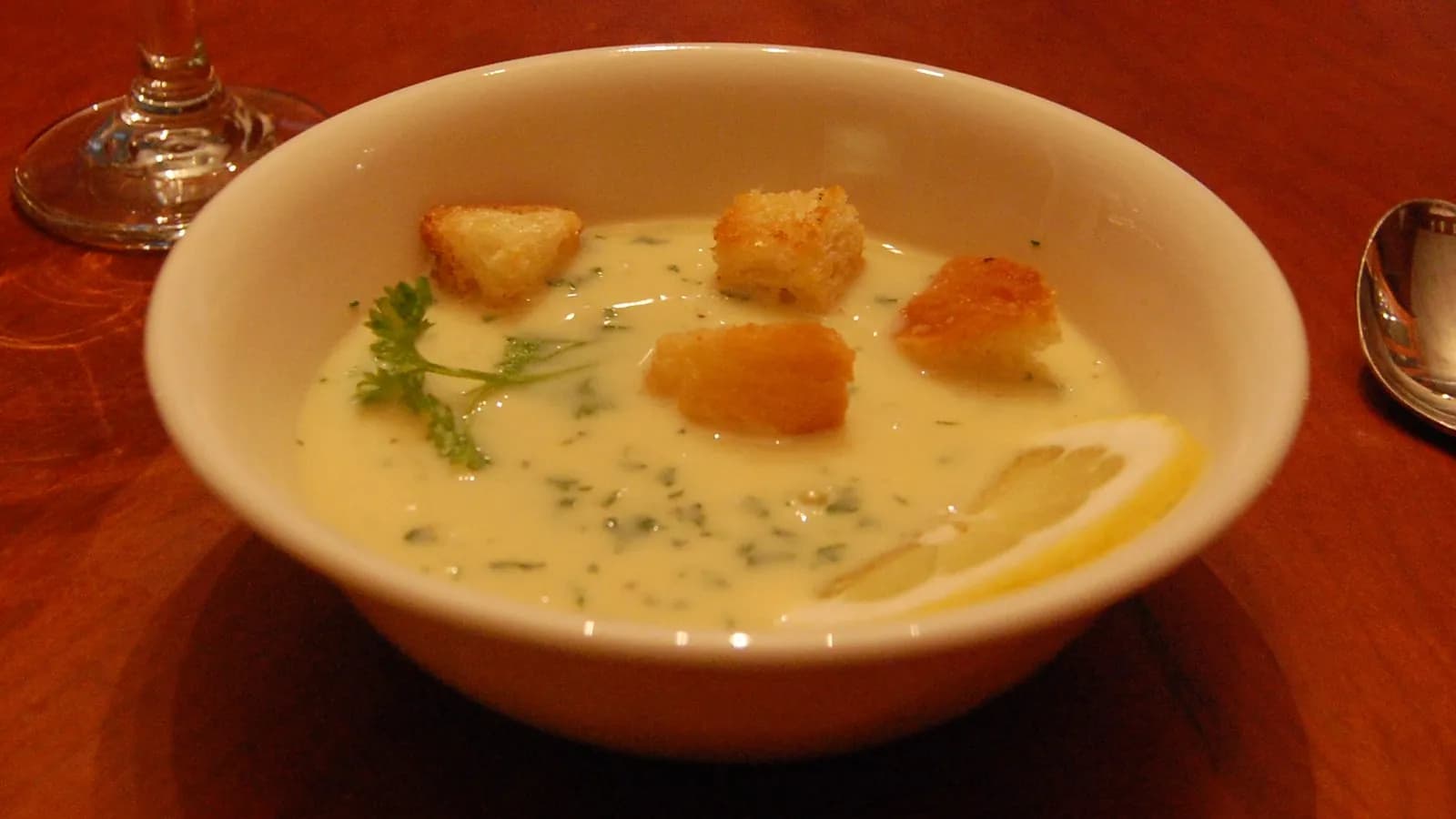
Avgolemono means egg-lemon, and it is both a sauce and a soup. The sauce goes over stuffed vine leaves, meatballs and artichokes; the soup, which is what most people mean by the word, is chicken broth thickened with rice and finished with the same emulsion of beaten egg and lemon juice. The result is pale, velvety and sharp, with the body of a cream soup and none of the cream. It is what Greek families make for the ill, the cold and the hungover, and it takes forty-five minutes if the broth is already made.
The technique
Eggs whisked into hot liquid scramble. Eggs whisked with lemon juice and then brought up to temperature gradually, by adding hot broth to them a ladle at a time before returning the mixture to the pot, thicken instead, because the proteins set slowly and evenly rather than seizing. This is tempering, and avgolemono is the purest lesson in it. The starch released by the rice into the broth helps stabilise the emulsion, which is why the soup is more forgiving than the sauce. Two rules cover almost every failure: never let it boil once the eggs are in, and never stop whisking while the broth goes into the eggs.
Ingredients, for four
- 1.5 litres good chicken broth, ideally from a poached bird, with 200 to 300 g of the cooked chicken shredded
- 100 g short-grain rice, or orzo
- 3 eggs, at room temperature
- Juice of 2 lemons, about 80 ml, plus more to taste
- Salt and white pepper
- Dill or parsley, chopped, to finish
Method
- Bring the broth to a simmer in a wide pan, add the rice and cook until tender, fifteen to eighteen minutes for rice, eight to ten for orzo. Season the broth properly at this stage; it is hard to adjust later without disturbing the emulsion. Add the shredded chicken to warm through.
- Take the pan off the heat and let it stop bubbling entirely.
- In a large bowl whisk the eggs until frothy, then whisk in the lemon juice.
- Whisking constantly, add a ladle of hot broth to the eggs in a thin stream. Then another. Then two more. The egg mixture should now be warm to the touch and noticeably thinner.
- Pour the tempered mixture back into the pan in a stream, stirring. Return to the lowest heat and stir for two or three minutes until the soup thickens enough to coat the back of a spoon. It must not boil. If you see the first bubble, pull it off.
- Taste. It should be sharp; add more lemon if it is merely pleasant. Adjust salt. Finish with white pepper and herbs and serve at once.
Notes
The soup does not reheat gracefully. Warmed gently it is fine; boiled it splits into curds and thin broth, and nothing brings it back. Make it to eat, and if there is any left, reheat it in a bowl over simmering water rather than in a pan.
Separate the eggs if you want it lighter: whisk the whites to soft peaks, fold in the beaten yolks and lemon, and temper as above. The soup will be frothier and paler and will hold slightly less well. Whole eggs give a more custard-like result that most cooks prefer.
The broth is everything. A stock cube produces a thin, salty soup that the eggs cannot rescue. Poaching a whole chicken with an onion, a carrot, a bay leaf and peppercorns for an hour gives you both the broth and the meat, and the method is the same one used in our chicken kabsa recipe, where the poaching liquid goes on to cook the rice. Related egg-lemon preparations appear across the eastern Mediterranean, in Sephardic Jewish cooking as agristada and in Turkish and Arab kitchens under other names; the Greeks did not invent the idea but they made it the national soup. The lemon, incidentally, is not decorative: sharpness is the character of the dish, and a timid version is a failed one. The same holds for the garlic in our toum recipe, another emulsion that punishes the cautious.
Published in The Outspoken Digest
Editorial desk
Outspoken Digest Food DeskCooking, ingredients, restaurants and the economics of what ends up on the table.
Newsletter
The Digest, in your inbox
One edition, sent when it is ready. No noise, and your address is never passed on.
Read Next
More Recipes →
Swangy Tamarind Glazed Chicken Wings for the Flavour Replacing Swicy on Fast Food Menus
Sep 29, 2026/3 min read

Baked Apple Cider Doughnuts for a Cider Season That Peaked Earlier Than the Calendar Says
Sep 29, 2026/3 min read
An Obatzda Bavarian Beer Cheese Dip for the Final Stretch of Oktoberfest 2026
Sep 29, 2026/3 min read