The 2026 Dive Computer Question Is Not Which Screen. It Is Whose Algorithm You Trust
Shearwater, Garmin and Suunto now sell wrist computers that look broadly alike and cost between 760 and 1,800 dollars. What separates them is the decompression model, the transmitter, and what you are really paying for.
Tuesday, August 18, 2026/4 min read
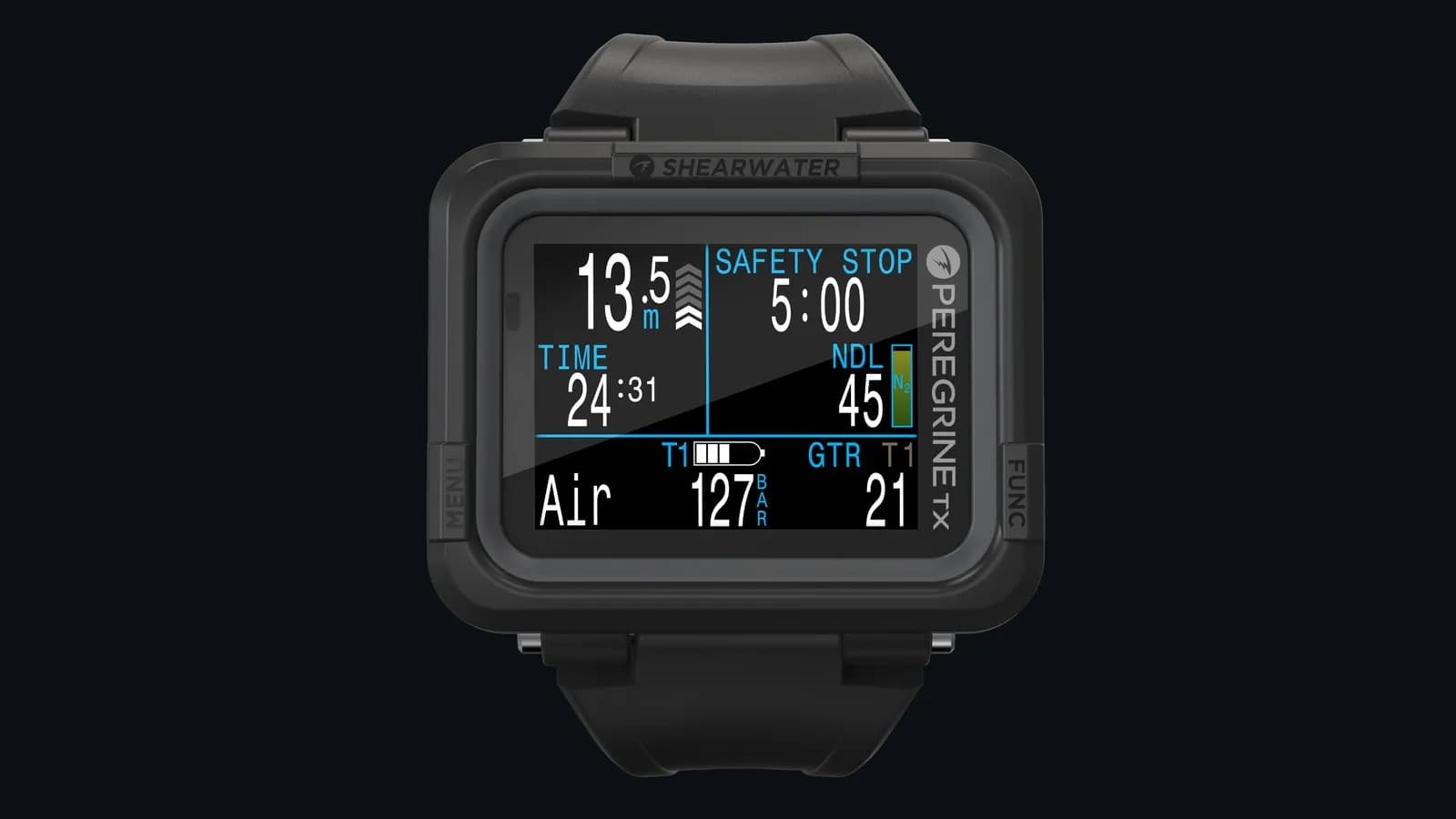
Every dive computer on this page will keep you out of trouble on a 25 metre reef dive. That is worth saying first, because the marketing implies otherwise and the forums argue as though the choice is life and death for a diver doing four dives a year in Sharm.
The differences are real, though, and they are not the ones on the box. Here is what actually separates the three companies people are choosing between in 2026, using each manufacturer's own published figures rather than a retailer's.
Shearwater Peregrine TX: the technical default, made recreational
Shearwater's reputation was built in technical diving and it shows in what the company refuses to hide from the user.
The Peregrine TX lists at 760 US dollars. It is depth rated to 120 metres, carries a 2.2 inch full colour LCD at 320 by 240, and runs on an internal rechargeable lithium ion cell rated at 3.4 watt hours for up to 30 hours at medium brightness, charged on a wireless cradle over USB-C. It will pair with up to four transmitters. It is designed and built in Canada.
Two things matter more than any of that. The first is the display philosophy: Shearwater's screens are famously legible because the company treats information density as a safety property rather than a styling opportunity. The second is that it gives the diver control of the decompression model. Bühlmann ZHL-16C with user-set gradient factors is the technical standard, and it means your conservatism is a number you chose and can explain, rather than a curve a marketing department picked for you.
If you intend to progress past recreational limits, this is the shortest path that does not involve buying twice.
Garmin Descent Mk3i: the one that is also a watch
Garmin came to diving from wearables, and the Descent line reflects that lineage in both directions.
The Descent Mk3i is 1,399.99 dollars in the 43mm size and 1,599.99 in the 51mm with a carbon grey DLC titanium bezel and silicone band, rising to 1,799.99 for the titanium bracelet. The Descent T2 transceiver is a further 499.99 and is dive rated to 20 atmospheres, or 200 metres.
The feature nobody else has is SubWave, a sonar based network that carries preset diver to diver messages at up to 30 metres and lets one unit monitor tank pressure and depth for up to eight divers within 10 metres. That is a genuine capability and not a gimmick: for instructors, for photographers who get separated from a buddy, and for anyone running a team, the ability to send "turn" or "low on gas" without swimming into someone's mask is new.
The cost is not only money. It is an AMOLED watch you will wear daily, charge weekly, and eventually replace on a consumer electronics cycle rather than a dive equipment one.
Suunto Ocean: the conservative option, literally
The Suunto Ocean is pitched in 2026 as a sports watch and dive computer in a single device, with an AMOLED display under sapphire and wireless tank pressure support via its own pod.
Suunto quotes up to 50 hours in combined training and dive use, up to 60 hours in dive and everyday wear, up to 200 hours in a reduced accuracy tour mode, and 16 to 26 days of daily wear depending on whether heart rate tracking is on.
The characteristic worth understanding before buying is conservatism. Suunto computers have long been noted for producing shorter no-decompression limits than a Shearwater or a Garmin diving the identical profile. Whether that is a feature depends entirely on you. For a once a year holiday diver it is a sensible margin quietly applied. For someone doing repetitive multi-day diving it is bottom time you paid for and did not get, and it is not always adjustable to the degree a technical diver would want.
What about air integration? Is a transmitter worth it?
This is where the money actually goes, and the honest answer is that it depends on what you do rather than what you own.
A transmitter puts tank pressure on your wrist and, more usefully, lets the computer calculate gas time remaining from your actual consumption rather than your optimism. For photographers, for anyone task loaded, and for instructors watching students, that is real.
What it does not do is remove the need for a submersible pressure gauge, and any instructor who tells you otherwise is selling something. Wireless links drop. Batteries die. The failure mode of an analogue gauge is that it gets harder to read; the failure mode of a transmitter is that it stops existing.
Budget accordingly. A Peregrine TX with a transmitter, or a Descent Mk3i with a T2, lands in a very different bracket from the headline price.
Which dive computer should you actually buy in 2026?
Three straightforward answers, and no hedging.
- If you dive recreationally and want one thing that works for a decade: a Shearwater. The display is the best in the water, the algorithm is transparent, and the resale market tells you what the community thinks.
- If you want a serious daily watch that also dives properly: the Garmin Descent Mk3i. Nothing else does both this well, and SubWave has no equivalent.
- If you dive twice a year and want to think about it as little as possible: the Suunto Ocean. The conservatism you might resent as a technical diver is exactly right for an occasional one.
Whichever you choose, the computer is the cheap part of staying out of trouble. Our piece on where the 12 and 18 hour flying rules came from is a reminder that the numbers on the wrist are models, not measurements, and our summary of DAN's guidance is the better place to start than any spec sheet.
Published in The Outspoken Digest
Editorial desk
Outspoken Digest Diving DeskCovers freediving, recreational and technical diving, dive medicine and the incidents the sport learns from.
Newsletter
The Digest, in your inbox
One edition, sent when it is ready. No noise, and your address is never passed on.
Read Next
More Diving →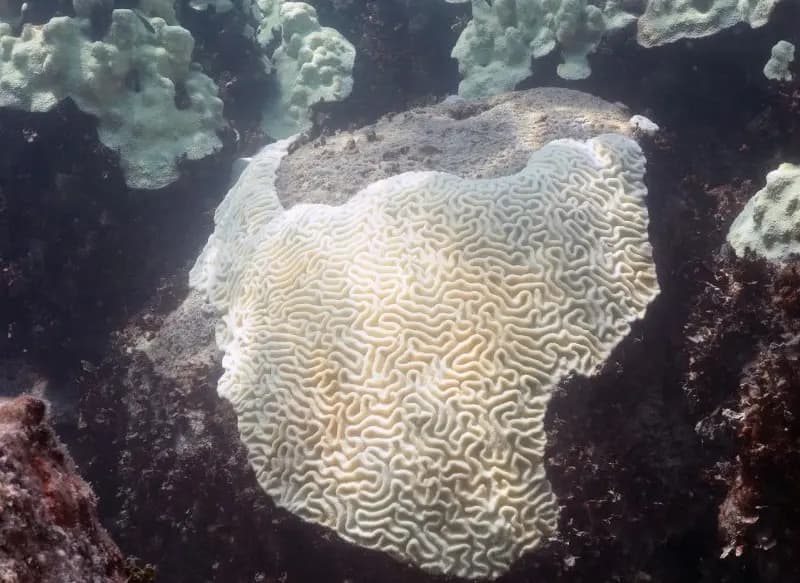
Bleached Corals Recovered After Touching a Healthy Clone, Stanford Lab Study Finds
Oct 15, 2026/2 min read
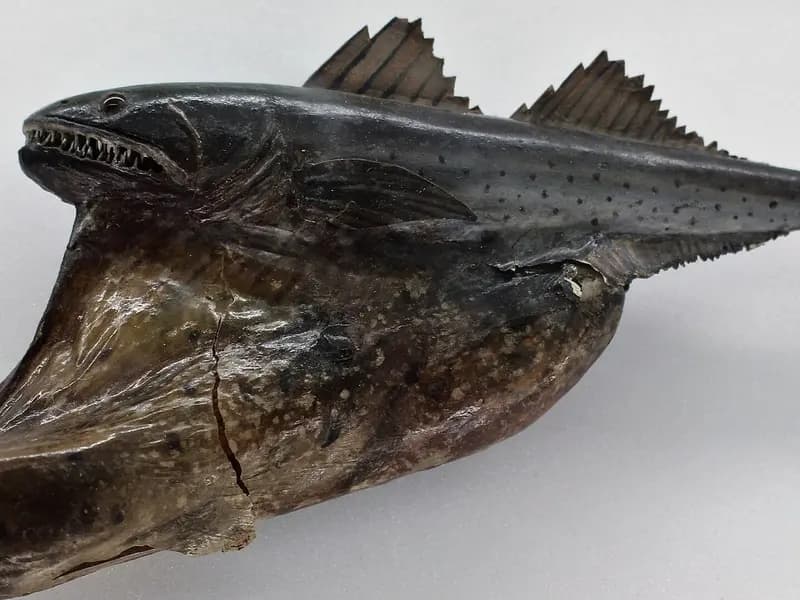
Black Swallower Filmed With a Hugely Swollen Belly 1,259 Metres Down Off Trinidad and Tobago
Oct 13, 2026/2 min read
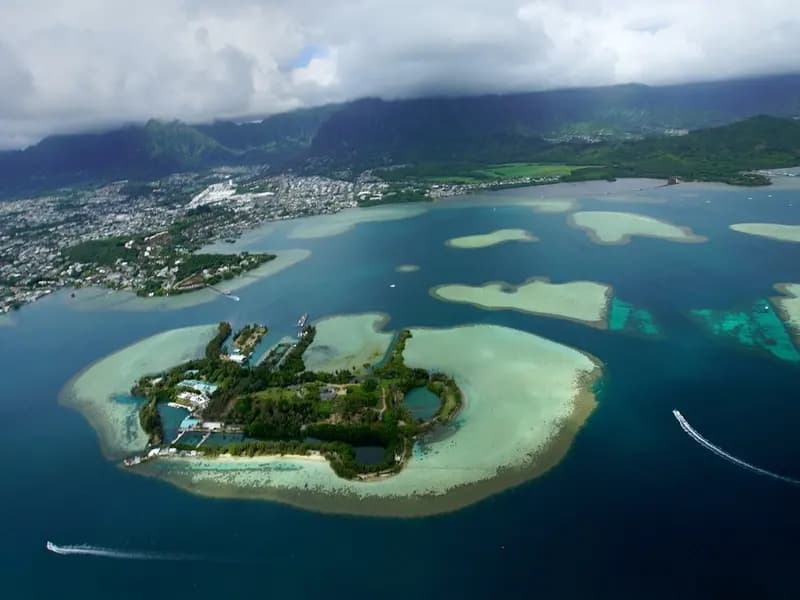
Playing Recordings of a Healthy Reef Drew More Coral and Fish Larvae to Artificial Structures Off Hawaii
Oct 9, 2026/3 min read
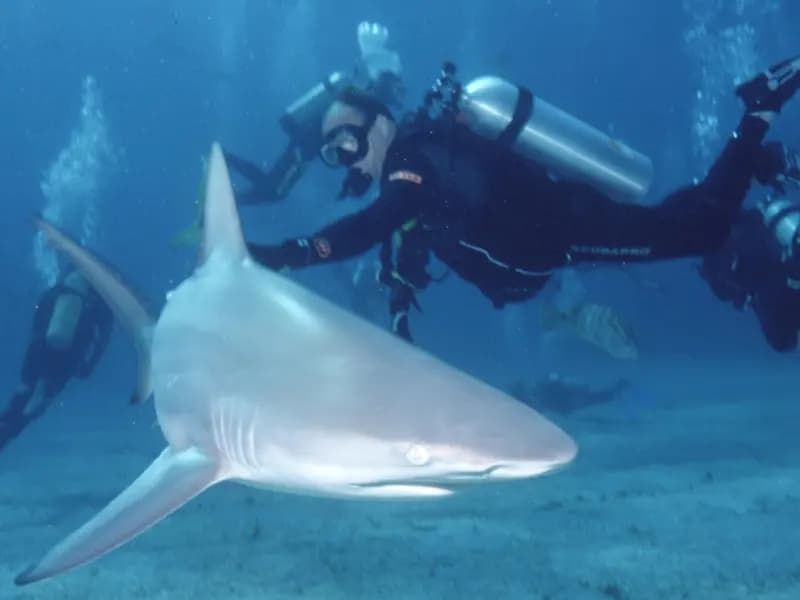
Blacktip Sharks Can Hear a Sound From Nearly 250 Feet Away and Swim Straight Toward or Away From It
Oct 1, 2026/2 min read