Fashion Brands Spent Years Fighting Resale. Now They Want to Run It
Secondhand is a 393 billion dollar market and roughly a tenth of all money spent on clothing. Zara, H&M, Levi's and others are building their own platforms to capture a trade they used to ignore.
Monday, August 17, 2026/3 min read
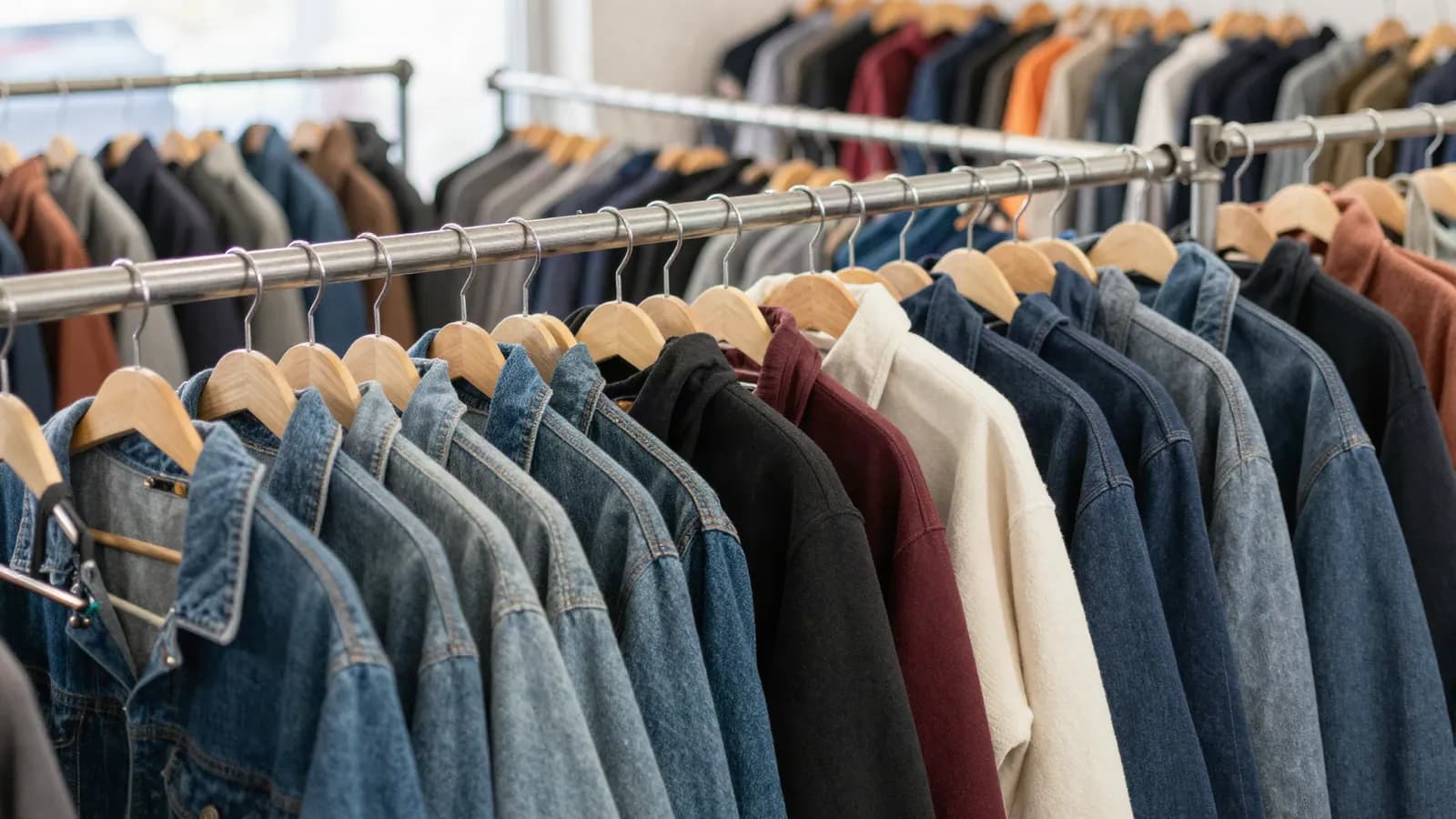
The global resale market has grown to around 393 billion dollars and now accounts for roughly one tenth of all money spent on clothing. Luxury resale alone is worth about 41.6 billion. A growing list of brands, among them Zara, H&M, Levi's, Lululemon and REI, have launched their own platforms to sell secondhand versions of their products alongside new ones.
For most of the last decade the same companies treated that trade as leakage. The change of position is worth understanding, because the reasons are not the ones the press releases give.
Why brands used to resist it
Two fears, both reasonable on their face.
The first was cannibalisation: every secondhand jacket sold is a new jacket not sold. The second was control, because a brand that does not touch the resale channel cannot govern how its products are photographed, described, priced or authenticated, and a market full of worn and mislabelled goods erodes the thing the brand is actually selling.
What changed the calculation was that the trade happened anyway. Billions in sales moved through eBay, Poshmark, Depop and the specialist luxury platforms, generating data, customer relationships and margin that the originating brands never saw. The choice stopped being whether resale existed and became whether the brand was in the room.
The finding that reframed the whole thing
The most useful piece of evidence in this shift is counterintuitive: the most engaged secondhand shoppers are higher-spending luxury clients, not budget-constrained ones.
That single fact dismantles the cannibalisation fear. If resale were mainly a discount channel, brand-operated resale would be a machine for converting full-price customers into bargain hunters. If instead the heaviest resale buyers are the heaviest spenders overall, resale is functioning as circulation rather than substitution: it is how people fund upgrades, try a house before committing, and clear wardrobe space so they can buy again.
A brand that runs its own resale sees all of that. It learns which pieces hold value, which sizes get returned to the market fastest, and who is trading up. That data has no equivalent on the primary side.
What it does to how clothes are made
This is the part that could matter more than the revenue.
A company that takes a garment back has a direct financial interest in how long it lasts, how easily it can be repaired and how well it photographs after three years. Those are engineering questions with cost implications, and they point in the opposite direction from the last twenty years of sourcing decisions.
Whether brands actually follow that incentive is the open question. It is entirely possible to operate a resale platform as a marketing surface while continuing to manufacture disposable product, and the gap between those two behaviours is where the greenwashing accusations will land.
The consumer-side version of this arithmetic is the one we set out in cost per wear, and the cultural shift that made secondhand desirable rather than embarrassing is covered in secondhand as a style signal.
What to watch as a shopper
- Who sets the price. Brand-run platforms often price secondhand stock themselves rather than letting sellers compete, which produces cleaner listings and worse deals.
- What you are paid in. Store credit is the standard trade-in currency, and it converts a resale transaction into a loyalty mechanism. That is not a scandal, but it is not cash.
- Whether authentication is real. The strongest genuine advantage a brand has in resale is that it can verify its own products. If a platform is not using it, the platform is a shop front.
- Where the price floor sits. Resale value is the closest thing fashion has to an honest quality signal, and it is now visible in public.
Is resale actually growing faster than new clothing?
Yes, by a wide margin. Secondhand is expected to grow two to three times faster than the first-hand market over the next several years, and in recent years it has grown close to four times faster than clothing retail overall, driven mainly by younger buyers.
That trajectory is what turned an ideological argument into a commercial one. A channel growing at several times the rate of the core business does not stay outside the business for long.
Published in The Outspoken Digest
Editorial desk
Outspoken Digest Style DeskReports for The Outspoken Digest across Fashion, Design, Lifestyle.
Newsletter
The Digest, in your inbox
One edition, sent when it is ready. No noise, and your address is never passed on.
Read Next
More Fashion →
Victoria's Secret Fashion Show Heads to Los Angeles on Sunday With an All-Women Lineup and Three Angel Hopefuls
Oct 15, 2026/2 min read

Anthony Vaccarello Is Leaving Saint Laurent After a Decade, and Kering Has Not Yet Named His Successor
Oct 9, 2026/2 min read

Louis Vuitton Closes Paris Fashion Week With Hovering Cars, Paper-Light Dresses and a Louvre Courtyard Cityscape
Oct 7, 2026/2 min read

Celine Dion Made a Surprise Return to the Catwalk to Close L'Oreal's Paris Fashion Week Opening Show
Sep 29, 2026/2 min read