What Is Actually in a Grey-Market Peptide Vial
Research use only is a legal phrase, not a quality standard. Testing of peptides bought online keeps finding the wrong dose, the wrong compound, or contamination in something people inject at home.
Wednesday, August 12, 2026/3 min read
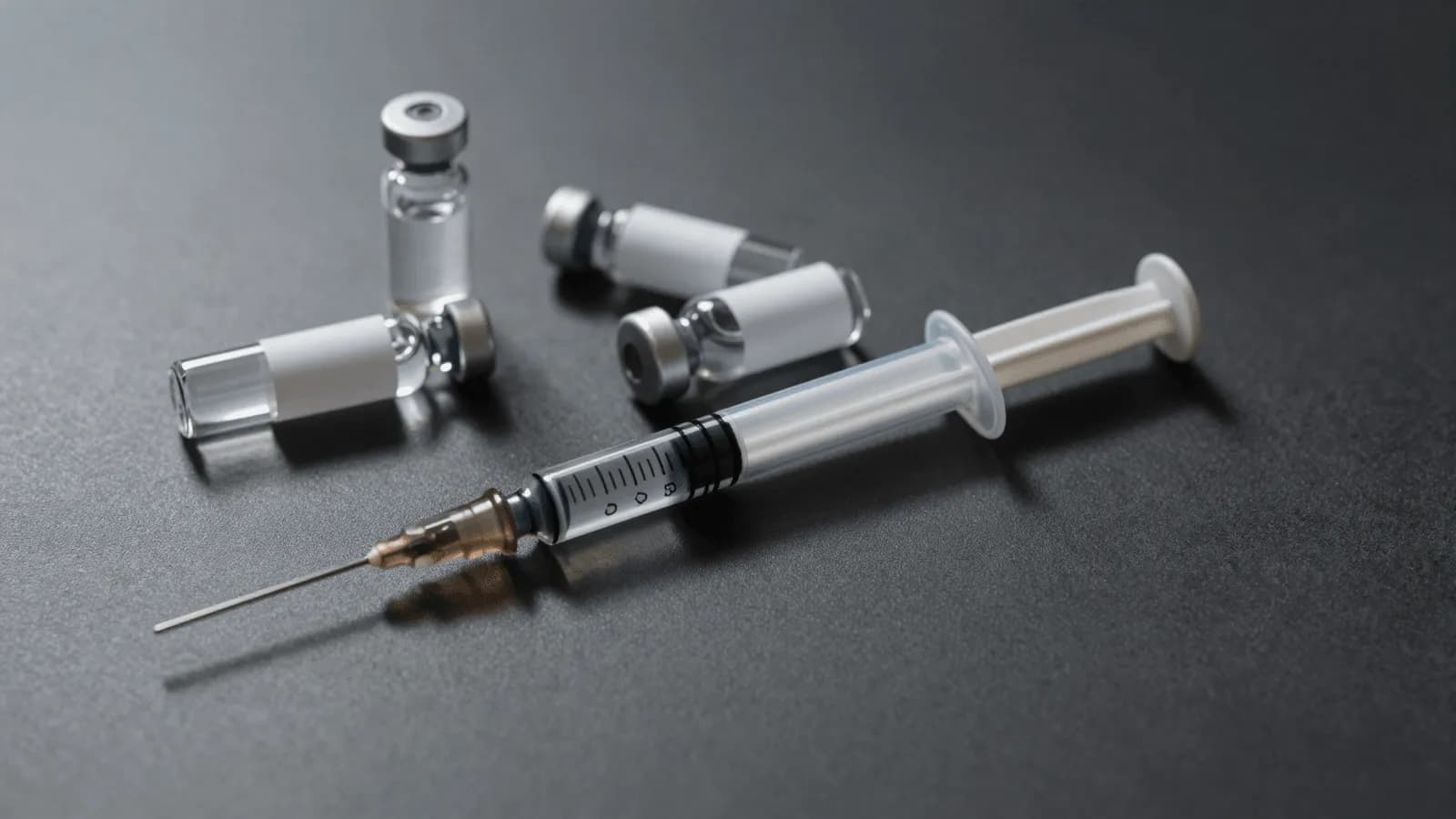
There is a large, visible market in injectable peptides sold with a label reading research use only, not for human consumption. Everyone involved understands that the buyer intends to inject it. The label exists to move the legal risk from the seller to you.
It is worth being specific about what that arrangement removes.
The five guarantees you give up
- Identity. Nothing verifies that the vial contains the compound named on it.
- Dose. Nothing verifies the quantity, and testing routinely finds both under and over the stated amount.
- Purity. Synthesis produces related impurities, including truncated and misfolded sequences, and removing them costs money. Impurity concerns are precisely why several peptides ended up in the restricted category on the FDA's bulk substances list.
- Sterility. This is the one that can kill you quickly. A non-sterile injectable can cause abscesses, cellulitis or bloodstream infection.
- Recourse. If it harms you, there is no manufacturer to hold responsible, and you were sold something you agreed not to inject.
Certificates of analysis are not what people think
Most sellers now display a certificate of analysis, and it looks reassuring. Three problems.
The certificate typically covers a batch, not your vial, and you have no way to confirm your vial came from that batch. Many are supplied by the manufacturer rather than an independent laboratory, which means the party with the incentive is also the party testing. And certificates are trivially copied, reused across sellers, and in some cases entirely fabricated.
A genuine third-party report, from a named laboratory, with a date and a batch number you can match to what you received, is meaningfully better. It is also rare.
The reconstitution problem
Even a good vial becomes a risk at the kitchen table. Peptides arrive lyophilised and must be reconstituted with bacteriostatic water, then dosed in units on an insulin syringe.
The arithmetic trips people constantly. Confusing milligrams with micrograms is a thousandfold error, and it is not hypothetical. Add unsterile technique, room-temperature storage of something that needed refrigeration, and a multi-use vial punctured repeatedly over weeks, and the risk compounds well beyond whatever was in the bottle to begin with.
Why the market exists anyway
It would be dishonest to present this as purely predatory. The demand has real causes.
Approved treatments are expensive, and where a legitimate drug is unaffordable or unavailable, people substitute. That is exactly what happened during the semaglutide shortage, when a vast compounded and counterfeit supply appeared and then caused documented harm.
Some of these compounds also have plausible mechanisms and no trials behind them because nobody can profit from running one. The economics, not the biology, produced the evidence gap, and people who feel abandoned by that logic go looking elsewhere.
The FDA's advisory committee spent two days in July wrestling with precisely this tension, and recommended letting pharmacies compound several of these peptides, partly on harm-reduction grounds.
If you are going to do it anyway
We are not going to pretend nobody will. Harm reduction is more useful than a lecture.
- Prefer a compounding pharmacy with a prescription. Where legally available, this is a genuinely different risk category, not a marginal improvement.
- Tell your doctor. Not for permission. So that if something goes wrong, the person treating you is not guessing.
- Demand an independent certificate with a matching batch number, from a laboratory you can look up.
- Never share vials or needles.
- Do the arithmetic twice, on paper, and have someone else check it.
- Stop at the first sign of an injection-site infection, meaning spreading redness, heat, swelling or fever, and get seen the same day.
- Be especially cautious with a cancer history. Several popular peptides are promoted precisely for promoting tissue growth and blood vessel formation, which is not a mechanism you want unexamined.
The framing that helps
The useful question is not whether a peptide might work. Many might. It is what you are accepting in exchange for finding out: an unverified substance, injected repeatedly, with no safety net, for an unknown duration.
Sometimes people accept that knowingly, and adults are allowed to. What they should not do is accept it while believing the vial is a medicine. It is not, and the label on it says so.
The framework for reading any of these claims is in what a peptide actually is, and the same instincts that serve you well on judging a diet claim apply here with higher stakes, because you cannot un-inject something.
Published in The Outspoken Digest
Editorial desk
Outspoken Digest Health DeskMedicine, public health and the research behind the headlines, read carefully.
Newsletter
The Digest, in your inbox
One edition, sent when it is ready. No noise, and your address is never passed on.
Read Next
More Health →
Cochrane Review Finds Medical Cannabis Has No Clear Benefit for Insomnia, With Weak Evidence Either Way
Oct 13, 2026/2 min read

Lancet Commission Names 17 Threats to Global Health Through 2100, With Obesity the Largest by Burden
Oct 12, 2026/2 min read

FDA Approves Pritelivir for Herpes Lesions That Resist Standard Antivirals in Immunocompromised Adults
Oct 10, 2026/2 min read