What a Peptide Actually Is, and Why the Word Now Sells Almost Anything
Insulin is a peptide. So is Ozempic. So is the unlabelled vial someone is selling on Telegram. The word describes a chemical class, not a level of evidence, and that gap is where the market lives.
Tuesday, August 11, 2026/4 min read
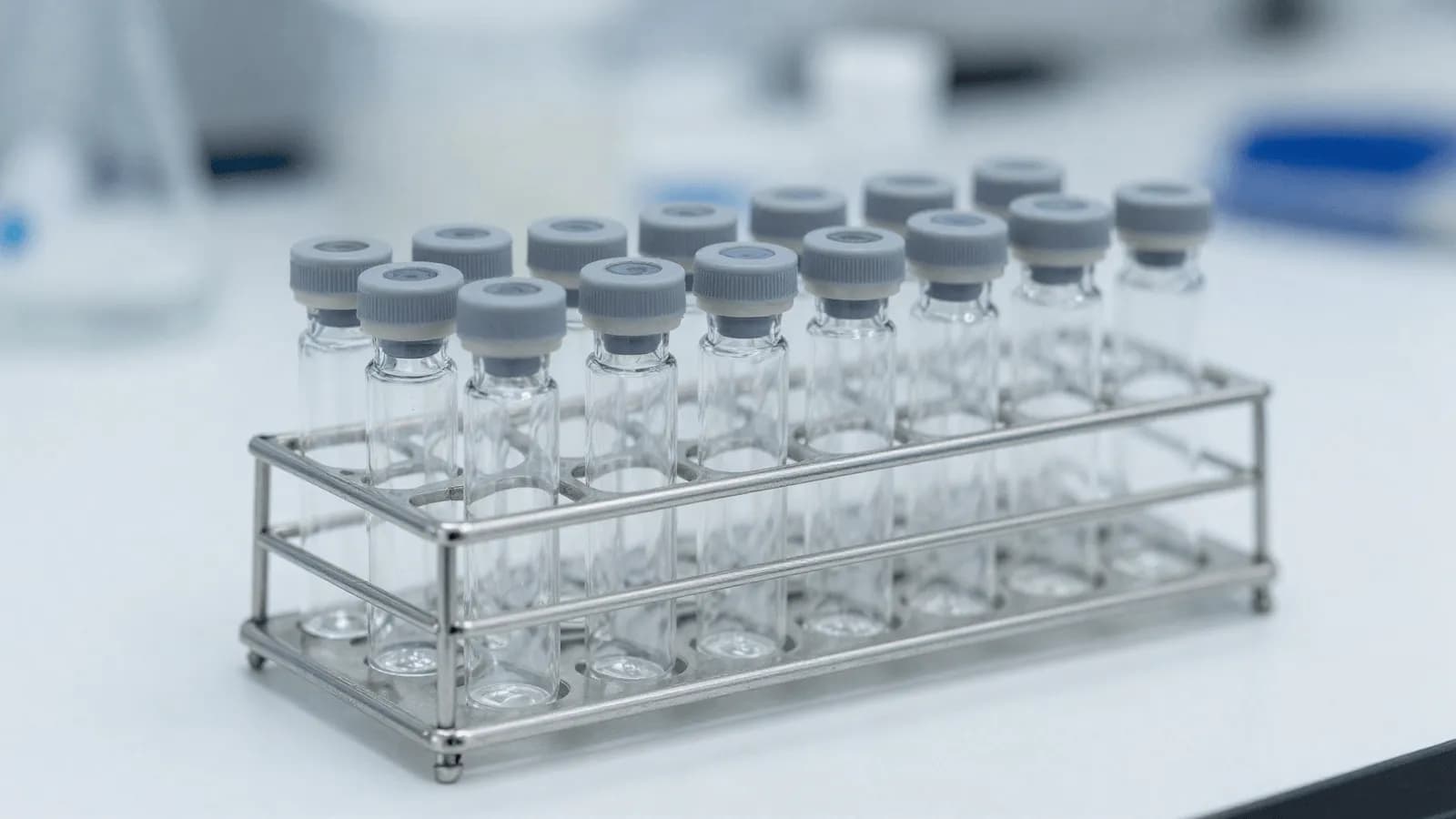
Peptide has become one of the most effective words in the wellness economy, and the reason is that it is technically accurate about products with wildly different evidence behind them.
A peptide is a short chain of amino acids. Longer chains are proteins; the boundary is conventional rather than sharp, usually drawn somewhere around fifty amino acids. That is the entire definition. It says nothing about whether something works, whether it is safe, or whether anyone has ever tested it in a human being.
Insulin is a peptide, and it has kept people alive since 1922. Semaglutide is a peptide. So is the vasopressin used in intensive care. And so is whatever is in an unlabelled vial marked research use only.
Why the body uses them
Peptides are the body's signalling vocabulary. They are large enough to bind a receptor with real specificity and small enough to be produced and cleared quickly, which makes them ideal for messages that need to be precise and temporary.
That specificity is the appeal for drug developers. A peptide designed to fit one receptor tends to do fewer unrelated things than a small molecule that fits many.
It also creates the field's defining inconvenience: peptides are digested. Swallow one and your gut treats it as food, which is why nearly all of them are injected. Getting a peptide to survive the stomach is a genuine pharmaceutical achievement, which is why the arrival of an oral semaglutide was a significant event rather than a convenience upgrade.
Three tiers, and they are not close
Tier one: approved medicines
Peptides that have been through full clinical trials, regulatory review and manufacturing oversight. Insulin, GLP-1 receptor agonists such as semaglutide and tirzepatide, certain cancer drugs, some fertility treatments.
You know the dose, the impurity profile, the side effects, and roughly what happens over years. We covered how the GLP-1 class works in our explainer on receptor agonists.
Tier two: investigational
Peptides with genuine research behind them that have not completed the process. Some will be approved. Some will fail on safety, and some will simply not work as well as hoped.
Retatrutide sat here until recently, and its Phase 3 results have been the biggest story in the field this year.
Tier three: the grey market
Peptides with animal data, small pilot studies, or essentially nothing, sold online under a research-use label that exists to avoid regulation rather than to describe a use.
BPC-157, TB-500, MOTS-c, ipamorelin and their relatives sit here. The interesting development is that the regulatory position on some of them is now genuinely in flux, which we cover in our piece on the FDA compounding panel.
What research use only actually means
It is a legal formulation, not a scientific grade. It means the seller is not making a medical claim and is therefore, in theory, not selling a drug.
Practically, it means:
- No requirement that the vial contains what the label says.
- No requirement for purity testing or endotoxin limits.
- No sterility guarantee for something being injected.
- No dosing guidance grounded in human data.
- No recourse if it harms you.
Independent testing of grey-market peptides has repeatedly found underdosing, wrong compounds and contamination. This is the same market dynamic that produced the counterfeit semaglutide problem, and the underlying incentive has not changed.
The argument that is actually happening
The peptide debate is not simply science against quackery, which is how both sides prefer to frame it.
The case for access is that peptide manufacturing is cheap, the molecules are often well characterised, and full trials cost hundreds of millions of dollars that nobody will spend on a compound that cannot be protected by a patent. Under that reading, the absence of evidence reflects economics, not biology.
The case against is that absence of evidence is not a technicality when you are injecting something weekly for years. Pharmacokinetics, long-term exposure, and interaction with other conditions are exactly the things that separate a promising molecule from a safe medicine. Peer-reviewed reviews of BPC-157 keep arriving at the same conclusion: interesting animal data, no adequate human characterisation.
Both of those are true simultaneously, which is why the policy question is difficult and why an advisory committee spent two days on it.
How to read a peptide claim
- Which peptide, exactly? A named compound, not a proprietary blend.
- Human trials, or rats? Almost every impressive peptide claim traces to a rodent study.
- How many people, and for how long? Twelve people for six weeks is a pilot, not evidence.
- Who is selling it to you? A clinic charging for a protocol is not a neutral source.
- What is the failure mode? Every drug has one. If nobody can tell you the side effects, nobody has looked.
The same discipline we recommend for judging a diet claim applies exactly here, and for the same reason: the plausible mechanism is the easiest part to produce.
Peptides are one of the most productive areas in modern medicine. That is precisely why the word is worth so much to people selling things that are not.
Published in The Outspoken Digest
Editorial desk
Outspoken Digest Health DeskMedicine, public health and the research behind the headlines, read carefully.
Newsletter
The Digest, in your inbox
One edition, sent when it is ready. No noise, and your address is never passed on.
Read Next
More Health →
Cochrane Review Finds Medical Cannabis Has No Clear Benefit for Insomnia, With Weak Evidence Either Way
Oct 13, 2026/2 min read

Lancet Commission Names 17 Threats to Global Health Through 2100, With Obesity the Largest by Burden
Oct 12, 2026/2 min read
FDA Approves Pritelivir for Herpes Lesions That Resist Standard Antivirals in Immunocompromised Adults
Oct 10, 2026/2 min read