Carrot Tops Are Not Poisonous, and the Rumour Seems to Trace to a Blog Post
The belief that carrot greens are toxic is remarkably widespread and has no scientific basis. They are a bitter, parsley-like herb, they make an excellent chermoula, and the alkaloid argument applies equally to spinach.
Friday, September 4, 2026/3 min read
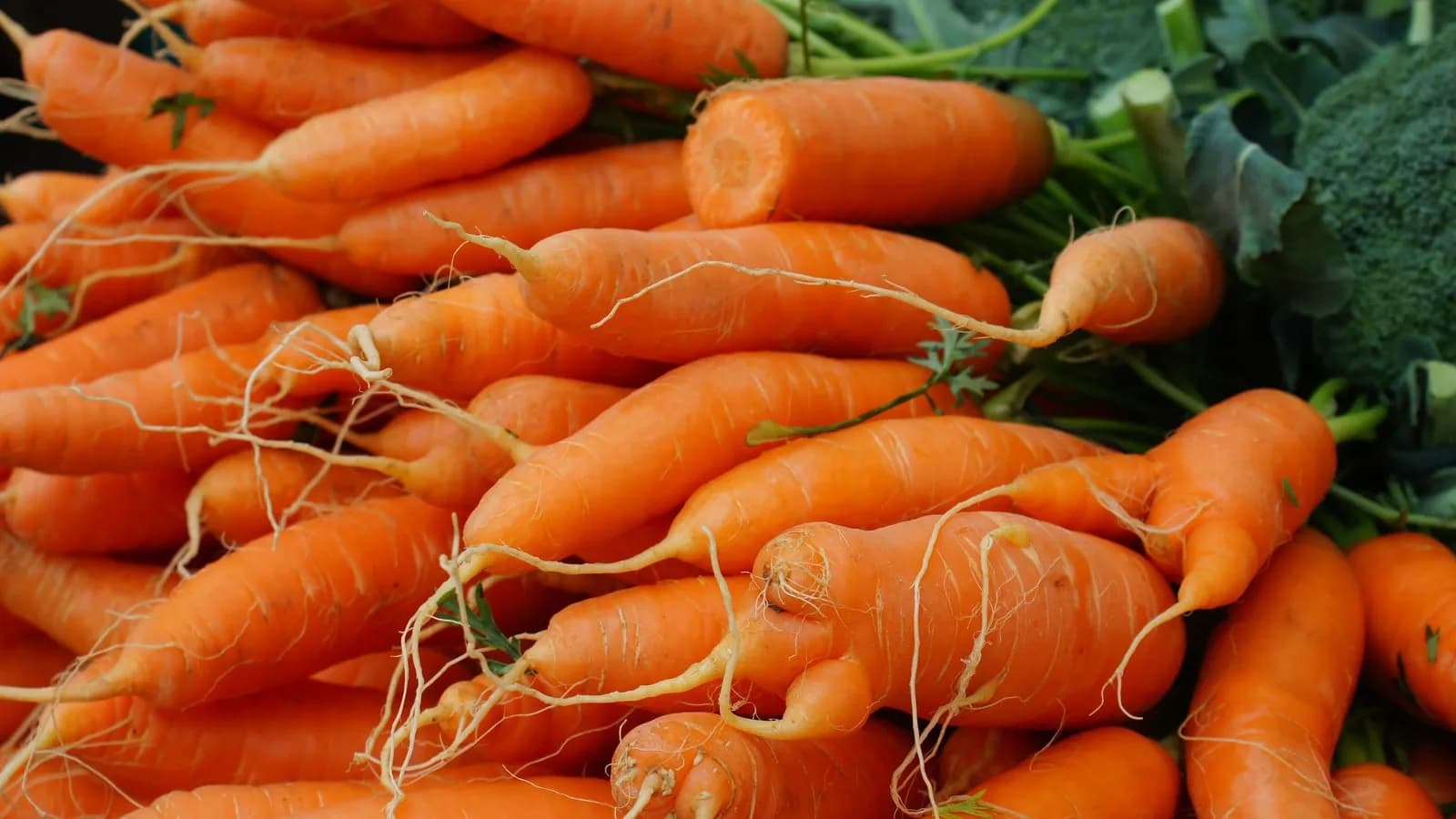
Ask a room of people whether carrot tops are edible and a surprising number will tell you they are poisonous. It is one of the most durable pieces of kitchen folklore in circulation, and there does not appear to be anything behind it.
No scientific literature establishes that carrot greens are toxic to humans. Carrots are in the Apiaceae family alongside parsley, celery, dill, fennel and coriander, all of whose leaves are eaten without comment. The tops taste like a coarse, bitter parsley, which is exactly what you would expect.
The alkaloid argument, and why it proves too much
The usual justification is that carrot tops contain alkaloids.
They do. So does almost every leafy green on the shelf. Spinach, chard, kale and lettuce all contain assorted alkaloids and other plant defence compounds, generally at levels that are irrelevant in the quantities anybody eats. An argument that rules out carrot tops on those grounds also rules out spinach, and nobody making it is proposing that.
The genuine cautions are ordinary ones. Carrot tops are bitter, so use them as a herb rather than as a bowl of salad leaves. Like many greens they contain nitrates. And the wild relative of the carrot, Queen Anne's lace, has a genuinely poisonous lookalike in hemlock, which is a serious warning about foraging and has nothing to do with a bunch you bought with the roots attached.
If you are going to be cautious about anything, be cautious about pesticide residue on greens that are not usually sold to be eaten, and wash them properly.
Carrot top chermoula
Chermoula is the North African herb and spice sauce that normally uses coriander and parsley. Carrot tops slot straight into it, and their bitterness is well matched by the cumin, lemon and garlic.
Makes about a jar.
- The tops from one bunch of carrots, roughly 60g of leaf, thick stems discarded
- A large handful of flat leaf parsley or coriander, to soften the bitterness
- 3 cloves garlic
- 1 tsp cumin seed, toasted and ground
- 1 tsp sweet paprika
- 1/2 tsp ground coriander
- A good pinch of chilli flakes
- Juice of 1 lemon, plus the zest of half
- 120ml olive oil
- 1 tsp salt
- Optional: 1 tbsp toasted almonds, for body
Pick the leaves from the thick stalks. The stalks are stringy and genuinely unpleasant, and this is the step that decides whether you enjoy the result.
Chop everything by hand if you have the patience, which gives a better texture, or pulse in a processor. Do not blitz to a smooth purée: chermoula should be loose and rubbly, not a pesto.
Combine with the oil, lemon and salt, and let it sit for at least half an hour. It improves markedly in the first hour as the bitterness settles.
What to do with it
The obvious and best answer is to put it back on the carrots. Roast the roots at 200C until they are caramelised at the edges, then spoon the chermoula over while they are warm. The whole bunch, one dish.
Beyond that it is very good on roasted cauliflower, on white fish, stirred through couscous or freekeh, or spooned onto a bowl of chickpeas with yoghurt.
Storage and the wider point
Chermoula keeps a week in the fridge under a film of oil, and freezes well in an ice cube tray.
Separate the tops from the roots as soon as you get home. Left attached, the leaves keep drawing moisture from the roots and both go limp, which is the same rule that applies to beetroot. Tops last two or three days; roots last weeks.
The general principle is worth stating once. A great deal of what gets thrown away in domestic kitchens is discarded on the basis of a rule nobody can source, and the rules are worth checking, because half of them turn out to be someone's guess repeated for thirty years. The broccoli version of the same argument is in this piece.
Published in The Outspoken Digest
Editorial desk
Outspoken Digest Food DeskCooking, ingredients, restaurants and the economics of what ends up on the table.
Newsletter
The Digest, in your inbox
One edition, sent when it is ready. No noise, and your address is never passed on.
Read Next
More Recipes →
Swangy Tamarind Glazed Chicken Wings for the Flavour Replacing Swicy on Fast Food Menus
Sep 29, 2026/3 min read

Baked Apple Cider Doughnuts for a Cider Season That Peaked Earlier Than the Calendar Says
Sep 29, 2026/3 min read
An Obatzda Bavarian Beer Cheese Dip for the Final Stretch of Oktoberfest 2026
Sep 29, 2026/3 min read