The Broccoli Stalk Is the Best Part and You Have Been Throwing It Away
A head of broccoli is roughly half florets and half stalk, and the stalk is sweeter than the top. The leaves, when a head still has them, are the most nutrient-dense part of the plant and are almost never sold attached.
Friday, September 4, 2026/3 min read
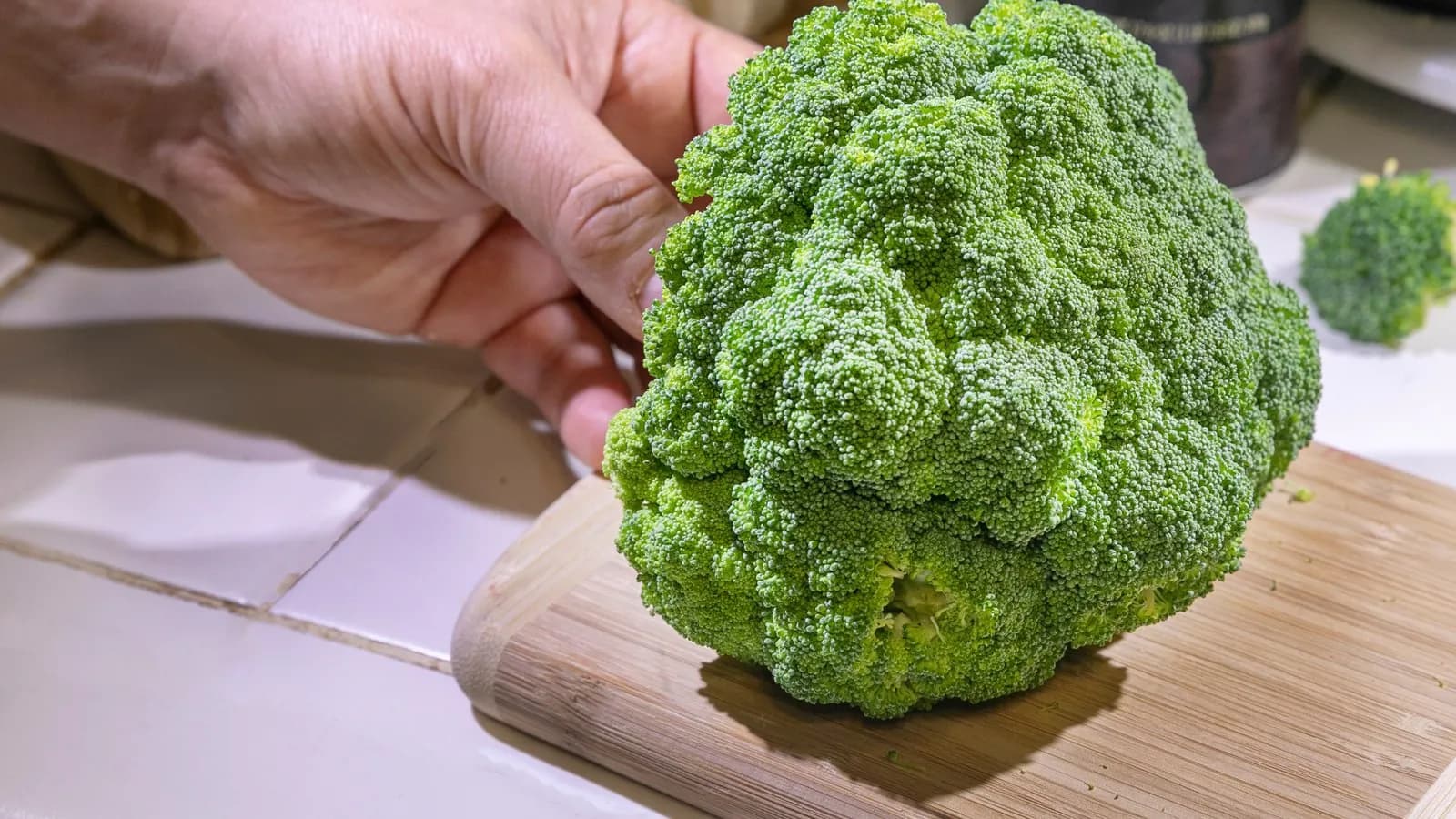
Take a head of broccoli and weigh it. Then cut off the florets and weigh those. On a typical head you have just discarded something close to half of what you paid for.
The stalk is not a lesser part. It is denser, sweeter and less sulphurous than the florets, it has a crisp texture closer to kohlrabi than to a flower head, and the only reason it gets binned is that the outer skin is tough and nobody was taught to remove it.
Breaking down a head
Cut the florets off where they meet the main stem, and keep the small stems attached to them.
Then deal with the stalk. The outer layer is fibrous and woody, and it is what people are objecting to when they say they do not like stalks. Stand it on end and cut down the sides with a knife, taking off two or three millimetres, or use a swivel peeler and go round twice. Underneath is pale green, crisp and completely tender.
If your broccoli has leaves, keep them. They cook like kale and are, gram for gram, the most nutritious part of the plant. Most supermarket broccoli has been trimmed of them before it reaches the shelf, which is a genuine loss and worth looking for at a market.
Three things to do with a peeled stalk
Raw, sliced into coins or matchsticks. Sweet and crunchy, excellent in a slaw with lemon and salt, and the fastest way to be convinced.
Roasted alongside the florets. Cut into batons of similar thickness so they cook at the same rate, toss with oil and salt at 220C for fifteen to twenty minutes.
Grated into anything. A stalk on the coarse side of a box grater disappears into fried rice, fritters, soups and pasta sauces.
A method for the whole head
For two, as a side or a light main.
- 1 large head of broccoli, leaves on if you can get them
- 3 tbsp olive oil
- 3 cloves garlic, sliced
- 1 tsp chilli flakes
- 1 tbsp capers, or 4 anchovies if not keeping it vegan
- Zest and juice of half a lemon
- 30g toasted almonds, roughly chopped
- Salt and black pepper
Peel and baton the stalk, break the head into florets, shred any leaves.
Heat the oven to 220C. Toss the stalks and florets in two tablespoons of the oil with plenty of salt and roast for twelve minutes on a hot tray, cut sides down where you can manage it.
Meanwhile warm the remaining oil gently with the garlic, chilli and capers until the garlic is pale gold. Do not brown it.
Add the shredded leaves to the roasting tray for the final three minutes; any longer and they burn.
Tip everything into a warm bowl, pour over the garlic oil, add lemon zest and juice, and scatter the almonds. Serve warm rather than hot.
Why roasting beats boiling
Broccoli contains glucosinolates, sulphur compounds that are largely responsible for both its characteristic smell and much of the interest in the vegetable nutritionally. They are water-soluble, which means boiling leaches a meaningful proportion of them into water you then pour down the sink.
Roasting and steaming both avoid that. Roasting adds browning on top, which is why a roasted floret tastes nutty and a boiled one tastes of school.
The same argument for using every part of a bunch, applied to a vegetable that arrives with its leaves attached far more often, is in our beetroot piece, and the tops that people throw away most reflexively of all are handled in the carrot top recipe.
Storage
Broccoli deteriorates fast and does so from the florets inward, going yellow as the buds begin to open. Keep it unwashed in the fridge and use it within four or five days. If the florets have yellowed, the stalk is usually still perfectly good, which is one more argument for peeling it rather than binning the head.
Published in The Outspoken Digest
Editorial desk
Outspoken Digest Food DeskCooking, ingredients, restaurants and the economics of what ends up on the table.
Newsletter
The Digest, in your inbox
One edition, sent when it is ready. No noise, and your address is never passed on.
Read Next
More Recipes →
Swangy Tamarind Glazed Chicken Wings for the Flavour Replacing Swicy on Fast Food Menus
Sep 29, 2026/3 min read
Baked Apple Cider Doughnuts for a Cider Season That Peaked Earlier Than the Calendar Says
Sep 29, 2026/3 min read
An Obatzda Bavarian Beer Cheese Dip for the Final Stretch of Oktoberfest 2026
Sep 29, 2026/3 min read