A Medium Can Vary by Twelve Centimetres Between Brands, Which Is Why Half of Everything Comes Back
There is no universal clothing size standard. Each brand sets its own charts, fit models and grading rules, and the result is a return rate that fashion e-commerce has simply priced in rather than fixed.
Thursday, August 20, 2026/3 min read
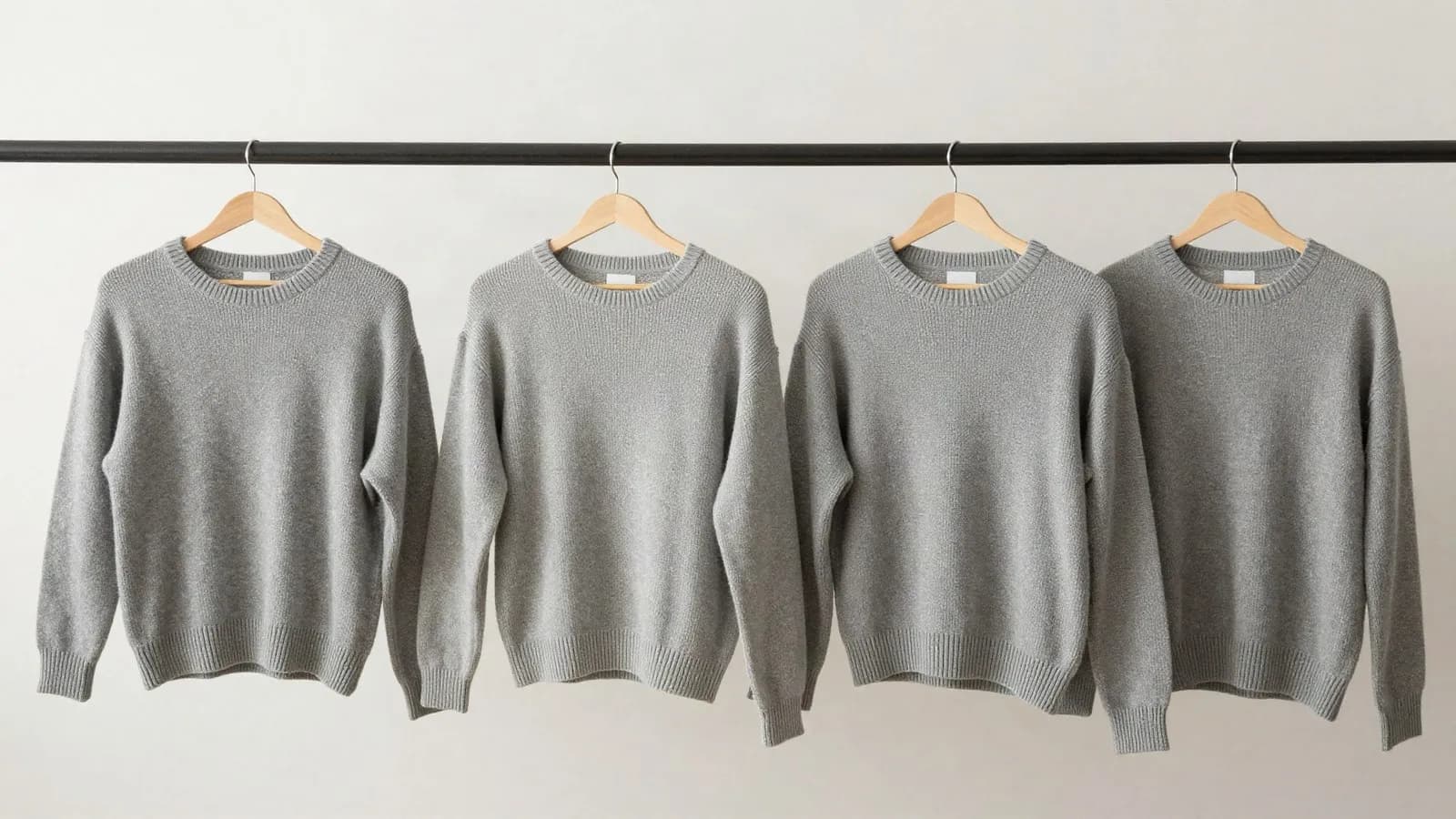
Everybody has had the experience and almost everybody blames themselves for it. You are a medium in one shop, a large in the next, and a small in a third, and somewhere in that sequence you start wondering what has happened to your body.
Nothing has happened to your body. There is no universal sizing standard, and there never has been.
Why are sizes not standardised?
Because nothing obliges them to be, and every brand has a reason not to be.
Each brand sets its own size chart, hires its own fit model, and writes its own grading rules for how measurements step up between sizes. The fit model is the individual on whom the base size is perfected, and a brand whose fit model has a longer torso produces a whole range with a longer torso. That is not an error. It is a house block, and it is part of how a label develops a recognisable fit.
The consequence is that a medium can vary by as much as 12cm in bust measurement across major brands. Twelve centimetres is not a fit preference. It is two or three sizes.
What is vanity sizing?
Labelling a garment with a smaller number than its measurements justify, because customers buy the number.
In a shop this is a mild flattery with a real commercial logic: a shopper who fits into a smaller number feels better and buys. Online it stops working entirely, because there is no fitting room to correct the label. The number becomes the only information available and it is deliberately unreliable.
Sizes have drifted over decades as a result, which is why vintage sizing feels brutal and why anyone comparing garments across twenty years finds the numbers meaningless.
How expensive is this?
Expensive enough that it is now a structural feature of the industry rather than an irritation.
Fashion e-commerce return rates average around 30 to 40 per cent, and fit and sizing drive over half of them. For dresses, where fit is least forgiving, return rates reach 50 to 55 per cent. One analysis of a million fashion returns attributed 67 per cent to fit and sizing.
Then there is bracketing: ordering the same item in two or three sizes with the intention of returning most of it. It is entirely rational behaviour given the information available, and it multiplies the shipping, handling and processing of every order that uses it.
Returned clothing is not simply put back on the shelf either. It has to be inspected, repackaged and often discounted, and a meaningful share of it is never resold at all, which connects this directly to what happens to clothing nobody buys.
Does the technology fix it?
Partially, and it treats a symptom.
Size recommendation tools, virtual fitting and body scanning all work by mapping your measurements onto a specific brand's actual garment measurements. When they have good data they reduce returns measurably, and they are worth using.
But notice what they are doing. They are building a translation layer on top of an inconsistency the industry could have removed. The tool exists because the size label does not mean anything, and the tool has to be rebuilt for every brand.
What can you actually do?
Stop shopping by size and start shopping by measurement.
Know three numbers. Chest or bust, waist, hip, measured with a tape rather than remembered. For trousers, add inside leg. These do not change between brands.
Read the garment measurement table, not the size chart. Many retailers publish both. The size chart says what body the size is meant for. The garment table says how big the item actually is, which is the number that decides whether it fits.
Measure something you already own that fits. Laid flat, across the chest, and compare. This is the single most reliable method available online and it takes two minutes.
Treat the number as a brand's internal code. It is not a fact about you. It is a label a company chose for commercial reasons, and it is worth far less attention than whether the garment will actually get worn.
The part worth saying plainly
An industry that cannot tell you whether something will fit has offloaded that problem onto its customers, and then built a returns operation to absorb the failure.
Anyone who has felt bad about their body in a fitting room because of a number on a label should know that the number was set by a marketing decision and a fit model, and that a medium varying by 12cm is a fact about the industry, not about them.
Published in The Outspoken Digest
Newsletter
The Digest, in your inbox
One edition, sent when it is ready. No noise, and your address is never passed on.
Read Next
More Fashion →
Victoria's Secret Fashion Show Heads to Los Angeles on Sunday With an All-Women Lineup and Three Angel Hopefuls
Oct 15, 2026/2 min read

Anthony Vaccarello Is Leaving Saint Laurent After a Decade, and Kering Has Not Yet Named His Successor
Oct 9, 2026/2 min read

Louis Vuitton Closes Paris Fashion Week With Hovering Cars, Paper-Light Dresses and a Louvre Courtyard Cityscape
Oct 7, 2026/2 min read

Celine Dion Made a Surprise Return to the Catwalk to Close L'Oreal's Paris Fashion Week Opening Show
Sep 29, 2026/2 min read