The Dive Briefing Questions Worth Asking Before You Get in the Water
A good briefing answers most of what a visiting diver needs. A great diver asks the rest: current, exit, turn pressure, lost-buddy plan and what happens if the boat cannot find you.
Friday, September 18, 2026/3 min read
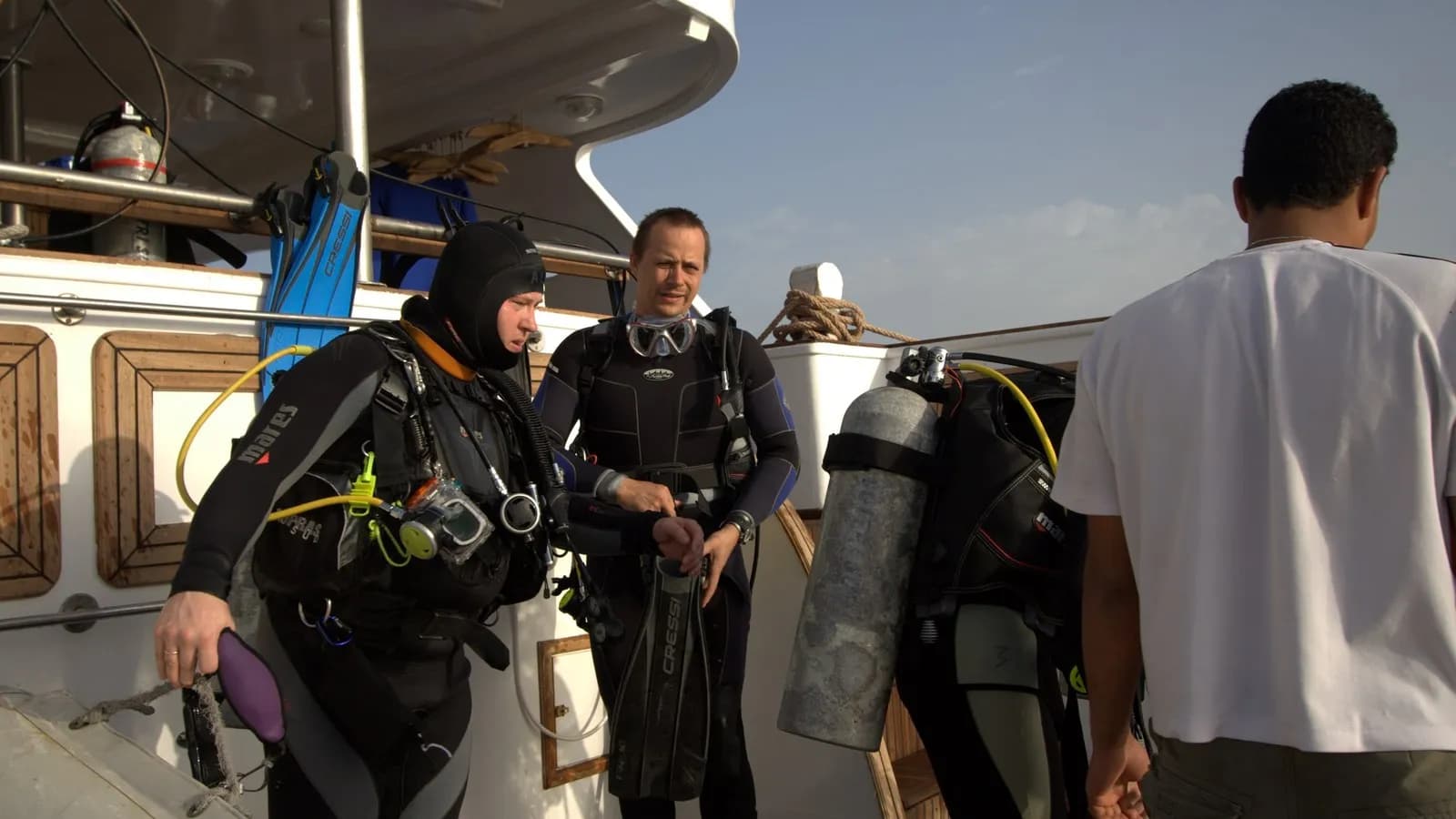
The briefing is the most valuable ten minutes of a dive day and the one most often half-heard. A guide runs through the site, points at a whiteboard, and divers nod at the parts they know. Yet most incidents on guided dives trace back to something that was either not said or not understood: a current nobody mentioned, an exit nobody described, a plan for losing the group that nobody had agreed. Divers Alert Network's health and safety resources and the British Sub-Aqua Club's safety pages both return, again and again, to planning and communication. A diver who asks sensible questions is not being difficult. They are doing the job.
The site and the limits
Ask for the maximum depth and the planned dive time, and ask who sets the turn. Many guided dives end when the first diver reaches a set pressure, often 50 bar (700 psi) as a minimum reserve on surfacing, and everyone must know the figure before they enter. If the guide plans a profile deeper than your certification, say so. A good operator will adjust, a poor one will not, and you should then ask yourself whether you want to be in that water.
Entry, exit and the surface
How do we enter, and how do we leave? Giant stride from a boat, back roll from a rib, a shore entry over rocks: each has its own risks. For an exit, ask what the plan is if the boat is not at the descent line, how pickup works, and where the ladder or platform is. Ask what the surface conditions are likely to be, because a calm morning can turn choppy by the end of the dive. Find out whether a surface marker is expected and whether you should carry your own. Our guide to the surface marker buoy and spool explains why it is the cheapest piece of safety kit you can own.
Current
Ask which way it flows and how strong, whether you will dive into it or with it, and what to do if it picks up. In a drift, the boat follows your bubbles or marker; in a site with a mooring line, the plan is to start into the current so that the return is easier. A sound answer will also say what to do if you are swept past the end of the reef. For the differences between drift diving and a standard dive, see drift diving and currents.
The group and the lost-buddy plan
Who is leading, how many are in the group, and who is last? Where do you swim relative to the guide? Agree the signals for turn, ascend and out of air. Most agencies teach a lost-buddy procedure of searching for about a minute and then surfacing carefully; if the operator uses a different rule, find out what it is. Ask your own buddy the same question, because the person whose plan you actually follow is the person next to you.
Hazards and the emergency plan
Ask what lives on the site that could cause you trouble: boat traffic, fishing lines, stinging hydroids, surge in a swim-through. Marine stings are common enough that the first-aid plan should be on the boat. Ask if there is emergency oxygen on board and a radio or phone signal, where the nearest hospital and recompression chamber is, and how long the transfer takes. The answers tell you a lot about the operator even when you never need them.
You can say no
The most important thing a briefing gives you is the chance to decline. A diver can call a dive at any point, on the boat or underwater, and a good guide respects it. Nothing at the site is worth a dive you are not comfortable with, and the better operators make saying so easy. A short list on your slate or phone, run through before every unfamiliar dive, takes less time than getting your fins on.
Published in The Outspoken Digest
Editorial desk
Outspoken Digest Diving DeskCovers freediving, recreational and technical diving, dive medicine and the incidents the sport learns from.
Newsletter
The Digest, in your inbox
One edition, sent when it is ready. No noise, and your address is never passed on.
Read Next
More Diving →
Breathless and Coughing Pink Froth After a Dive: Immersion Pulmonary Edema Explained
Oct 17, 2026/3 min read
Your Gas Consumption Is Not One Number: Why Depth, Cold and Nerves Change It
Oct 16, 2026/3 min read
SS United States Reef Sinking Targeted for November: What Divers Should Know
Oct 16, 2026/2 min read

Divers Excavating Off Kekova Find a Wreck Believed to Be the World's Oldest, Turkey Says
Oct 15, 2026/2 min read