Archaeologists Near Dortmund Uncover a Rare Roman-Era Workshop Where Germanic Craftsmen Recycled Roman Metal
A Landschaftsverband Westfalen-Lippe excavation team found pottery kilns, furnaces and metalworking pits at a settlement outside the Roman frontier, the first physical evidence from the site of how looted or traded Roman metal was reworked locally.
Saturday, September 26, 2026/2 min read
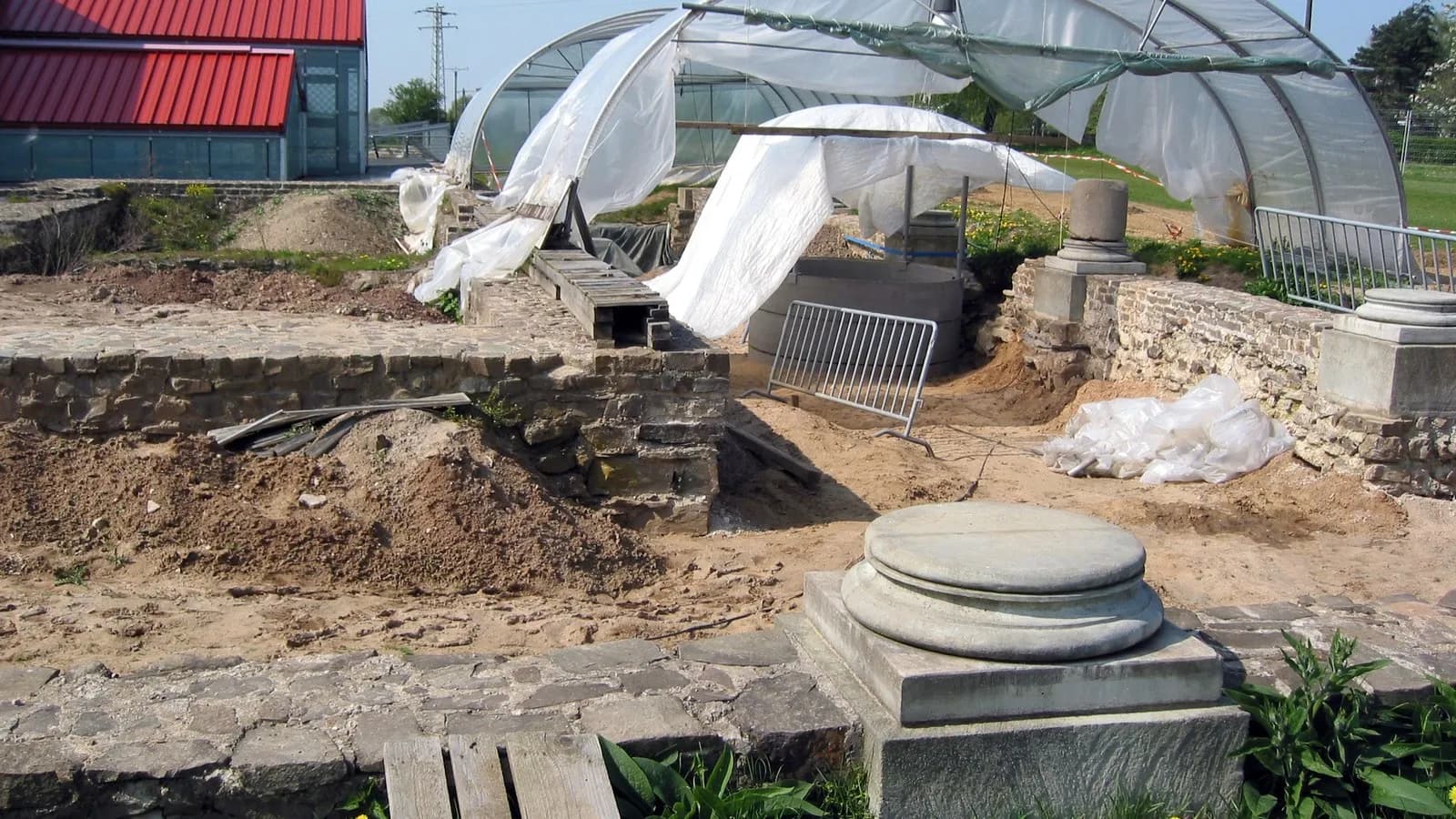
Excavators working since mid-August at a Germanic settlement in western Dortmund have uncovered what regional archaeologists are calling an unusually well-preserved workshop complex, offering rare physical evidence of how communities living outside the Roman Empire's formal border reused Roman metal for their own purposes. The dig, run by the Landschaftsverband Westfalen-Lippe together with Dortmund's city archaeology office, is detailed in a report from Archaeology Wiki and in the city of Dortmund's own announcement, both describing the find as the first of its kind uncovered in the western part of the local Germanic settlement area.
What the pits and furnaces reveal
The team has documented several distinct work areas at the site, dating from roughly the first to the fifth century, including the settlement's first identified pottery kiln alongside furnaces, hearths and pits used for metalworking. Archaeology Magazine's account notes that the metalworking areas in particular survived in exceptional condition, giving researchers a level of physical detail about the actual process, rather than just the finished objects, that this kind of site rarely offers.
Roman objects, non-Roman hands
The settlement itself sat beyond the Roman Empire's administrative control, in territory the Romans never formally annexed, which is what makes the workshop significant beyond its state of preservation. Roman-made metal objects, whether traded, looted or otherwise acquired, evidently made their way into this Germanic community and were then broken down and reworked in these same furnaces and pits, a pattern of cross-border material exchange that written Roman sources describe only in the vaguest terms and that archaeology has previously had to infer rather than observe directly.
Why this fills a specific gap
Historians have long known that Roman goods circulated well beyond the empire's formal frontier through trade, tribute and plunder, but evidence of what happened to those goods once they left Roman hands, whether they were kept intact, melted down, or recast into locally styled objects, is thin. A workshop area with furnaces, kilns and metalworking debris all in one place lets researchers trace that second life of Roman material directly, rather than reconstructing it from finished artefacts found in graves or hoards with no clear record of where or how they were altered.
What comes next
The excavation is ongoing, and the Landschaftsverband Westfalen-Lippe team has not yet published a full catalogue of the metal objects and residues recovered from the site, which would allow a more precise reading of what kinds of Roman items were being processed and into what. For now, the discovery stands as a rare, physically grounded window into an economic relationship, between an empire and the communities on its margins, that has mostly had to be argued from absence rather than shown from the ground itself.
Published in The Outspoken Digest
Editorial desk
Outspoken Digest Science DeskReports for The Outspoken Digest across Technology, Latest Trends, Health.
Newsletter
The Digest, in your inbox
One edition, sent when it is ready. No noise, and your address is never passed on.
Read Next
More Technology →
Some White Dwarfs Would Look Green, Pink or Purple, Warwick Astronomers Calculate
Oct 15, 2026/2 min read
Oxford Physicists Reproduce the Aharonov-Bohm Effect on a Hybrid Quantum Computer
Oct 15, 2026/2 min read
Japan Will Fund Up to $21 Billion for Two GlobalFoundries Chip Plants in New York
Oct 15, 2026/2 min read
Apple's $299 HomeView Smart Display Takes Preorders, but Not in the European Union
Oct 15, 2026/2 min read