The Fed Raised Rates for the First Time Since 2023. Warsh Said Conditions Were Not Restrictive. The Dow Lost 631
A unanimous quarter point takes the funds rate to 3.75 to 4 per cent. The median official sees 4.1 per cent by December, sixteen of eighteen expect at least one more rise, and the ten-year went back through five per cent while the chairman spoke.
Thursday, September 17, 2026/3 min read
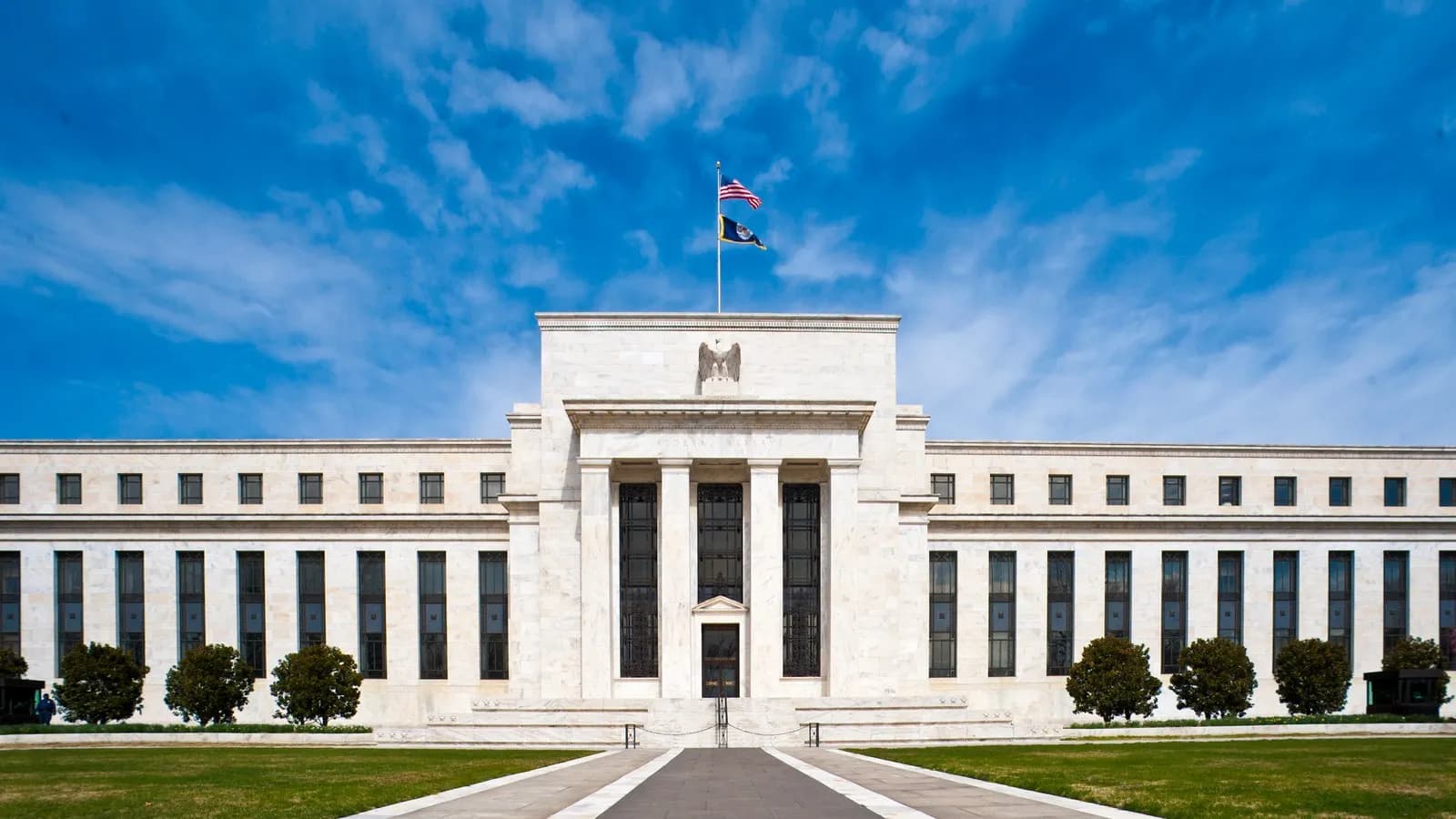
The Federal Open Market Committee did on Wednesday what the market had priced at better than ninety per cent for a fortnight, and it still hurt. The committee voted twelve to nothing to raise the target range for the federal funds rate by a quarter of a percentage point, to 3.75 to 4 per cent. It is the first increase since July 2023, the first under Kevin Warsh, and the end of a cutting cycle that began two years ago this week. The statement was short. Activity is "expanding solidly", productivity growth is strong, capital investment robust, job gains are keeping pace with the workforce. Then the sentence that matters: "Inflation remains elevated. Today's policy action will support a timelier return to the Committee's 2 percent goal." And a promise that reads like a pledge: "The Committee will deliver price stability."
What the dots say
The summary of economic projections published alongside the decision puts the median federal funds rate at 4.1 per cent at the end of this year and 4.1 per cent at the end of 2027, easing to 3.9 per cent in 2028 and a longer-run 3.2 per cent. That is one more quarter point this year, in October or December, and then a plateau, not a descent. Sixteen of the eighteen participants have at least one more rise pencilled in and four see two. The inflation forecasts explain why: headline PCE at 3.7 per cent this year and 3.4 per cent core, coming down to 2.3 and 2.5 per cent in 2027 only if the policy path holds. Growth is put at 2.3 per cent this year and 2.4 next, unemployment at 4.1 per cent both years. This is a committee that believes the economy can take the medicine.
What Warsh said
The chairman gave the market less comfort than the statement did. "This summer's inflation readings do not tell me that underlying trends have meaningfully improved," he said, and later, of the increase, "Today's action starts to show we are serious about this." Asked whether policy was now tight, he answered: "I would be hard pressed to describe broad financial conditions as restrictive. This view was widely shared by the committee, so we removed a dose of accommodation." He declined to own the dot plot ("Those aren't my forecasts") and declined to guide ("I'm not in the forward guidance business"). Fortune's account of the press conference has the S&P 500 sliding toward its lowest close since July as he spoke.
The close
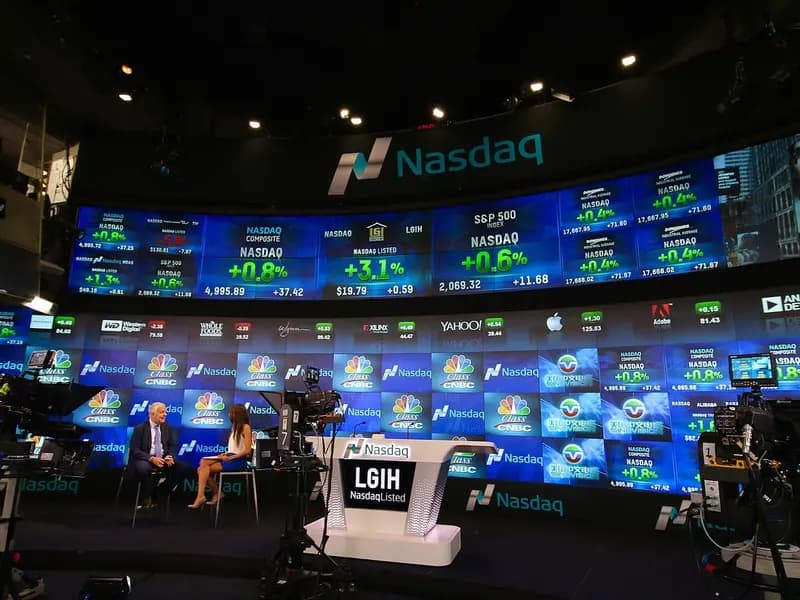
The Dow Jones Industrial Average finished down 631.21 points, or 1.21 per cent, at 51,461.90. The S&P 500 lost 0.45 per cent to 7,551.81 after being down a full point intraday, and the Nasdaq Composite closed all but flat at 25,978.42, down 0.01 per cent. Financials led the decline. The ten-year Treasury yield went back above five per cent, a level it first reached last week and which we described on Monday as the highest since 2007, and the dollar index rose 0.6 per cent to its strongest since late July. Jeffrey Roach at LPL Financial told Fortune the Fed "may not see a cut until 2028. Another hike may be coming." Michael Pearce at Oxford Economics expects one more and then a stop, and thinks the market has too much tightening priced. Chris Zaccarelli at Northlight Asset Management offered the historical rule that once the Fed starts raising it does so several times.
The war in the numbers
Nobody at the press conference needed reminding where the inflation came from. Brent settled at 108.75 dollars on Tuesday, its highest close in nearly four months, on the news that Saudi Arabia had suspended loadings at Yanbu, which we report separately. The Congressional Budget Office said this week that the war adds about half a percentage point to inflation in the first quarter of next year. Diesel at the pump is 6.27 dollars a gallon against 2.98 dollars in February. The Fed cannot pump oil; what it can do is stop the second-round effects, and Wednesday was the committee saying, as plainly as central bankers say anything, that it intends to. The next meeting is 27 and 28 October.
Published in The Outspoken Digest
Editorial desk
Outspoken Digest Markets DeskReports for The Outspoken Digest across Business, Crypto.
Newsletter
The Digest, in your inbox
One edition, sent when it is ready. No noise, and your address is never passed on.
Read Next
More Business →
Wall Street Week Ahead: A Fed Decision on Wednesday, Alphabet, Microsoft and Amazon Report, and Oil Near $117
Oct 26, 2026/2 min read
Dow Sheds More Than 600 Points as Brent Passes $116 and Houthi Attacks Rattle Wall Street
Oct 24, 2026/2 min read
Meta Reports $64.6 Billion Revenue and Negative Free Cash Flow, and Plans a New Class of Non-Voting Shares
Oct 23, 2026/2 min read
Nasdaq Falls 2.6% and Chip Stocks Plunge as Brent Oil Jumps to $113 and Treasury Yields Slide
Oct 23, 2026/2 min read