Forest Bathing Has Real Data and One Awkward Finding About Anticipation
Shinrin-yoku has produced a body of research showing reduced cortisol and blood pressure after time among trees. It has also produced evidence that expecting to go may lower cortisol by itself, which complicates the story usefully.
Outspoken Digest Work and Life Desk
Friday, September 4, 2026/3 min read
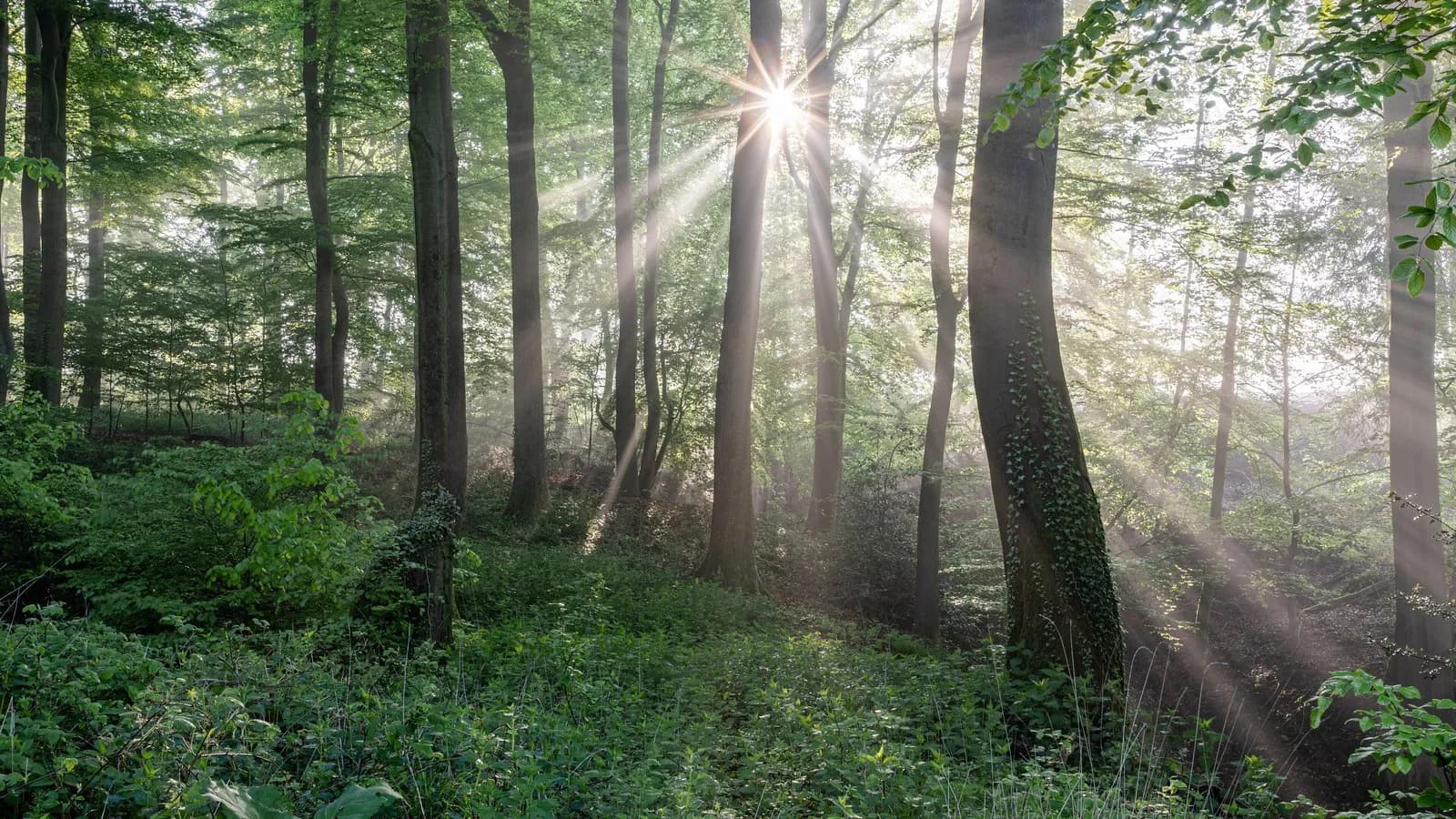
Shinrin-yoku, forest bathing, was coined by the Japanese Ministry of Agriculture, Forestry and Fisheries in 1982. It means going into woodland and being there attentively, without exercising, without a destination, and generally without a phone.
Unusually for something that sounds like this, it has a research literature, and the literature is more interesting than either its promoters or its detractors tend to allow.
What has been measured
Two outcomes dominate: cortisol and blood pressure.
A systematic review and meta-analysis of forest bathing and cortisol screened 971 articles, included 22 in the review and 8 in the meta-analysis. In all but two of the included studies, cortisol was significantly lower after the intervention in forest groups compared with controls, or a significant reduction from before to after was found within the forest groups.
A separate systematic review and meta-analysis examined the blood pressure lowering effect and found reductions associated with forest environments compared with non-forest control settings.
Reductions in heart rate and in sympathetic nervous activity have been reported after exposures as short as twenty minutes.
That is a more substantial evidence base than most wellness interventions can point to.
The awkward finding
Anticipation appears to do some of the work.
There is evidence that simply expecting to take part in forest bathing can lower cortisol, before anyone has reached a tree. And some newer work has replicated the cortisol reduction while observing an increase in diastolic blood pressure, which runs against the earlier data.
This is not a debunking. It is the ordinary difficulty of the field, and it is worth stating clearly because it is usually omitted.
You cannot blind someone to whether they are in a forest. Every study is therefore comparing a pleasant, expected, chosen experience against a control condition that is usually a city street, and expectation, novelty, quiet, temperature, air quality and the absence of traffic noise are all riding along with the trees. Isolating a specific forest effect from the general effect of a calm, agreeable environment is extremely hard, and largely has not been done.
The phytoncide hypothesis
The most-cited proposed mechanism is that trees emit volatile organic compounds, phytoncides, which have measurable biological effects, with several studies reporting increases in natural killer cell activity after forest exposure.
Treat this as an open hypothesis. The natural killer cell work comes largely from a small number of research groups, sample sizes are modest, and the leap from a change in a laboratory measure to a health outcome is long and has not been made. It is a plausible idea that has been reported far more confidently than the data supports.
What is safe to conclude
Time spent in green space, unhurried and without a screen, is associated with reduced physiological stress markers and with people feeling better. That much is consistent across a reasonably large literature and matches a broader body of research on green space and mental health.
Whether trees specifically are required, or whether a quiet park, a beach or a garden would do as much, is not established. Whether phytoncides are doing anything is not established. Whether the effects last beyond the visit is barely studied.
Which leaves an honest recommendation that costs nothing. Go and spend two hours somewhere green and quiet, slowly, without your phone, without counting steps or covering distance. The evidence that this is good for you is decent. The evidence for the more specific claims made about it is not, and you do not need them.
Doing it properly
Slow down further than feels natural. The instruction most people get wrong is that this is not a walk. Two hours might cover a kilometre.
Leave the phone away or off, since the absence of interruption is plausibly a large part of the effect.
Use more than sight: sound, smell, the temperature change under canopy. The traditional protocols emphasise this and it is what distinguishes the practice from simply being outdoors while thinking about work.
Go regularly rather than once. Almost everything in this literature measures short-term change, and the argument for a habit rests on the same reasoning as the argument for a routine generally, which we set out in our piece on the daily routine. The related evidence on quiet, attention and contemplative practice, including its documented downsides, is in this piece.
Published in The Outspoken Digest
Editorial desk
Outspoken Digest Work and Life DeskReports for The Outspoken Digest across Lifestyle, Latest Trends.
Newsletter
The Digest, in your inbox
One edition, sent when it is ready. No noise, and your address is never passed on.
Read Next
More Lifestyle →
Tarek Atoui Opens Hold in Tate Modern's Turbine Hall, Turning the Cavernous Space Into a Giant Sound Instrument
Oct 13, 2026/2 min read

Jodie Comer, Adrian Lester and a Mary Whitehouse Play Take Top Honours at the 2026 UK Theatre Awards
Oct 12, 2026/2 min read

Andrew Scott's Elsinore Opens the London Film Festival With Tears, an Ovation and a Disco Tribute
Oct 9, 2026/3 min read