Meditation Has Adverse Effects, and the People Most Likely to Meet Them Are the Ones Told It Cannot Hurt
Contemplative practice has real benefits and a real adverse event literature that wellness culture has quietly declined to read. In a survey of 1,370 regular meditators, 22 percent reported particularly unpleasant experiences.
Friday, September 4, 2026/4 min read
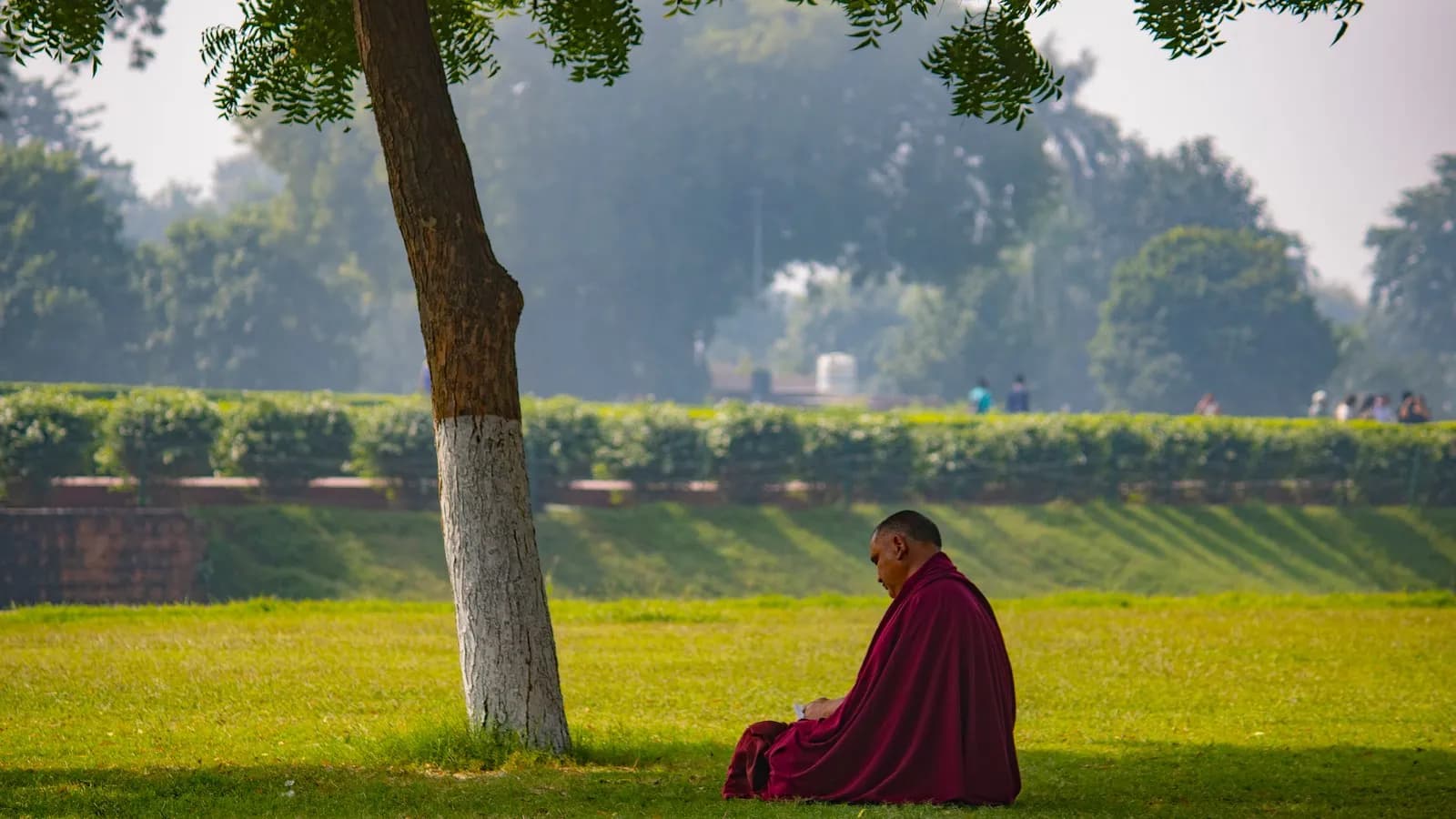
Every contemplative tradition that has taken meditation seriously for any length of time has also had a vocabulary for what happens when it goes wrong. Buddhist literature has extensive accounts of difficult stages. Christian contemplatives wrote about desolation and the dark night. Yogic texts warn repeatedly about practising intensively without a teacher.
Modern wellness culture inherited the practice and discarded the warnings, which is how meditation became the only intervention in common use that is marketed as having no downside.
What the benefit side actually looks like
Real, replicated, and smaller than the marketing.
Structured mindfulness programmes have reasonable evidence for modest improvements in anxiety, depression and stress, with effect sizes typically in the small to moderate range and comparisons against active controls considerably less flattering than comparisons against waiting lists. It is a useful tool. It is not a transformation, and studies of some of the more sweeping claims, such as substantial increases in compassion and prosocial behaviour, have found much weaker effects than the field assumed.
None of that is an argument against practising. It is an argument against expecting the wrong thing.
The adverse event literature
The first systematic review of meditation adverse events was published by Farias and colleagues in Acta Psychiatrica Scandinavica in 2020. It covered 83 studies and 6,703 participants.
The pooled prevalence of adverse events was 8.3 percent. That figure splits sharply by study type: 3.7 percent in experimental studies and 33.2 percent in observational ones, a gap which mostly reflects how hard people were looking rather than how often it happened. Sixty five percent of the studies reviewed reported at least one adverse event. The most commonly reported were anxiety, at 33 percent of events, depression at 27 percent, cognitive anomalies at 25 percent, and gastrointestinal problems and suicidal ideation at 11 percent each.
A separate international survey of 1,370 regular meditators found that 22 percent reported particularly unpleasant experiences they attributed to practice. Thirteen percent reported effects severe enough to be classed as adverse. Most were transient: 8.9 percent mild without consequence, 8.8 percent moderate and distressing. At the severe end the numbers are small and not zero: 3.1 percent required countermeasures, 0.9 percent reported very severe effects with lasting consequences, and 0.2 percent reported effects that were life threatening or led to hospitalisation.
The commonest categories were affective, at 16.3 percent, somatic at 13.4 percent and cognitive at 11.5 percent, followed by disturbances in the sense of self at 9.9 percent.
Who is most at risk
People with a pre-existing mental health condition had about 1.6 times the odds of reporting an unpleasant experience.
Which is the group most likely to be told to try meditation, and most likely to be told it is gentle, safe and suitable for everyone. That mismatch is the practical problem. Intensity is the other consistent factor: long silent retreats, many hours a day, and practices emphasising deconstruction of the sense of self carry more risk than ten minutes of guided breathing on an app.
How to hold this sensibly
The base rates deserve proportion. A large majority of people who meditate regularly report nothing worse than boredom, and the severe outcomes are rare in absolute terms. Nobody should be frightened away from sitting quietly for ten minutes.
What follows is more modest. Difficulty during practice is a known phenomenon rather than a sign of failure or of doing it wrong, which is what people are usually told and which keeps them pushing when they should stop. Increasing dose is not automatically better. A first long retreat is a significant undertaking and deserves the same caution as any other intensive intervention. If you have a history of psychosis, dissociation, severe trauma or an unstable mood disorder, this is worth discussing with a clinician rather than an app.
And a teacher who cannot describe what going wrong looks like should be treated the way you would treat a physiotherapist who has never heard of injury.
Spirituality, health and the trap of instrumentalising it
There is a body of epidemiological work associating religious and spiritual involvement with better health outcomes, and it is genuinely difficult to interpret. Communities provide social support, meaning and behavioural norms, all of which have well established health effects, and disentangling those from anything specific to belief has largely defeated the field. The honest summary is association, plausible mechanisms, weak causal evidence.
There is also something worth naming about the framing. Contemplative practices were not developed to lower blood pressure. They were developed to answer questions about meaning, death, attention and the self. Recruiting them as health interventions and then judging them on biomarkers is a strange transaction, and it tends to produce both bad science and thin practice.
You can meditate because it makes you calmer. You can meditate because the tradition it comes from is asking a question you find serious. The second reason is at least as defensible as the first, and it does not require a trial to justify it. The corresponding evidence for the physiological side, which is stronger and narrower than most claims made for meditation, is in today's piece on slow breathing.
Published in The Outspoken Digest
Editorial desk
Outspoken Digest Health DeskMedicine, public health and the research behind the headlines, read carefully.
Newsletter
The Digest, in your inbox
One edition, sent when it is ready. No noise, and your address is never passed on.
Read Next
More Health →
Cochrane Review Finds Medical Cannabis Has No Clear Benefit for Insomnia, With Weak Evidence Either Way
Oct 13, 2026/2 min read

Lancet Commission Names 17 Threats to Global Health Through 2100, With Obesity the Largest by Burden
Oct 12, 2026/2 min read


FDA Approves Pritelivir for Herpes Lesions That Resist Standard Antivirals in Immunocompromised Adults
Oct 10, 2026/2 min read