Six Breaths a Minute Is the Number, and It Is One of the Few Wellness Claims With Trials Behind It
Yogic breathing is unusual among wellness practices in having a measurable, replicated physiological effect. The size of it is modest, the mechanism is well understood, and a few of the more dramatic techniques carry real risk.
Friday, September 4, 2026/4 min read
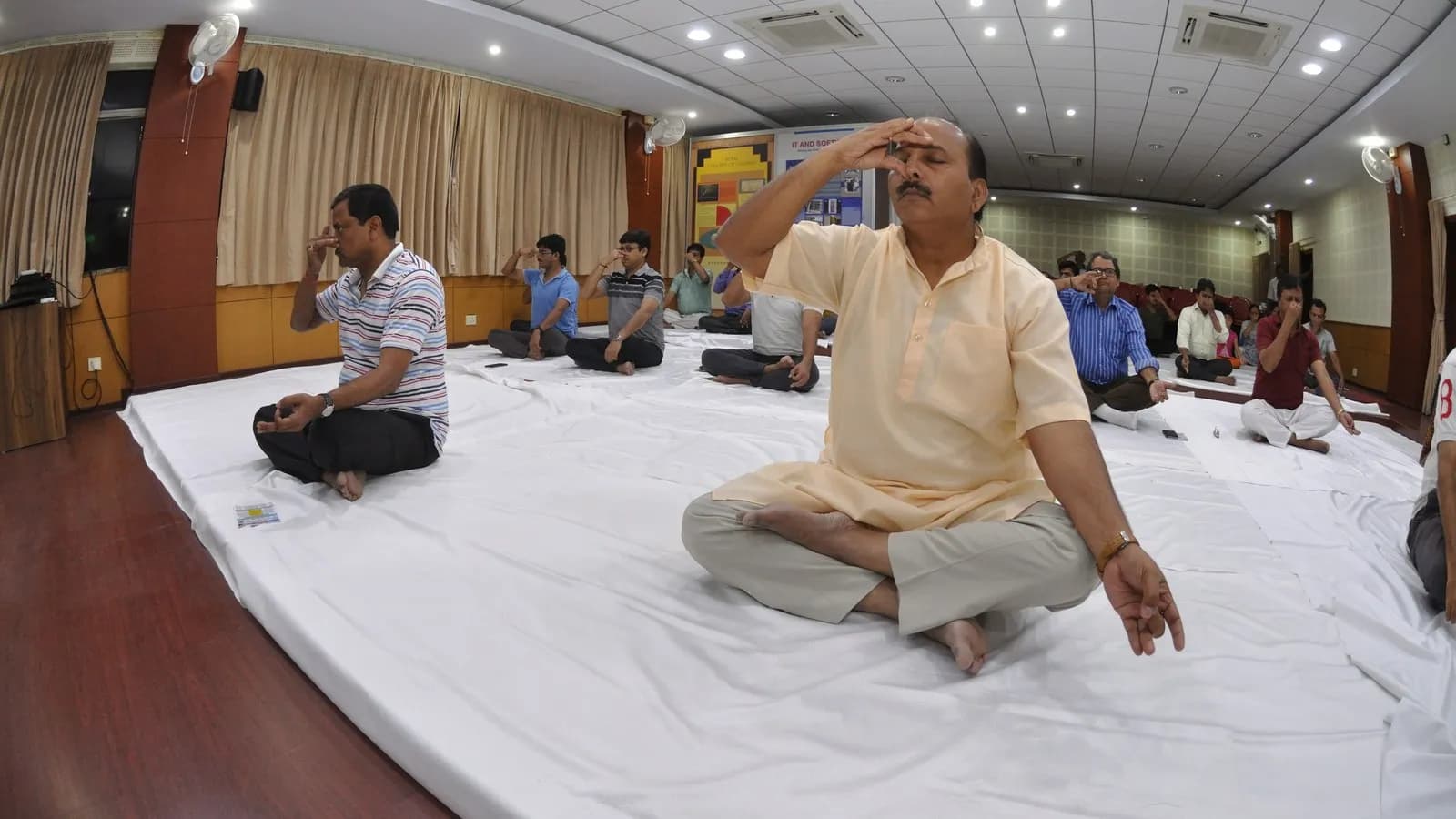
Most of what gets sold as wellness has no measurable effect on the body at all. Slow breathing is the interesting exception, because you can put someone on a monitor and watch it work in about ninety seconds.
That does not make it a cure for anything, and the gap between what the research supports and what a breathwork weekend will tell you is wide. But there is something real here, and it is worth separating from the marketing around it.
The number that matters
Roughly six breaths a minute.
Normal resting respiration is around twelve to eighteen breaths a minute. Slow it to about six, meaning a cycle of ten seconds, and something specific happens: the natural fluctuation of heart rate with the breath comes into phase with the slower rhythms of blood pressure regulation. Heart rate variability rises sharply. This is not mystical. It is a resonance effect in the cardiovascular control system, and six a minute is approximately where the resonance sits in most adults.
Nearly every effective technique, from yogic pranayama to cardiac rehabilitation protocols to the paced breathing built into consumer devices, converges on that same rate. That convergence is itself evidence, since these traditions were not copying one another.
What the trials actually show
A systematic review and meta-analysis published in the Indian Heart Journal pooled seven randomised controlled trials of yogic breathing in hypertensive patients, covering 683 participants. It found a significant reduction in heart rate, with a standardised mean difference of 0.43 and a confidence interval running from 0.34 to 0.52. Heterogeneity between the trials was nil, which is unusual and makes the heart rate finding one of the more solid things in this literature. Systolic blood pressure also fell significantly, while the diastolic and heart rate variability improvements were characterised as modest.
Two cautions belong with that. These are standardised effect sizes rather than millimetres of mercury, so they describe a consistent direction rather than a dose you can compare against a tablet. And the authors' own conclusion is the careful one: pranayama lowers heart rate and may modestly reduce blood pressure, which supports it as a safe adjunct pending larger standardised trials.
The correct summary is that slow breathing is a plausible adjunct, not a replacement for treatment. Anyone taking blood pressure medication should keep taking it.
Pacing beats effort
One of the more useful findings is about how you do it rather than whether.
A randomised crossover study of 25 healthy adults compared five conditions, including self paced deep breathing and externally paced breathing at six a minute, and found that external pacing produced the larger rise in heart rate variability. Left to themselves, people breathe deeply but not slowly enough, and they drift.
The practical consequence is that a metronome, an app, a visual guide or a teacher counting is not a crutch. It is doing the work. The study is small, its participants were healthy, and each performed each technique only once, so it should not be over read. But it points the same way as the wider literature.
A protocol you can test today
Sit upright, not rigid. Breathe through the nose. Four seconds in, six seconds out, for five minutes.
The longer exhale is the active ingredient. Heart rate rises slightly on inhalation and falls on exhalation, so lengthening the out breath relative to the in breath biases the whole cycle towards the parasympathetic side. If four and six is uncomfortable, use three and five. Strain defeats the purpose entirely.
Do not force the volume. Deep does not mean maximal. You are aiming for slow and smooth, not for the largest breath you can take, and the most common beginner error is hyperventilating slowly.
The techniques that carry actual risk
This is the part most breathwork content omits, and it is not hypothetical.
Rapid forced breathing practices, kapalabhati and bhastrika among them, drive carbon dioxide down and can produce dizziness, tingling, muscle spasm and fainting. Fainting is the dangerous outcome, because of what you might hit on the way down.
Extended breath retention, kumbhaka, is where the serious hazard lies. Voluntary hyperventilation followed by breath holding suppresses the urge to breathe without adding meaningful oxygen, which means a person can lose consciousness with no warning. In water this kills people, reliably and often, and the mechanism is exactly the one we described in our piece on shallow water blackout. Never do breath holding or hyperventilation in a pool, in the sea, or in a bath. Never do it alone in water under any circumstances.
On land, anyone with uncontrolled hypertension, glaucoma, retinal problems, epilepsy, a recent cardiac event, or who is pregnant should get medical advice before taking up forceful techniques. Slow paced breathing at six a minute carries none of this risk and is where almost all the evidence sits anyway.
What it does not do
It does not detoxify anything, alkalise the blood in any useful sense, or oxygenate the tissues beyond what normal breathing already achieves. Healthy lungs saturate arterial blood at around 97 percent at rest, and there is no headroom for a breathing exercise to fill.
What it does is shift autonomic balance for a while, and with regular practice, modestly, over time. That is a genuine and useful thing, and it is smaller and more interesting than the claims made for it. The wider evidence on breath control in a very different context is in our piece on land based breath hold training.
Published in The Outspoken Digest
Editorial desk
Outspoken Digest Health DeskMedicine, public health and the research behind the headlines, read carefully.
Newsletter
The Digest, in your inbox
One edition, sent when it is ready. No noise, and your address is never passed on.
Read Next
More Health →
Cochrane Review Finds Medical Cannabis Has No Clear Benefit for Insomnia, With Weak Evidence Either Way
Oct 13, 2026/2 min read

Lancet Commission Names 17 Threats to Global Health Through 2100, With Obesity the Largest by Burden
Oct 12, 2026/2 min read
FDA Approves Pritelivir for Herpes Lesions That Resist Standard Antivirals in Immunocompromised Adults
Oct 10, 2026/2 min read