Ful Medames: Breakfast That Has Outlasted Every Empire in Egypt
Fava beans simmered until they collapse, crushed with garlic, lemon and olive oil, eaten out of a bowl with bread. Older than the pyramids by some accounts, and still what Cairo eats at dawn.
Friday, August 14, 2026/5 min read
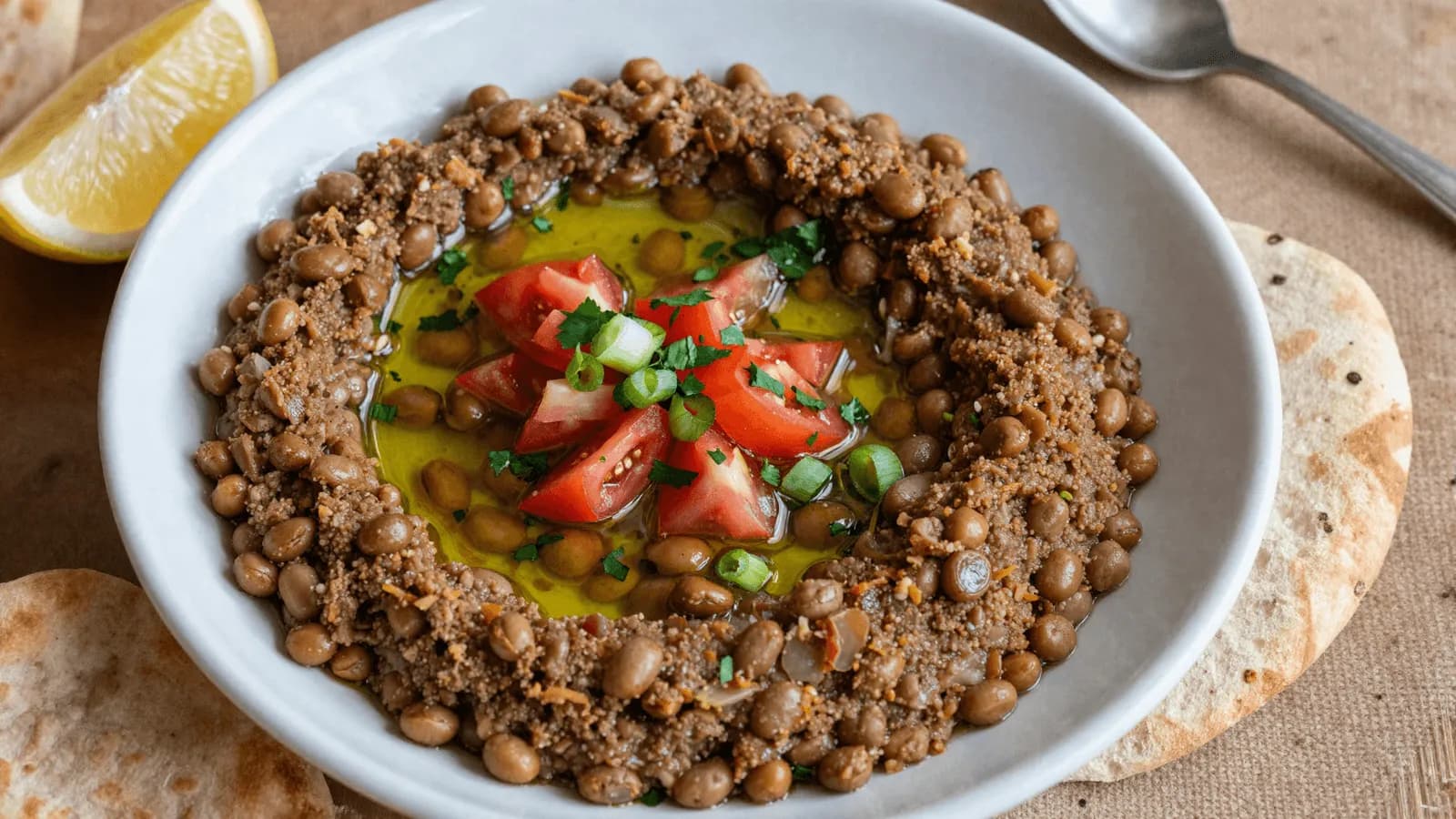
There is a cart on almost every busy street in Cairo before seven in the morning with a bulbous copper pot on it, narrow at the neck and wide at the base. Inside are fava beans that have been cooking since the previous evening. A queue forms. Nobody consults a menu.
Ful medames is the Egyptian national dish and one of the oldest continuously eaten meals anywhere. It is fava beans, simmered until they slump, crushed roughly, and dressed with olive oil, lemon, garlic and cumin. It costs almost nothing and it will keep you going until the afternoon.
Buried beans
The name explains the method. Ful is simply beans. Medames comes from a Coptic word meaning buried, and it refers to how the pot was cooked: set into hot coals or embers overnight so the beans cooked for hours at a very low temperature without attention.
The modern copper pot, the idra, is the descendant of that. It is narrow-necked deliberately, which limits evaporation and holds the heat, so the beans stew rather than boil.
How far back this actually goes is debated but the range is remarkable regardless. The dish is described as pre-Ottoman and pre-Islamic, with suggestions that the recipe dates to the Dynastic period, and a version of it appears in the Jerusalem Talmud. Whatever the precise chronology, people have been eating this in the same place for a very long time.
Dried or tinned
Dried beans are better and take a night of soaking plus two hours of cooking. Tinned ful is genuinely acceptable and takes ten minutes, which is why most households outside Egypt use it.
If you buy tinned, buy the small brown fava beans sold specifically as ful medames rather than large broad beans, which are a different thing with a tougher skin and a mealier texture. Drain and rinse them; the canning liquid is heavily salted and tastes metallic.
The variety matters more than the format. Small brown favas break down into the right creamy-but-textured state. Large green broad beans stay stubbornly separate and taste grassy.
Ingredients
Serves 4. 20 minutes with tinned beans, or overnight soaking plus 2 hours with dried.
- 2 tins (about 800 g) small brown fava beans, drained and rinsed
- 3 cloves garlic, crushed to a paste with a little salt
- 1 teaspoon ground cumin, plus more to serve
- Juice of 1 to 2 lemons
- 4 tablespoons good olive oil, plus more for the top
- 120 ml water or bean cooking liquid
- Salt and black pepper
- To finish: chopped tomato, chopped parsley, sliced spring onion, sliced green chilli, tahini (optional)
- To serve: warm flatbread, boiled eggs, pickles
The garlic must be raw and crushed rather than cooked. Cooked garlic is sweet and rounded; ful needs the sharp, hot, slightly aggressive version, and it is a defining flavour rather than a background one.
Method
1. Warm the beans through
Put the drained beans in a saucepan with the water and bring them to a gentle simmer for ten minutes. If you are using dried beans you have soaked and cooked, use some of their cooking liquid here instead of water.
They should be soft enough to crush against the side of the pan with almost no pressure. Anything firmer than that will read as a bean salad rather than as ful.
2. Crush, but not to a puree
With a potato masher or the back of a wooden spoon, crush maybe two thirds of the beans against the base of the pan and leave the rest whole.
This is the single decision that separates good ful from bad. Fully blended, it becomes a smooth beige paste that eats like nursery food. Left entirely whole, it will not hold the dressing. You want a thick, rough, spoonable mixture with recognisable beans still in it.
3. Dress it in the pan
Off the heat, stir in the crushed garlic, cumin, lemon juice, olive oil, salt and plenty of black pepper.
Taste it now and expect to add more lemon than feels reasonable. Fava beans are earthy and slightly flat, and acid is what lifts them. If it tastes dull, it is almost certainly short of lemon rather than short of salt.
4. Adjust the consistency
It should be loose enough to scoop with bread but thick enough to hold on it. Add a splash more water if it has tightened, which it will as it stands.
5. Finish generously in the bowl
Spoon into bowls, make a well in the surface with the back of the spoon, and pour a serious amount of olive oil into it. Dust with more cumin.
Then pile on the chopped tomato, parsley, spring onion and chilli. The toppings are not decoration. Ful on its own is monotone by design, and the fresh, sharp, raw elements on top are what make a bowl of it interesting to the last spoonful.
What is the difference between ful and hummus?
Different bean and different treatment. Hummus is chickpeas blended smooth with tahini and lemon into a dip, eaten cold or at room temperature. Ful is fava beans, only partly crushed, served hot as a meal in its own right, and tahini is optional rather than structural. They are both eaten with bread, which is where the confusion starts, but one is a component of a mezze table and the other is breakfast. Our hummus guide covers the other side.
Can you use canned fava beans for ful medames?
Yes, and most people do. Buy the small brown fava beans labelled ful medames rather than large broad beans, drain and rinse them well to remove the salty canning liquid, then simmer for ten minutes so they soften enough to crush. The result is close enough to the slow-cooked version that the difference only shows if you eat them side by side. Dried beans, soaked overnight and simmered for around two hours, give a slightly deeper flavour and better texture.
Is ful medames healthy?
It is one of the better breakfasts available on most measures. Fava beans are high in protein and dietary fibre, low in fat before the oil goes on, and slow to digest, which is precisely why it sustains manual workers through a morning. The olive oil adds calories but also makes it satisfying. The nutritional caveats are the salt in tinned beans and the fact that people with the inherited condition favism must avoid fava beans entirely, which is not a minor footnote in a region where the trait is not rare.
How to eat it
With bread, using your hands, tearing off a piece and using it as a scoop. Cutlery is available in restaurants and almost nobody uses it.
The standard accompaniments are boiled eggs, pickled turnips, more raw vegetables and very sweet tea. If you want the full spread, add falafel, which in Egypt is made from fava beans rather than chickpeas and is called taameya. Our falafel recipe covers both versions.
The regional variations, and how the Lebanese and Syrian versions differ from the Egyptian one, are in the comparison piece.
Published in The Outspoken Digest
Editorial desk
Outspoken Digest Food DeskCooking, ingredients, restaurants and the economics of what ends up on the table.
Newsletter
The Digest, in your inbox
One edition, sent when it is ready. No noise, and your address is never passed on.
Read Next
More Recipes →
Swangy Tamarind Glazed Chicken Wings for the Flavour Replacing Swicy on Fast Food Menus
Sep 29, 2026/3 min read

Baked Apple Cider Doughnuts for a Cider Season That Peaked Earlier Than the Calendar Says
Sep 29, 2026/3 min read
An Obatzda Bavarian Beer Cheese Dip for the Final Stretch of Oktoberfest 2026
Sep 29, 2026/3 min read