The Same Beans, Four Countries, Four Different Breakfasts
Egyptian ful is crushed, oily and cumin-heavy. Lebanese ful keeps chickpeas in it and more lemon. Sudanese ful arrives under cheese. The bean is the same and almost nothing else is.
Saturday, August 15, 2026/4 min read
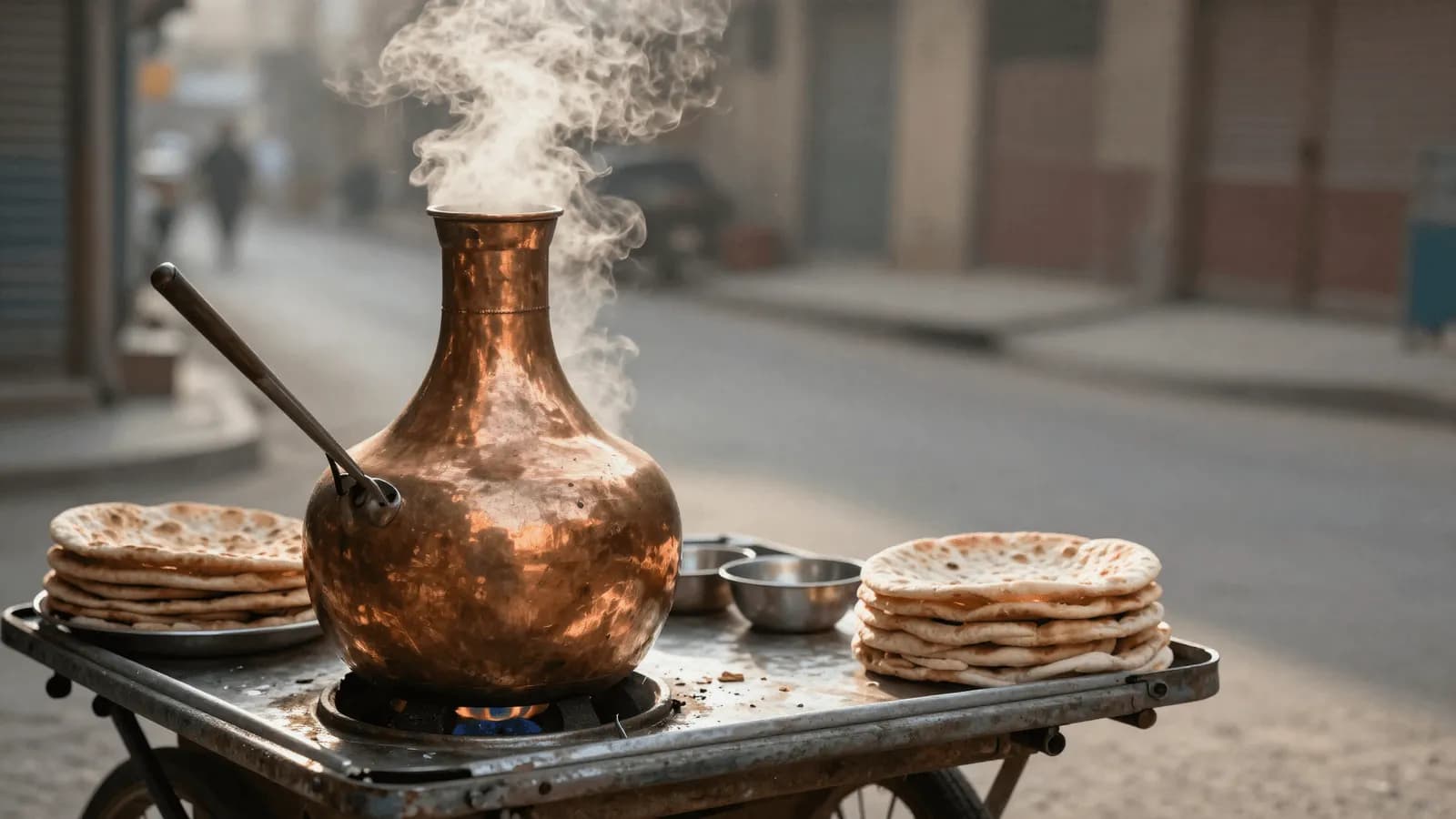
Order ful in Cairo, Beirut, Damascus and Khartoum and you will be given four bowls that a stranger would struggle to identify as the same dish. The bean is identical. Everything done to it afterwards is local.
This is unusual. Most dishes that travel change their ingredients. Ful keeps its single ingredient and changes its entire character instead, which makes it a useful way of learning what each of these cuisines actually values.
Egypt: the crushed, oily original
The Egyptian version is the reference point and the one the dish is named for. Small brown fava beans cooked overnight in a narrow-necked copper pot, crushed roughly in the pan, and dressed with olive oil, lemon, raw garlic and a great deal of cumin.
The defining features are texture and cumin. Egyptian ful is crushed further than any other version, into something thick and spoonable, and cumin is present at a level that would seem excessive elsewhere. The oil is poured on at the table, generously and visibly.
Toppings are fresh and sharp: chopped tomato, spring onion, parsley, green chilli. It is street food, sold from carts, and it is eaten fast with bread and no cutlery. The method is set out in full in the Egyptian recipe.
Lebanon and Syria: chickpeas, tahini and more lemon
The Levantine version is a restaurant dish more than a street one, and it is noticeably more composed.
Three things change. Chickpeas go in alongside the fava beans, often at close to equal proportions, which lightens the texture considerably and adds a nuttiness the fava does not have. Tahini is stirred through, or spooned over, which makes it richer and creamier. And the lemon is dialled up sharply, sometimes to the point of being the dominant flavour.
The beans are also left much less crushed. A Lebanese ful frequently arrives with most of the beans whole in a loose, lemony, garlicky dressing, closer to a warm bean salad than to the Egyptian paste.
Cumin is present but restrained. Where an Egyptian bowl smells of cumin as it arrives, a Lebanese one smells of lemon and garlic. It is usually served with mint, radishes and raw onion on the side, and it is a proper sit-down breakfast rather than something eaten walking.
Palestine and Jordan: the middle ground
Palestinian and Jordanian ful sits between the two, unsurprisingly given the geography. Chickpeas appear sometimes and not always, the crushing is moderate, and the tahini is optional.
What is distinctive is the frequent use of a whole-spice finish and the habit of serving it with a hard-boiled egg mashed directly into the bowl. Olive oil quality is taken very seriously and the oil is often the most expensive thing on the table.
Sudan: the cheese and the peanut oil
The Sudanese version is the outlier and the one that surprises visitors most.
Ful in Sudan is typically finished with crumbled white cheese, frequently a salty jibna, and with sesame or peanut oil rather than olive. Both changes push the dish somewhere quite different: saltier, denser, and richer in a way that has nothing to do with the Mediterranean.
It is also commonly eaten communally from one large shared dish rather than in individual bowls, which is a distinctly Sudanese table habit and not merely a serving detail.
Which version is the original?
Egypt has the strongest claim by a distance. The dish is described as an ancient, pre-Ottoman and pre-Islamic Egyptian staple, and the name itself is part of the evidence: medames derives from a Coptic word meaning buried, describing the practice of cooking the pot in embers overnight. The other versions are adaptations of an Egyptian dish that travelled, which does not make them lesser, only later.
Which one should you make first?
The Egyptian, because it is the simplest and because everything else is a variation on understanding it. Once you know how far to crush the beans and how much lemon they need, adding chickpeas and tahini for a Levantine bowl is a two-minute decision rather than a new recipe. Working the other way round is harder, because the Levantine version's chickpeas and tahini hide the state of the fava beans underneath.
Is ful the same as foul or fool?
Yes. They are transliterations of the same Arabic word for beans, and you will see ful, foul, fool and fuul on menus, sometimes on the same street. Medames also appears as mudammas, medammas and mudammes. None is more correct than another; Arabic vowels do not map cleanly onto the Latin alphabet, and restaurant signage has never been consistent about it.
The one thing every version shares
Acid. Whether it arrives as a modest squeeze in Cairo or an aggressive quantity in Beirut, every regional version of this dish is finished with lemon, and every version is flat without it.
That is worth generalising from. Fava beans are earthy, starchy and slightly dull on their own, and the whole architecture of this dish across four countries is a set of different solutions to the same problem of lifting them. Egypt solves it with cumin and raw garlic, Lebanon with lemon and tahini, Sudan with salt and cheese.
If your ful tastes boring, it does not need more salt. It needs more of whichever of those you were already using. The same principle runs through most of the region's cooking, and we set it out across the wider repertoire in the weeknight guide.
Published in The Outspoken Digest
Editorial desk
Outspoken Digest Food DeskCooking, ingredients, restaurants and the economics of what ends up on the table.
Newsletter
The Digest, in your inbox
One edition, sent when it is ready. No noise, and your address is never passed on.
Read Next
More Recipes →
Swangy Tamarind Glazed Chicken Wings for the Flavour Replacing Swicy on Fast Food Menus
Sep 29, 2026/3 min read
Baked Apple Cider Doughnuts for a Cider Season That Peaked Earlier Than the Calendar Says
Sep 29, 2026/3 min read
An Obatzda Bavarian Beer Cheese Dip for the Final Stretch of Oktoberfest 2026
Sep 29, 2026/3 min read