Gigantes Plaki: The Greek Baked Beans That Make a Case for Dried Beans Over Tinned Every Time
Giant runner beans from the lakes of northern Greece, soaked overnight, simmered until tender and then baked slowly in tomato, onion, dill and a great deal of olive oil. A vegan main, a meze, and the best argument for the dried bean aisle.
Sunday, September 6, 2026/3 min read
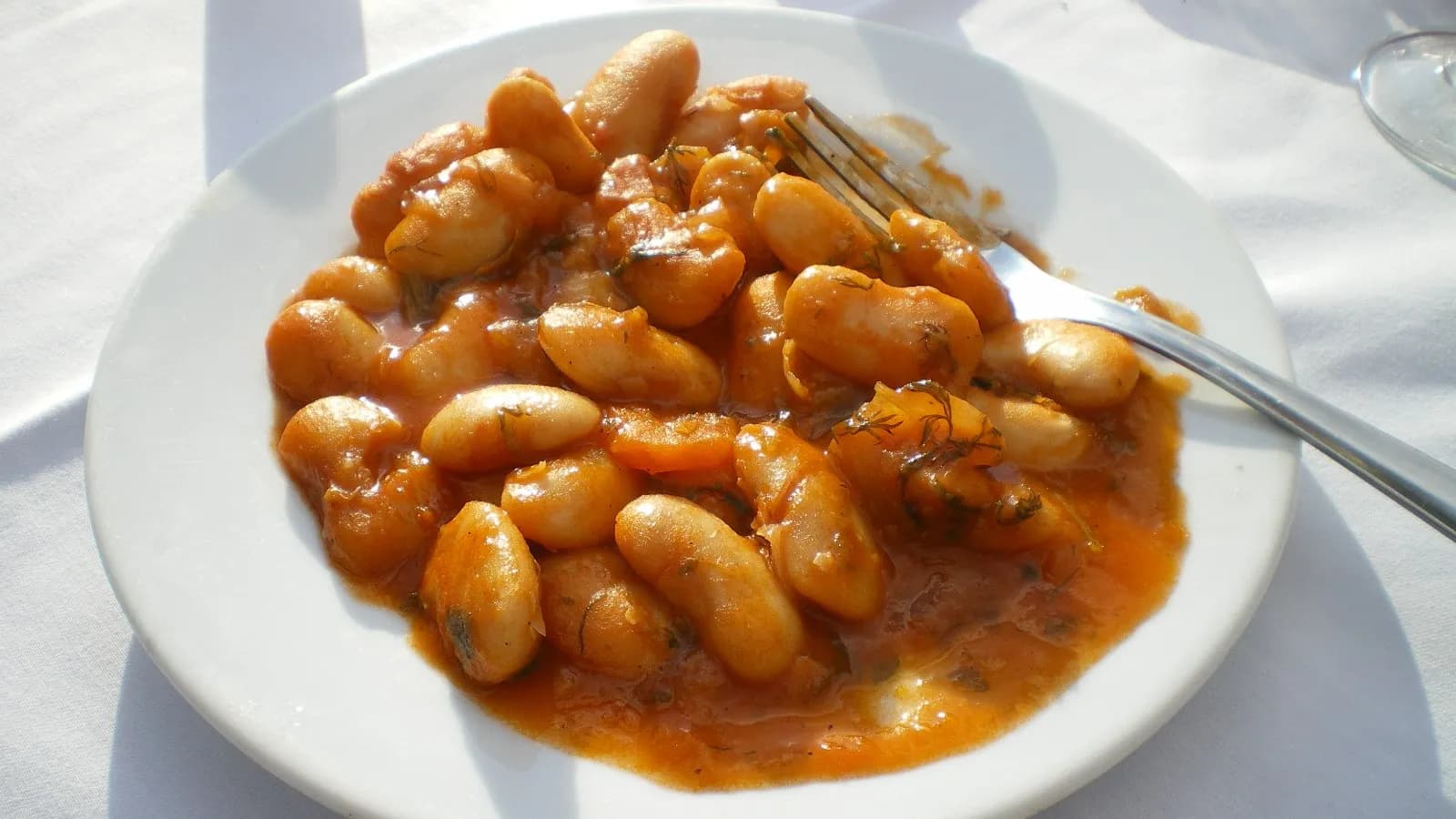
Gigantes plaki is what happens when a country with excellent olive oil, excellent tomatoes and a long tradition of fasting days turns its attention to a bean. It is a dish of large white beans baked in a tomato sauce until the sauce has thickened around them and the top has caught in places, and it is served warm or at room temperature with bread, as a main course or as one dish among several. It is entirely vegan, which in Greek Orthodox practice is the point: it belongs to the family of dishes that carry the country through Lent.
The bean
The beans are fasolia gigantes, giant beans, and they are not a large haricot or a butter bean, though either will do at a pinch. They are a variety of Phaseolus coccineus, the scarlet runner bean, grown for the seed rather than the pod, and the best come from the high ground around the Prespa lakes in the north-west of the country, where they are grown under protected geographical status. Cooked properly they are soft, creamy and slightly sweet, with a skin thin enough to disappear. A tin of butter beans gives you the shape and about half the flavour; dried gigantes, or dried large lima beans, soaked and cooked from scratch, give you the dish.
Ingredients, for six as a main
- 500 g dried gigantes or large lima beans
- 150 ml extra virgin olive oil, plus more to finish
- 2 large onions, finely chopped
- 4 cloves garlic, sliced
- 2 sticks celery, finely diced
- 2 carrots, finely diced
- 1 tablespoon tomato purée
- 800 g tinned chopped tomatoes, or 1 kg ripe fresh tomatoes, grated
- 1 teaspoon sugar, if the tomatoes need it
- 1 teaspoon dried oregano
- A large handful each of dill and flat-leaf parsley, chopped
- Salt and black pepper
- 1 teaspoon sweet paprika, optional
Method
- Soak the beans in plenty of cold water for at least twelve hours. They will roughly double in size, so use a big bowl.
- Drain, put them in a large pan, cover with fresh cold water by a good hand's width and bring to the boil. Skim, lower to a simmer and cook, uncovered, until tender but still holding their shape. This takes anywhere from forty-five minutes to an hour and a half depending on the age of the beans. Do not salt the water; salt at this stage can toughen the skins. Drain, reserving a cup of the cooking liquid.
- Heat the oven to 180°C. Warm the olive oil in a wide pan over medium heat and cook the onions with a pinch of salt until soft and golden, about fifteen minutes. Add the garlic, celery and carrot and cook another five.
- Stir in the tomato purée and cook for a minute, then add the tomatoes, oregano, paprika if using, a teaspoon of salt and plenty of pepper. Simmer for ten minutes until slightly thickened. Taste; add the sugar only if the tomatoes are sharp.
- Combine the beans and sauce in a large baking dish, add enough of the reserved cooking liquid to make the mixture loose, since it will tighten in the oven, and stir through most of the dill and parsley.
- Bake uncovered for an hour to an hour and a quarter, until the sauce has thickened, the beans on top have coloured and the edges have caught. If it looks dry halfway, add a splash of water.
- Rest for at least twenty minutes. Finish with the remaining herbs and a generous pour of olive oil.
Notes
The oil is not a garnish. Greek bean and vegetable dishes of this kind, the ladera, are defined by cooking in olive oil in a quantity that alarms people from other traditions, and reducing it changes the dish: the sauce goes thin and the beans go dull. A hundred and fifty millilitres for six people is not excessive by the standard of the cuisine, and much of it ends up in the bread.
The dish is better the next day and holds for four in the fridge. Serve at room temperature rather than cold. Feta crumbled over the top is common and good, and removes the vegan claim. A squeeze of lemon at the table is not traditional and is also good.
If gigantes are unavailable, large dried lima beans are the honest substitute. Cannellini are too small and cook to mush in the time the sauce needs. For the Levantine cousin of this dish, our ful medames recipe is the same idea with a different bean, and the spinach pie in our spanakopita recipe is what sits beside it on a Greek table.
Published in The Outspoken Digest
Editorial desk
Outspoken Digest Food DeskCooking, ingredients, restaurants and the economics of what ends up on the table.
Newsletter
The Digest, in your inbox
One edition, sent when it is ready. No noise, and your address is never passed on.
Read Next
More Recipes →
Swangy Tamarind Glazed Chicken Wings for the Flavour Replacing Swicy on Fast Food Menus
Sep 29, 2026/3 min read

Baked Apple Cider Doughnuts for a Cider Season That Peaked Earlier Than the Calendar Says
Sep 29, 2026/3 min read
An Obatzda Bavarian Beer Cheese Dip for the Final Stretch of Oktoberfest 2026
Sep 29, 2026/3 min read