Chickpea Socca as a Pizza Base: Two Ingredients, No Flour Blend
Most gluten-free pizza bases are elaborate reconstructions of wheat. Socca is not pretending to be anything. Chickpea flour and water, rested and baked hot, gives you a crisp, sturdy base in half an hour.
Tuesday, August 11, 2026/3 min read
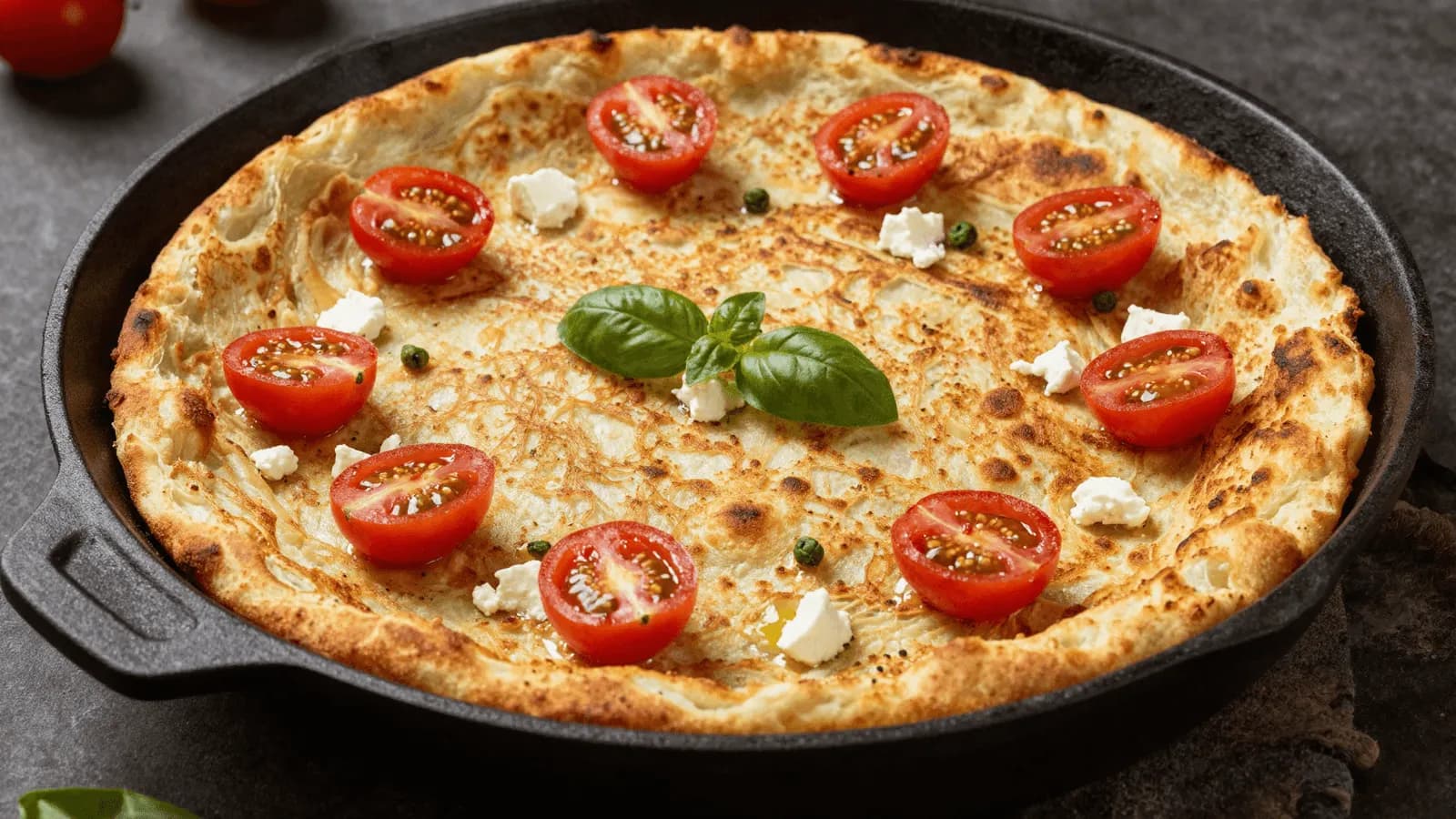
Gluten-free pizza is usually an exercise in imitation, and imitation is where it goes wrong: four flours, two binders, a prove, and a base that still tastes like an apology.
Socca sidesteps the whole problem. It is a chickpea pancake from Nice, the same thing Ligurians call farinata, and it has been made for centuries by people who were not thinking about gluten at all. Chickpea flour, water, olive oil and salt. It bakes crisp at the edges, stays sturdy in the middle, and holds toppings without collapsing.
It is not a wheat pizza and it does not taste like one. It tastes better than most of the things sold as gluten-free pizza.
Ingredients
Makes two bases of about 25 cm, serving two.
- 150 g chickpea flour, also sold as gram flour or besan
- 300 ml water, room temperature
- 3 tablespoons olive oil, plus more for the pan
- 1 teaspoon fine salt
- Black pepper
- Half a teaspoon of ground cumin, optional
For a simple topping:
- 200 g cherry tomatoes, halved
- 125 g mozzarella, torn and well drained
- A handful of basil
- Half a red onion, sliced thin
Method
1. Whisk, then wait
Whisk the chickpea flour into the water gradually so it stays smooth, then add the oil, salt and pepper. It should be the consistency of thin cream.
Now rest it for at least thirty minutes, and up to a few hours in the fridge. This is the step that matters. Resting hydrates the flour, removes the raw chalkiness, and lets any foam settle. Skipping it is the single most common reason socca tastes bitter.
Skim off any foam on the surface before you cook.
2. Get the pan properly hot
Heat the oven to 240C with a cast iron pan or a heavy baking tray inside. It needs a full ten minutes at temperature.
The heat is doing the work here. A cool pan gives you a soft, greasy pancake instead of a crisp base.
3. Bake the base
Take the pan out, add a tablespoon of olive oil and swirl, then pour in half the batter to a depth of three or four millimetres. Return it to the oven for eight to ten minutes, until set, dry on top and browning at the edges.
If your oven has a grill, thirty seconds under it at this point gives the blistering people associate with pizza.
4. Top and finish
Scatter the tomatoes, onion and mozzarella over the base and return to the oven for six to eight minutes, until the cheese has melted and the edges are dark.
Do not overload it. Socca is strong but it is not a deep-dish crust, and a wet topping will soften the middle. Drain your mozzarella properly.
Basil and a little more olive oil after it comes out, not before.
Notes and variations
Plain socca, with nothing but salt, pepper and rosemary, is the traditional version and is excellent with drinks. Cut it in rough pieces and eat it hot.
For a Levantine version, brush the baked base with za'atar loosened in olive oil, add labneh after baking, and finish with sliced tomato and mint. If you are avoiding dairy as well, our cultured cashew labneh holds up here.
The batter keeps for three days in the fridge and improves on the second day. Whisk it again before using, since the flour settles.
Why chickpea flour works when rice flour does not
Chickpea flour is high in protein and it sets when heated, which is what gives socca its structure. It is doing something closer to what egg does in a batter than what wheat does in a dough, and that is why it holds together without gums or binders.
It also brings a meaningful amount of protein and fibre, which most gluten-free bases, built on refined starches, do not. We go through what each alternative flour actually contributes in the gluten-free flour guide.
The usual caution
Chickpea flour is naturally gluten free, but if you have coeliac disease buy a certified product, because chickpea flour is often milled in facilities that also handle wheat. The distinction between coeliac disease and other reasons for avoiding gluten is set out in our explainer, and it determines how strict you actually need to be.
Published in The Outspoken Digest
Editorial desk
Outspoken Digest Food DeskCooking, ingredients, restaurants and the economics of what ends up on the table.
Newsletter
The Digest, in your inbox
One edition, sent when it is ready. No noise, and your address is never passed on.
Read Next
More Recipes →
Swangy Tamarind Glazed Chicken Wings for the Flavour Replacing Swicy on Fast Food Menus
Sep 29, 2026/3 min read

Baked Apple Cider Doughnuts for a Cider Season That Peaked Earlier Than the Calendar Says
Sep 29, 2026/3 min read
An Obatzda Bavarian Beer Cheese Dip for the Final Stretch of Oktoberfest 2026
Sep 29, 2026/3 min read