Is the Gulf at Risk From Earthquakes? A Straight Answer
The honest answer is low but not zero, and it is not evenly spread. Tremors felt in Dubai towers usually come from Iran. The region's own exposure sits in Oman, the eastern UAE and the Red Sea coast.
Wednesday, August 12, 2026/4 min read
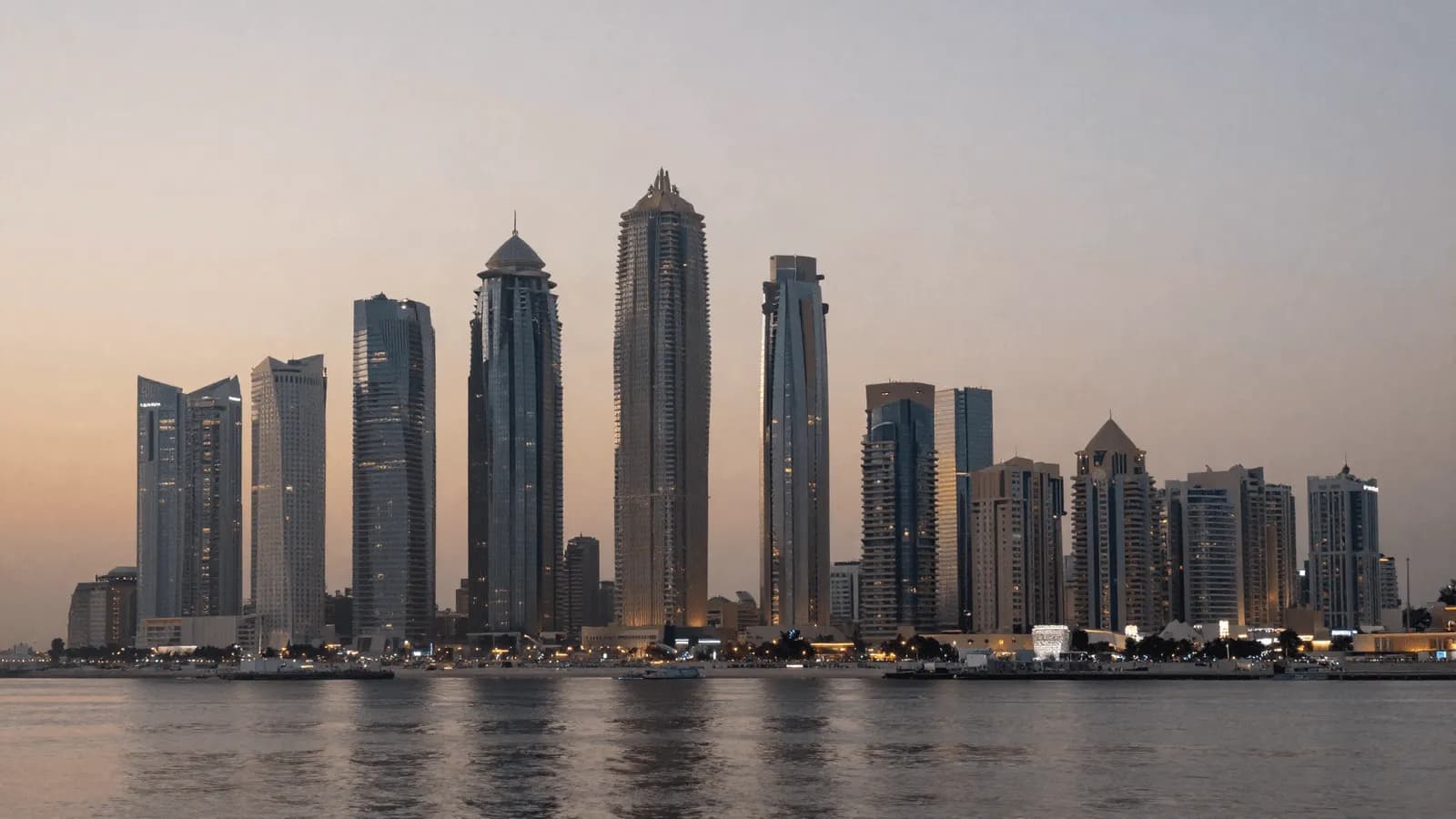
Every time a tower in Dubai or Doha sways, the same question circulates: is the Gulf actually at risk from earthquakes? The answer is more interesting than either of the usual ones, which are that the region is perfectly safe and that a disaster is overdue.
Neither is right. Hazard here is genuinely low by global standards, unevenly distributed, and dominated by events that happen somewhere else.
Where the shaking comes from
The Zagros belt, Iran
The dominant source of felt shaking in the Gulf. The Arabian plate is colliding with Eurasia along a belt running the length of western Iran, and it produces frequent moderate to large earthquakes.
Almost every occasion on which residents of Dubai, Abu Dhabi, Doha or Manama have felt a building move traces back here. The 2013 Iran earthquakes were felt across the region and prompted precautionary evacuations of high-rises.
The Makran subduction zone
Offshore southern Iran and Pakistan, this is the region's most serious low-probability hazard, because it is capable of very large earthquakes and of generating a tsunami in the Gulf of Oman and the Arabian Sea.
It has form. The 1945 Makran earthquake, magnitude around 8.1, produced a tsunami that killed people along the coasts of Pakistan, Iran, Oman and India. Oman's coastline and the eastern UAE face it directly.
The Dibba and eastern UAE structures
Northern Oman and the eastern UAE, around the Hajar mountains, carry more local seismicity than the western Gulf. Masafi and the surrounding area has produced small local earthquakes that residents felt.
The Red Sea rift
Western Saudi Arabia is a different tectonic situation entirely. The Red Sea is an active spreading centre, and the Harrat volcanic fields inland from it have both seismic and volcanic history. The Harrat Lunayyir seismic swarm in 2009 led to the evacuation of tens of thousands of people.
What is low risk, and what is not
For Kuwait, Bahrain, Qatar, and the western UAE and Saudi interior, hazard is genuinely low. Damaging local earthquakes are rare, and the practical exposure is to felt shaking from distant Iranian events.
Higher relative exposure sits with Oman, particularly the coast facing the Makran zone, the eastern UAE near the Hajar mountains, and western Saudi Arabia near the Red Sea.
Low is not zero, and the distinction matters most for the things that are built to last a century.
The high-rise question
This is where Gulf risk becomes unusual rather than simply small.
Tall buildings respond to long-period seismic waves, which travel further than short-period ones. A large distant earthquake can produce motion that is imperceptible at street level and clearly noticeable on the fortieth floor.
Three consequences follow.
- Swaying in a tower during a distant earthquake is expected behaviour, not a sign of failure. Tall buildings are designed to move.
- Panic is the realistic injury risk. Crowded stairwells and mass evacuations cause more harm in this scenario than the shaking does.
- Non-structural damage is the realistic property risk. Facade panels, suspended ceilings, sprinkler pipework and lift systems are the things that fail first.
The mechanism, and why building period and soil matter more than magnitude, is explained in how earthquake damage actually happens.
What the region has done about it
Seismic provisions are incorporated into building codes across the GCC, with Dubai and Abu Dhabi applying requirements to tall buildings and the UAE operating a national seismic network.
The UAE's National Emergency Crisis and Disasters Management Authority coordinates preparedness and runs the national early warning system that pushes alerts by text. Civil Defence handles response, with emirate-level teams.
Two structural points are worth noting in the region's favour. Much of the Gulf's building stock is recent, which means it was built under modern codes, and that is the single largest determinant of earthquake outcomes anywhere. Steel and reinforced concrete framed towers, properly detailed, perform well.
The weaker points are older low-rise construction, informal or unreinforced masonry in some areas, and the enormous quantity of non-structural elements in modern buildings that nobody has secured.
What a resident should actually do
Proportionate, not alarmed.
- Secure heavy furniture and anything above a bed. This is worth doing in Dubai for the same reason it is worth doing anywhere, and it addresses the actual injury mechanism.
- Know that Drop, Cover, Hold On applies here too, and that going outside during shaking is the wrong move. The full guidance is in our comparison of GCC, US and European advice.
- If you live or work on the coast facing the Gulf of Oman, know that strong or prolonged shaking is itself a tsunami warning, and move inland without waiting for an official alert.
- Sign up for official alerts and ignore the prediction accounts, which surface after every regional tremor and are examined in our piece on why earthquakes cannot be predicted.
The summary
The Gulf is not a high-hazard seismic region and will not become one. Its realistic exposure is felt shaking from Iranian earthquakes, a low-probability but serious tsunami hazard along the Oman-facing coast, and local seismicity in the east and in western Saudi Arabia.
The most useful thing anyone here can do about earthquakes takes an afternoon and a bracket set. That is an unglamorous conclusion, and it is the correct one.
Published in The Outspoken Digest
Editorial desk
Outspoken Digest NewsroomReports for The Outspoken Digest across Latest Trends, Lifestyle.
Newsletter
The Digest, in your inbox
One edition, sent when it is ready. No noise, and your address is never passed on.
Read Next
More Latest Trends →
Federal Agents Search Rep. Ilhan Omar's Washington Home Three Weeks Before the Midterms, and She Calls It Intimidation
Oct 13, 2026/2 min read
Iran Calls the US Reply on Hormuz 'Inadequate' as Two Indian Seafarers Go Missing After a Tanker Is Hit Off Oman
Oct 13, 2026/2 min read
Trump Declares a Russia-Ukraine 'Energy Ceasefire' and Moscow Keeps Hitting Ukraine's Power Plants, Zelenskyy Says
Oct 13, 2026/2 min read
Saudi Arabia Vows a Serious Response After a Houthi Missile Killed 13 at Riyadh Airport as Trump Weighs Joining
Oct 13, 2026/2 min read