The Gulf Lost Up to a Quarter of Its Luxury Shoppers. The Brands Responded by Moving Further Upmarket
Bain puts the shrinkage in the Gulf's luxury customer base at 15 to 25 per cent in early 2026 while the Americas surged. The industry's answer to losing aspirational buyers has been to stop trying to keep them.
Tuesday, August 18, 2026/5 min read
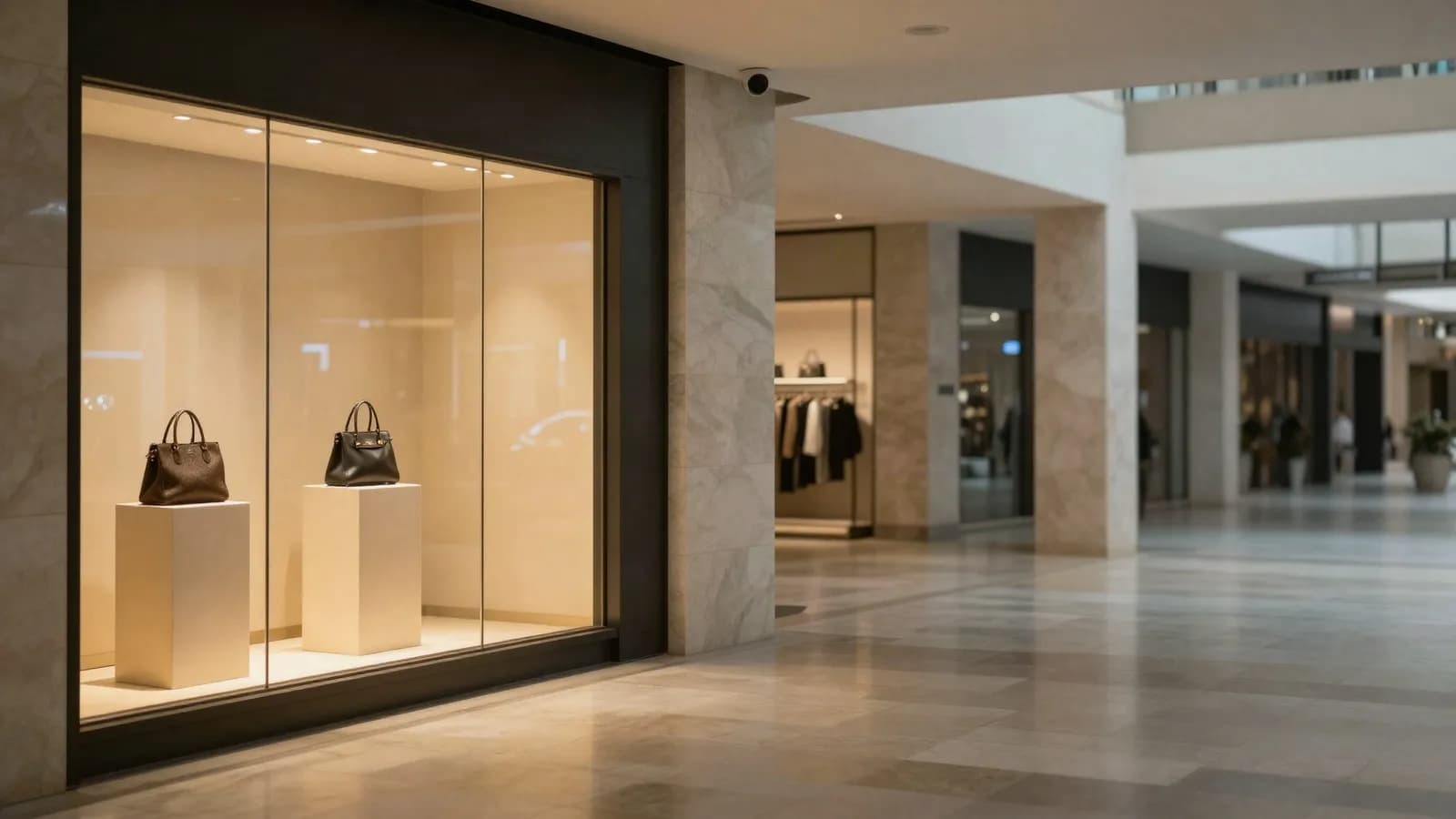
There is a number in Bain's latest luxury work that should have caused more argument in this region than it has. The Gulf's luxury consumer base shrank by somewhere between 15 and 25 per cent in early 2026.
Not spending. Not footfall. The customer base. Between one in seven and one in four of the people who used to buy luxury goods here stopped being luxury customers, in the space of a few months.
Meanwhile the Americas surged, with American-native brands growing 10 to 15 per cent year on year in the first quarter. Same products. Same global brands. Opposite outcomes, and the reason is not taste.
What is actually happening to the luxury market in 2026?
Globally, very little, which is itself the story. Bain's numbers put total luxury spending at around 1,443 billion euros in 2025 and project 1,440 to 1,470 billion for 2026, which is growth of zero to two per cent at constant rates. Personal luxury goods, the handbags and watches and ready-to-wear that most people mean by the word, came in at 358 billion euros and are forecast to reach 365 to 373 billion this year.
Flat, in other words, at the aggregate. But the aggregate is hiding two markets moving in opposite directions, and averaging them produces a number that describes nowhere.
In the Americas, growth is coming from below: households in the upper middle class are increasing luxury spending at roughly twice the rate of genuinely wealthy ones, and consumers under 35 are spending about four percentage points faster than their elders. In Europe and the Middle East, international tourist spending fell around 20 per cent in February and the regional customer base contracted.
Why did the Gulf shrink while the Americas grew?
Because the Gulf's luxury market was disproportionately built on exactly the customer that price increases have driven out.
Luxury pricing rose relentlessly through the first half of this decade, and the industry now concedes that it reached a ceiling in 2025. The customer who absorbed those increases was the aspirational buyer: not wealthy, but willing to save for the bag. That buyer is the first to leave in any squeeze, and this region had a great many of them, augmented by tourists doing the same thing on holiday.
When the tourist flow softens and the resident aspirational buyer decides a handbag at four times its 2019 price is no longer a reasonable proposition, the customer base does not decline gently. It falls off a step.
The Americas did not experience that because the growth there is coming from a slightly wealthier cohort trading into luxury rather than an aspirational one trading out of it. Our reporting on how the modest fashion market is actually measured made a related point: regional demand here is frequently described with numbers that were never designed to capture it.
What is the squeezed middle in fashion?
It is the price band between roughly $300 and $1,500, and it is the most dangerous place to be standing in this industry.
Above it sits luxury proper, which has pricing power because it sells scarcity and craft. Below it sits fast fashion and now Shein, which competes on a cost base nobody in the middle can match. The middle used to sell aspiration, and aspiration has stopped paying.
The brands caught there are not obscure. Coach, Michael Kors and Burberry have all spent recent years being described in exactly these terms by analysts. What they share is a position that made complete sense when a growing middle class wanted a visible step up, and makes very little sense now that the same customer can buy a well-made bag from Polene or Toteme at a third of the price, or a convincing dupe at a tenth.
Are dupes really the problem?
Partly, though not in the way the industry says.
The genuine shift is not that dupes exist. Copies have always existed. It is that buying one has stopped carrying any social penalty. A shopper who once hid a counterfeit now posts the comparison video, and the framing has moved from embarrassment to competence. Finding the dupe is presented as being good at shopping.
That is a reputational problem no enforcement budget can solve, because there is nothing illegal about a well-made unbranded bag with a similar silhouette. And it lands hardest on brands whose value was mostly the logo, which is precisely the squeezed middle again.
The other half of the same shift is secondhand. Around half of luxury shoppers now check the resale market before buying anything new, a habit we examined in our piece on preowned becoming a style signal. A brand competing with its own back catalogue is competing with something it cannot discontinue.
What are the brands actually doing about it?
Leaving. Almost every brand with the option is moving upmarket, and the BoF and McKinsey State of Fashion work for 2026 describes the logic plainly: elevate, so you are not fighting Shein at the bottom, and so you can catch the shoppers priced out of luxury above you.
The trouble is visible as soon as you say it out loud. If everyone elevates, nobody has elevated. And the customer the strategy is designed to capture is the same aspirational buyer whose disappearance caused the problem, now expected to pay more for a brand that has just told the market it is worth more.
The more credible version of the same strategy is the one that gives the customer something back. The industry's own language this year has moved from price to craftsmanship, newness and creativity, which is a polite way of admitting that a decade of charging more for the same object has run out of road.
What does this mean if you are the one buying?
Better conditions than you have had in years, if you are unsentimental.
The middle of the market is competing hard for you and losing, which is where value tends to appear. The premium contemporary brands at $300 to $800 are making genuinely good products because that is the only way in. Resale has never been deeper. And a brand that has just raised prices while its customer base shrank is a brand with a discounting problem coming, whatever it says now.
What has actually ended is the idea that a logo at a mid-market price buys you standing. That was the product, more than the leather was, and the customers worked it out before the boardrooms did.
Published in The Outspoken Digest
Editorial desk
Outspoken Digest Style DeskReports for The Outspoken Digest across Fashion, Design, Lifestyle.
Newsletter
The Digest, in your inbox
One edition, sent when it is ready. No noise, and your address is never passed on.
Read Next
More Fashion →
Victoria's Secret Fashion Show Heads to Los Angeles on Sunday With an All-Women Lineup and Three Angel Hopefuls
Oct 15, 2026/2 min read

Anthony Vaccarello Is Leaving Saint Laurent After a Decade, and Kering Has Not Yet Named His Successor
Oct 9, 2026/2 min read

Louis Vuitton Closes Paris Fashion Week With Hovering Cars, Paper-Light Dresses and a Louvre Courtyard Cityscape
Oct 7, 2026/2 min read

Celine Dion Made a Surprise Return to the Catwalk to Close L'Oreal's Paris Fashion Week Opening Show
Sep 29, 2026/2 min read